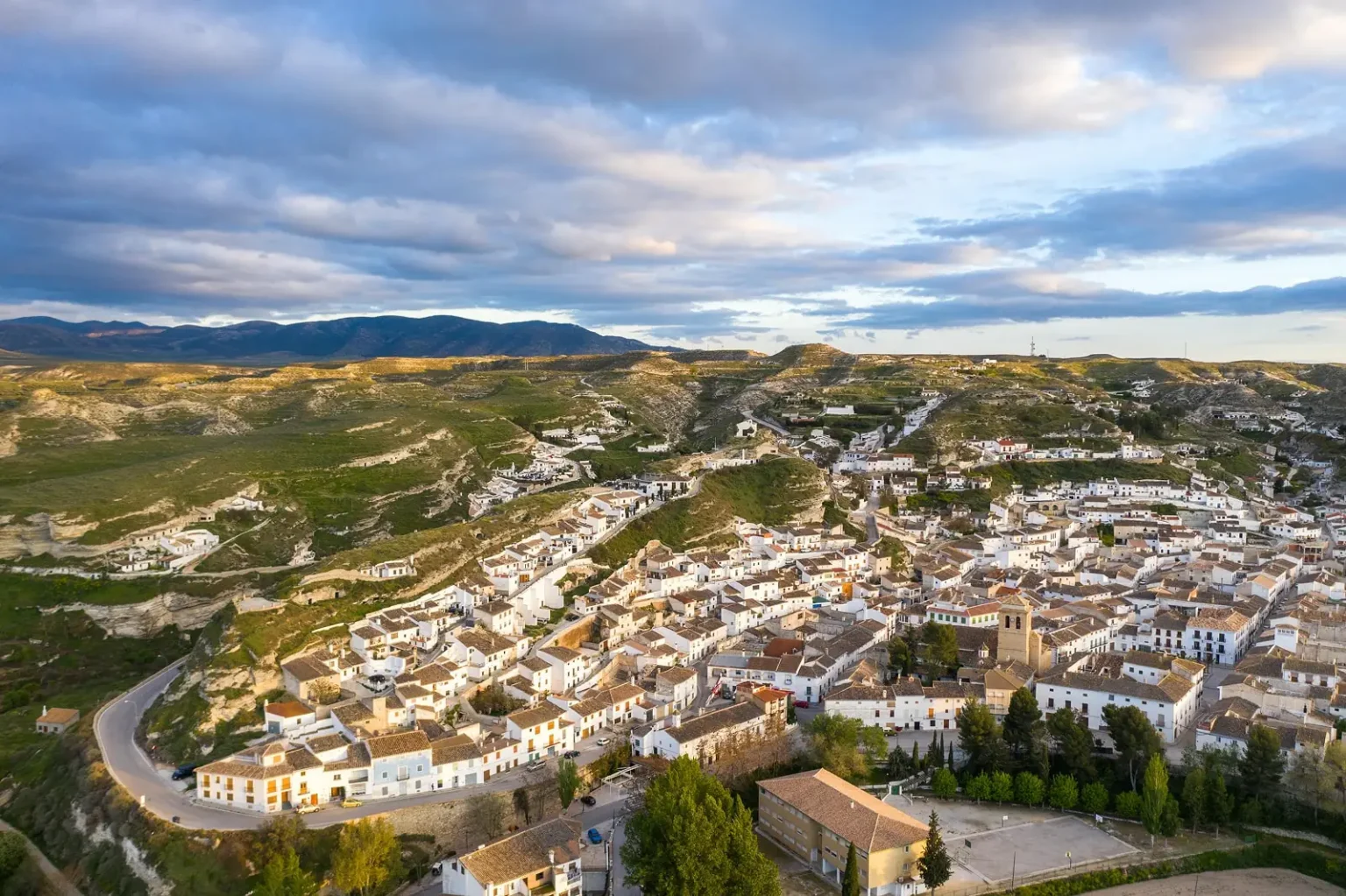

Cave houses carved into hillsides, a prehistoric settlement and an extraordinary ancient burial make this inland Granada village a compelling visit.
Set in the province’s northeastern highlands, in the Huescar district, Galera sits amid eroded clay ravines, open countryside and green river valleys.
Its history stretches back thousands of years, with archaeological sites revealing communities from the Copper Age to medieval times.
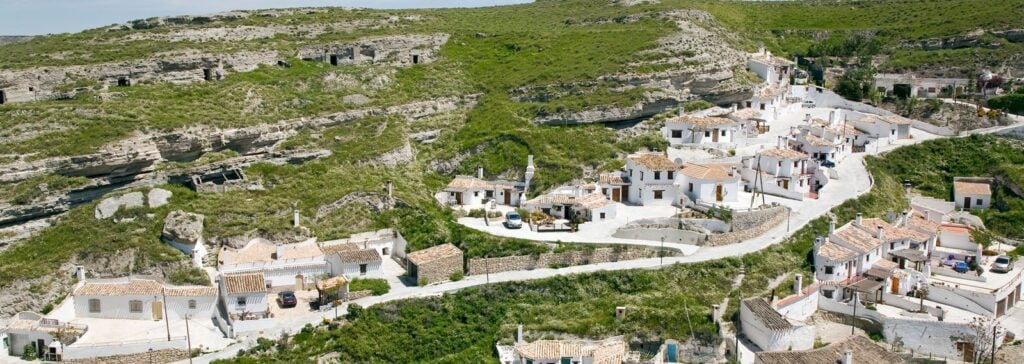
Galera’s cave homes are among its defining features. Excavated into the slopes, they offer naturally stable indoor temperatures, and many have been restored as visitor accommodation.
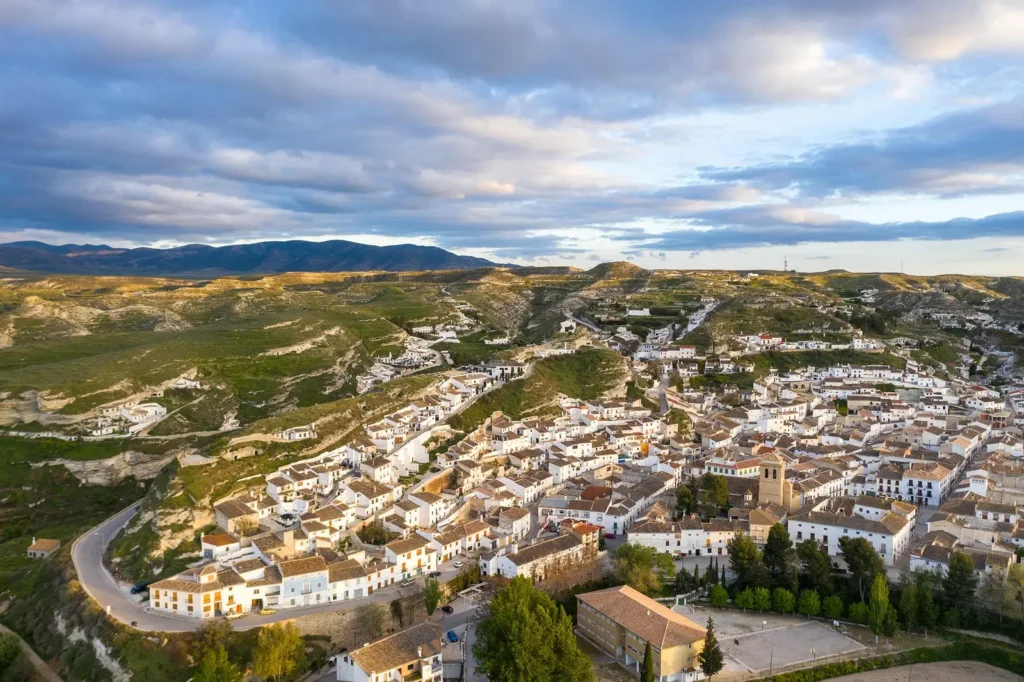
Walking through the village brings you past whitewashed facades and hillside dwellings, while the surrounding countryside opens into a striking landscape of badlands, vegetable plots and poplar groves.
In the centre stands the 16th-century Church of the Annunciation.
The village also bears the legacy of the Morisco rebellion. In 1570, troops led by Juan de Austria stormed Galera, fighting through its cave dwellings.
The devastated settlement was subsequently repopulated with families from Valencia, Murcia and La Mancha.
One of the area’s standout visits is Castellon Alto, an Argaric settlement dating from approximately 1900–1600 BC.
Its homes occupied natural terraces and the hillside, with a fortified upper section reserved for the community’s elite.
Archaeologists discovered numerous burials, including children placed in ceramic vessels and adults buried in chambers cut into the rock.
The most remarkable find came from tomb 121: the burial of an adult man and a child, with the man’s remains naturally preserved.
Known as the Galera Mummy, he is now displayed in the village’s archaeological museum on Calle San Marcos.
The museum also explores local life through objects connected with winemaking, traditional homes and crafts using esparto grass and hemp.
Nearby, the Iberian necropolis of Tutugi offers another journey into the past.
Burials included cremated remains placed in pottery vessels or stone containers beneath burial mounds, accompanied by weapons, ornaments and offerings.
Its most famous discovery is the Lady of Galera, a small Phoenician alabaster figure seated between two sphinxes and holding a bowl.
The original is displayed at Madrid’s National Archaeological Museum.