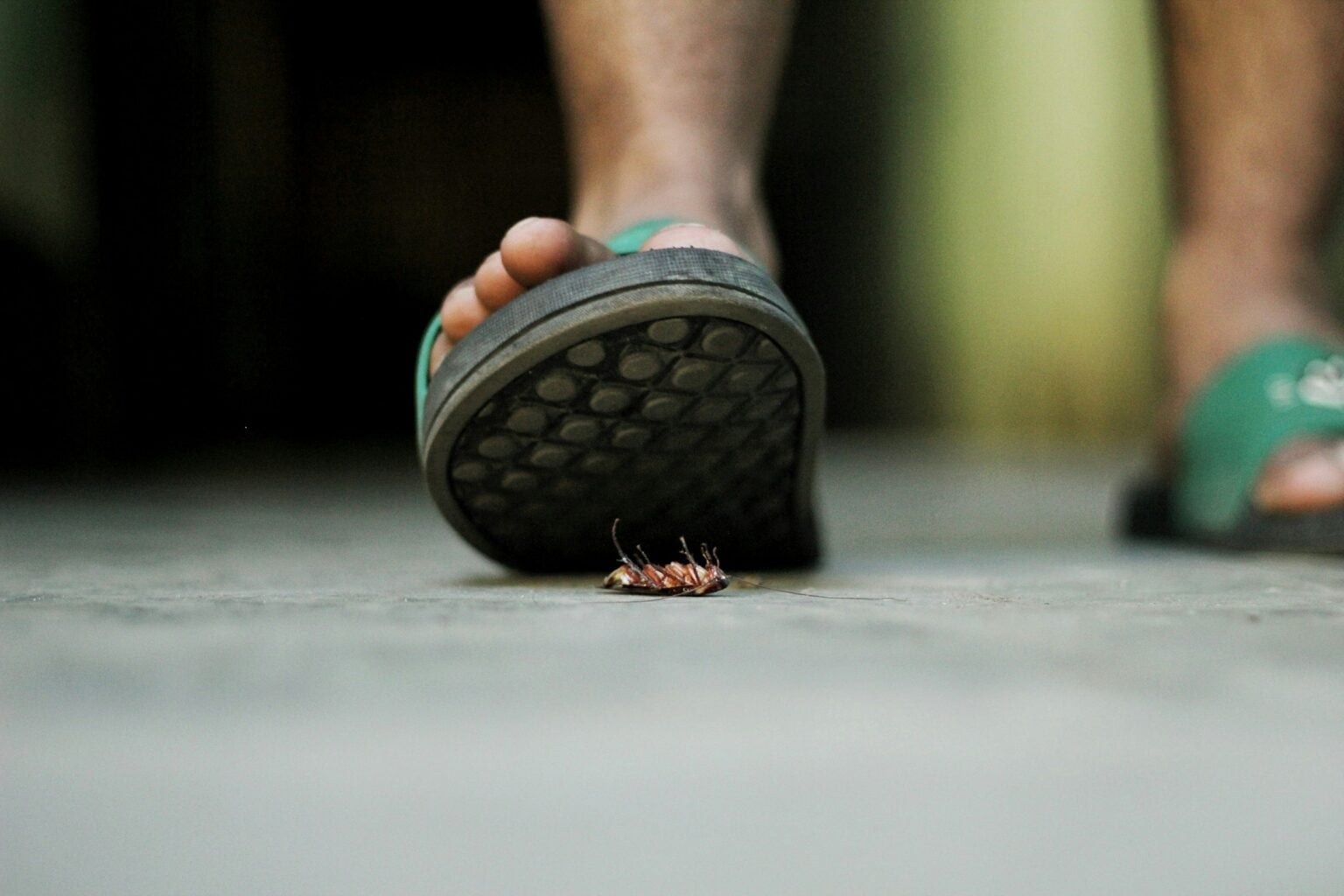

An environmental educator in Spain has warned homeowners against stamping on cockroaches.
Mario Barrero discussed the issue on the Cadena SER programme Me pasa una cosa, where he addressed some of the common myths surrounding one of the world’s most reviled pests.
During the discussion, presenter Manuel Burque said: ‘If you crush them, you can spread their eggs and also release diseases such as salmonella or staphylococcus.’
Barrero confirmed the broader health concern, explaining that cockroaches can act as vectors for potentially harmful microorganisms – but said the eggs claim was not entirely accurate.
‘It is true that they are vectors, they are carriers of different diseases,’ he said.
Cockroaches frequently move through drains, rubbish, sewage and other contaminated environments before entering kitchens, bathrooms and other areas used by humans.
This means bacteria and other pathogens can potentially be carried on their bodies and transferred to surfaces and food.
‘They can transmit them,’ Barrero explained, adding that the risk arises largely because cockroaches live in such close proximity to humans.
Can crushing one really spread its eggs?
However, he said the claim about eggs requires a little more nuance.
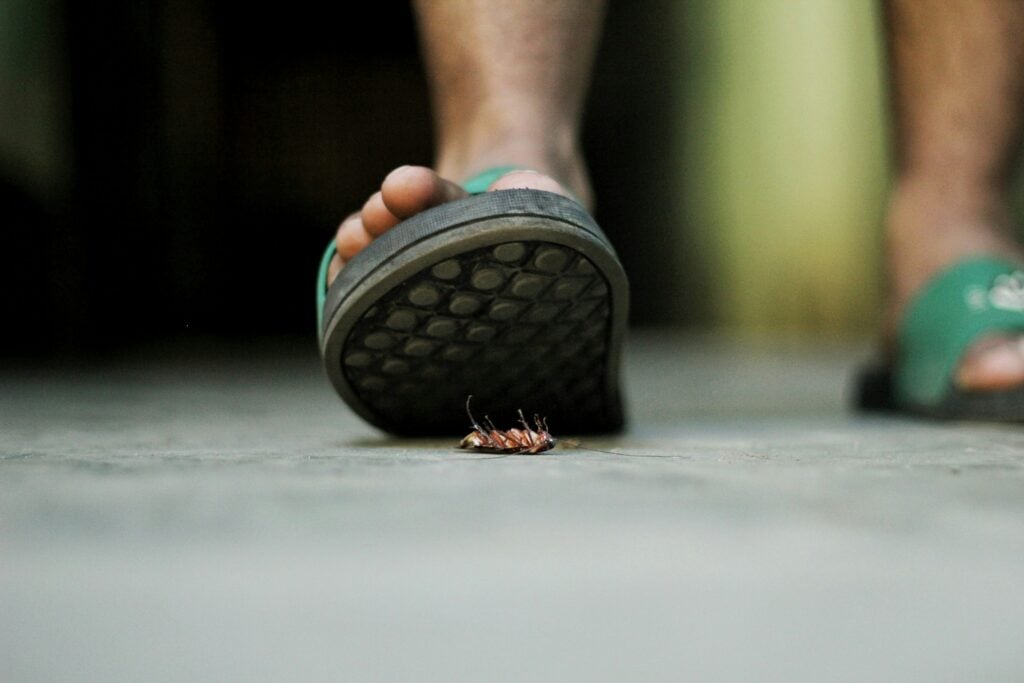
Cockroaches generally do not carry loose eggs that simply scatter across the floor when the insect is crushed.
Instead, females produce an egg case known as an ootheca, containing multiple eggs. Depending on the species and stage of development, a female may be carrying that case when she is killed.
So stamping on a cockroach is not guaranteed to suddenly create dozens of new cockroaches, and crushing one thoroughly will normally kill it.
The more convincing reason to avoid using your shoe is hygiene.
Cockroaches are well-established mechanical carriers of microorganisms, and crushing one can leave its body contents and contaminants on the floor or on the object used to kill it.
The World Health Organization has historically identified cockroaches as potential mechanical carriers of bacteria including Salmonella and Staphylococcus, particularly in environments with poor sanitation.
That does not mean simply stepping on a cockroach will automatically make someone ill, but it does mean the remains should be handled and the affected surface cleaned properly.
What should you do instead?
For a single cockroach, removing it without crushing it and then thoroughly cleaning the area is preferable.
But regularly seeing cockroaches inside a home can indicate a larger infestation hidden behind appliances, inside cracks, around pipes or in other dark and humid areas.
Keeping food sealed, removing crumbs and rubbish, eliminating accessible water and sealing potential entry points can make a property less attractive to them.
Where there is an established infestation, targeted cockroach baits or professional pest control are generally more effective than simply killing individual insects as they appear.