
Scientists in Malaga have identified a naturally occurring compound that could prove crucial in the fight against Alzheimer’s disease.
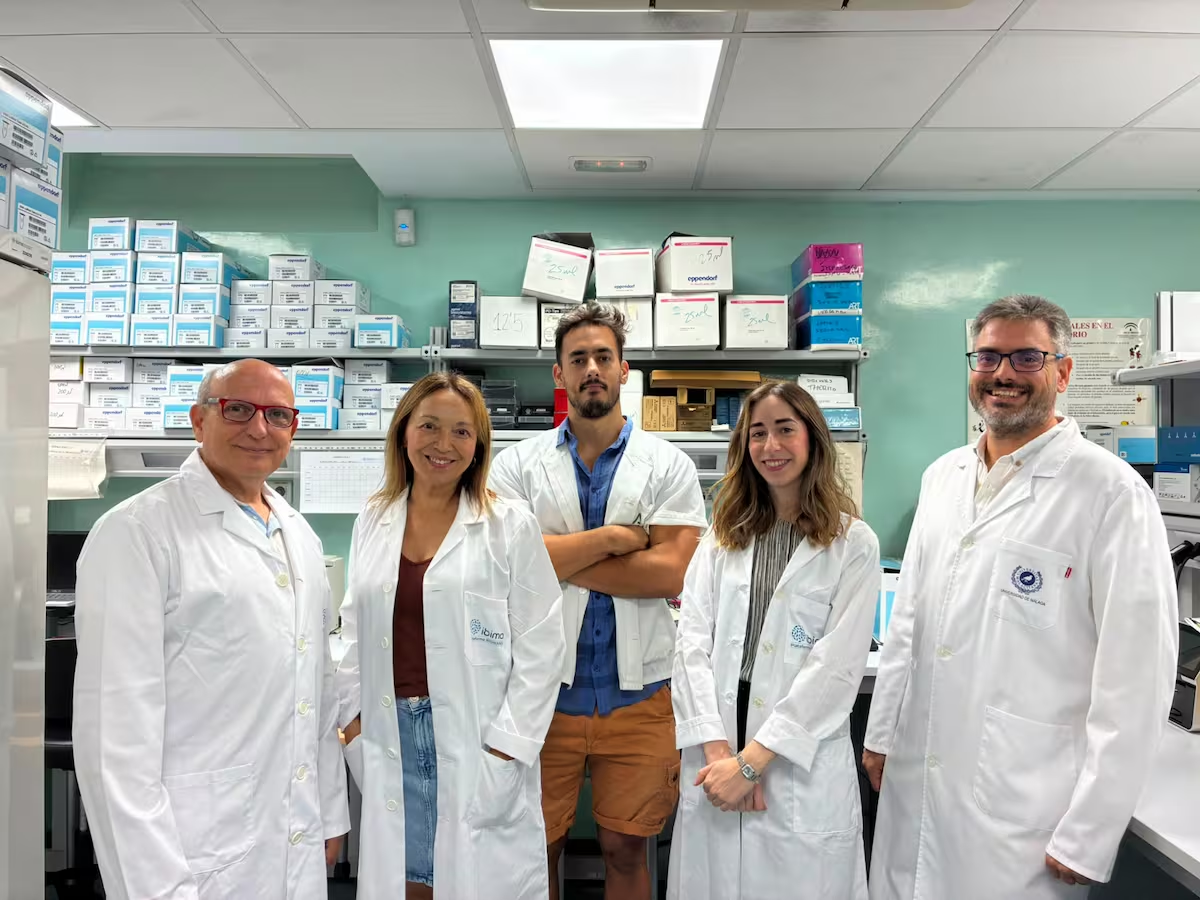
Researchers from the Malaga Biomedical Research Institute and Nanomedicine Platform (IBIMA Plataforma BIONAND) and the University of Malaga (UMA) took part in an international study examining D-chiro-inositol.
A press release from the Junta de Andalucia explained how oral administration of the compound reduced the accumulation of beta-amyloid in the hippocampus.
It also lowered neuroinflammation and improved certain cognitive abilities, including recognition memory.
However, the scientists stressed that the research remains at the preclinical stage, with the results obtained from cellular and animal models rather than human patients.
The findings, published in the scientific journal Biomedicine & Pharmacotherapy, could nevertheless open a new avenue of research into treating the complex mechanisms behind Alzheimer’s.
D-chiro-inositol is a naturally occurring compound associated with glucose regulation and insulin signalling.
It is found in certain plant foods and has previously been studied for its metabolic, antioxidant and anti-inflammatory properties.
The particular form used in the study was a standardised, plant-derived D-chiro-inositol produced from carob.
Tackling Alzheimer’s on several fronts
Alzheimer’s is characterised by the progressive deterioration of memory and other cognitive functions.
Among the changes associated with the disease are the accumulation of beta-amyloid protein, persistent inflammation in brain tissue, disruption of communication between neurons and metabolic dysfunction.
This combination of processes is one reason why developing effective treatments focused on a single therapeutic target has proved so challenging.
Researchers believe D-chiro-inositol is particularly interesting because it appears capable of acting on several of these mechanisms simultaneously.
The team tested the compound using neurons from an advanced Alzheimer’s model, modified human cells designed to produce increased quantities of amyloid protein, and mice that rapidly develop some of the characteristic features of the disease.
Initial safety and pharmacokinetic testing indicated that the compound was well tolerated and could acutely improve glucose handling.
In neurons, treatment reduced the release of beta-amyloid 42, regarded as one of the more toxic forms of the protein, while helping preserve neuronal structure.
Experiments using human cells also found that the compound affected proteins involved in insulin signalling and the processing of amyloid precursor protein, suggesting it could reduce the production of potentially harmful fragments.
Improvements in memory
The results in mice provided further evidence of its potential.
After several months of oral treatment, researchers found fewer amyloid deposits in certain areas of the hippocampus, the part of the brain crucial to learning and memory.
The treatment also reduced the activity of enzymes involved in generating beta-amyloid and partially improved mitochondrial metabolic activity.
Researchers additionally observed changes in microglia, the immune cells that protect the brain but can contribute to neuronal damage when they remain chronically activated.
D-chiro-inositol appeared to moderate this excessive activation, suggesting it could help reduce the neuroinflammatory response associated with amyloid accumulation.
Crucially, some of these biological changes were accompanied by improvements in the animals’ behaviour.
Treated mice showed a partial recovery in recognition memory and a normalisation of behaviours associated with assessing risk that had been altered by the Alzheimer’s model.
Stronger effects among females
The effects were particularly pronounced among female animals, which had a greater amyloid and inflammatory burden before treatment.
Researchers said the difference highlights the importance of considering sex as a biological variable when developing future treatments for neurodegenerative diseases.
Fernando Rodríguez de Fonseca, head of IBIMA’s Neuropsychopharmacology research group, said the results suggest D-chiro-inositol could simultaneously act on several mechanisms involved in Alzheimer’s rather than targeting just one.
But he cautioned that considerably more research is required.
‘This is preclinical research and further studies will be necessary, but it opens up an interesting avenue that deserves further exploration,’ he said.
The technological development of the proprietary D-chiro-inositol as a potential therapeutic candidate is being led by Advenion, the pharmaceutical subsidiary of Malaga-based company Euronutra, which also manufactures the compound used in the research.
The international study also involved scientists from Sweden’s Karolinska Institutet and the Andalucian Network for Clinical and Translational Research in Neurology (NEURO-RECA).
Researchers will now need to establish whether the findings can be replicated in other models, investigate the reasons for the differences observed between males and females and, ultimately, determine whether the benefits can be safely reproduced in humans.
For now, the findings should not be interpreted as evidence that D-chiro-inositol can prevent or treat Alzheimer’s in people.
Nevertheless, researchers believe its natural origin, oral administration and observed safety profile make it a promising candidate for further investigation.
Read more Andalucia news at the Spanish Eye.