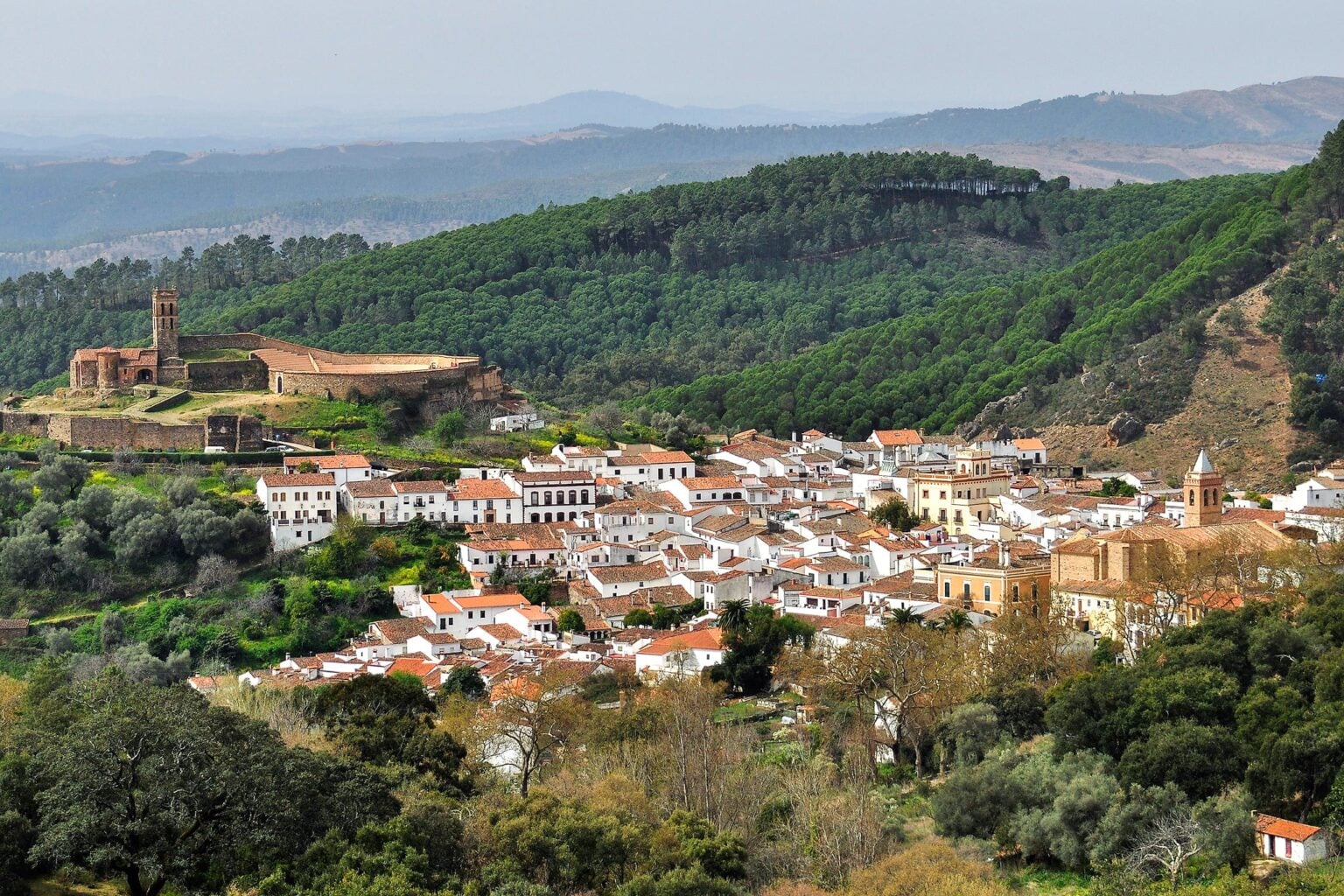

Hidden among the forests and rolling hills of Huelva province is a tiny whitewashed village that is home to one of Spain’s most remarkable pieces of Islamic architecture.
Almonaster la Real, which has fewer than 1,800 inhabitants, is officially recognised as one of Los Pueblos Mas Bonitos de España (Spain’s Most Beautiful Villages).
In fact, it is currently the only municipality in Huelva province to belong to the prestigious association.
Nestled within the Sierra de Aracena y Picos de Aroche Natural Park, the village is surrounded by chestnut trees, cork oaks and thick woodland.
Its narrow streets and traditional whitewashed houses would be enough to justify a visit in their own right.
But overlooking the village is an Andalucian mosque dating back more than 1,000 years.
A mosque unlike almost any other in Spain
The Mezquita de Almonaster la Real dates from around the 9th or early 10th century, during the period of Islamic rule in the Iberian Peninsula.
It is particularly significant because it is considered the only rural mosque in Spain to have survived virtually intact to the present day.
The mosque forms part of a fortified monumental complex overlooking the village rather than standing as an isolated building.
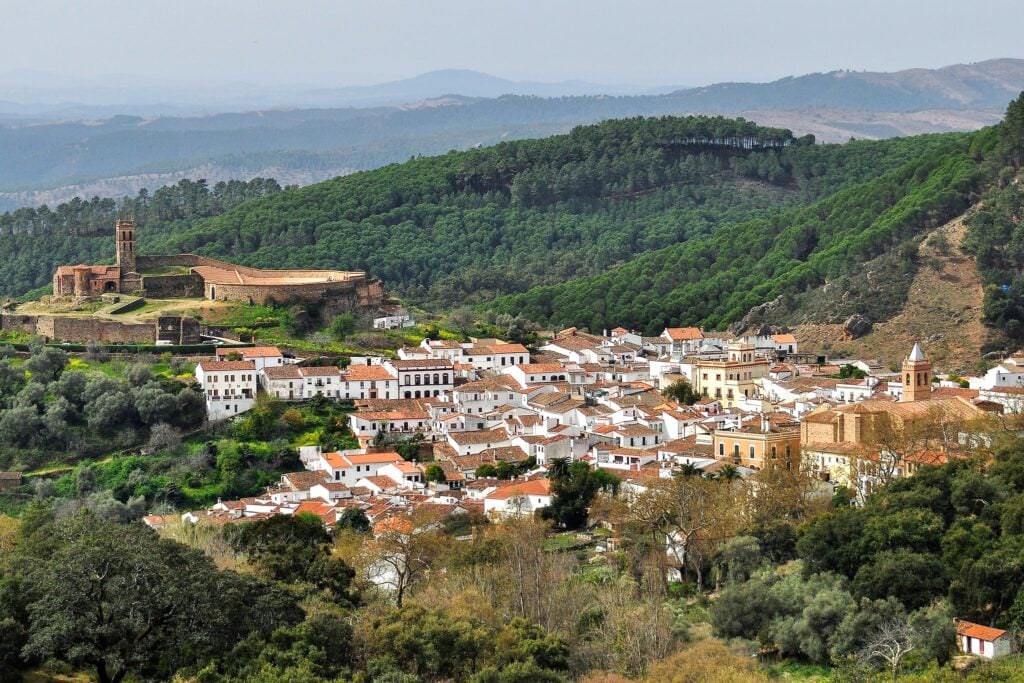
Alongside it are the remains of a medieval castle-fortress, itself believed to have incorporated materials from earlier structures, including a Visigothic basilica.
The site consequently contains traces of several different periods of Spanish history, from Roman and Visigothic remains to Islamic architecture and later Christian additions.
Following the Christian conquest of the area in the 13th century, the mosque was converted into the Hermitage of Nuestra Señora de la Concepción.
It has survived in that form to the present day and was declared a National Monument in 1931, with the site now protected as a Bien de Interés Cultural.
Much more than its famous mosque
Almonaster’s historical importance extends well beyond the hilltop complex.
The village itself has been designated a Historic-Artistic Site since the 1980s, reflecting the unusually rich collection of architecture packed into the small settlement.
Another highlight is the Hermitage of Santa Eulalia de Merida, a 15th-century building constructed on the site of a Roman temple.
Inside are historic frescoes depicting scenes associated with the Apostle Santiago, while the building itself has also received national monument protection.
Then there is the parish church of San Martín, built between the 14th and 16th centuries in the Gothic-Mudejar style and distinguished by its striking Manueline doorway.
One of the village’s smaller architectural surprises is the Chapel of the Trinity, whose irregular dimensions were dictated by the restricted site on which it was constructed.
Its interior provides another dramatic change in period and style, this time showcasing distinctly Baroque architecture and decoration.
Together, the buildings make Almonaster la Real an unusual journey through centuries of Andalucian history within a village of fewer than 2,000 people.
Read more Andalucia news at the Spanish Eye.