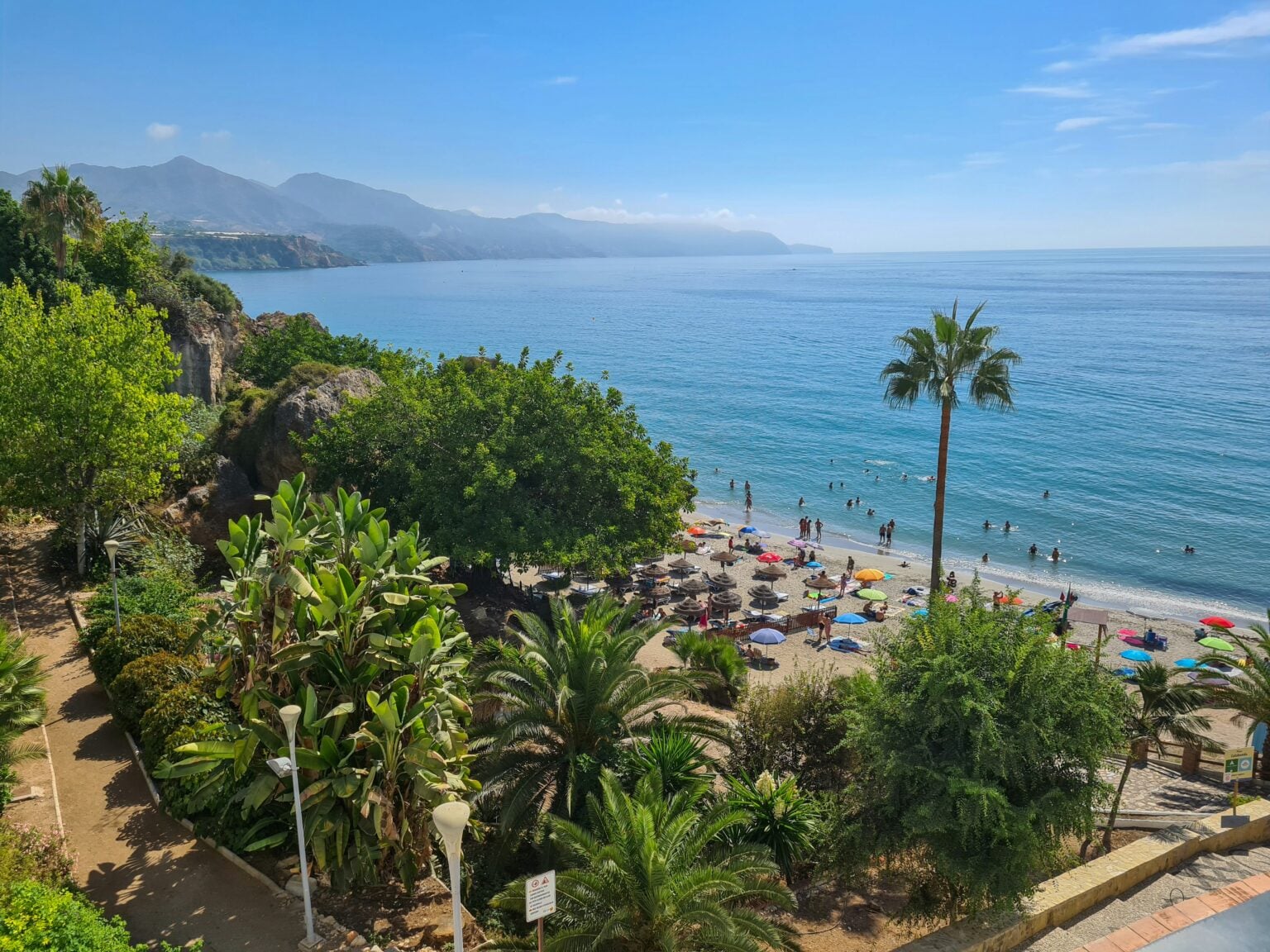

There is a much-loved corner of southern Spain where tropical fruit grows on hillsides overlooking the Mediterranean and mountain villages sit just a short drive from the beach.
The region’s 31 municipalities include hotspots such as Nerja, Torrox and Torre del Mar, alongside white villages including Competa, Comares, Canillas de Aceituno and Frigiliana.
Known as La Axarquia, it combines Mediterranean beaches, dramatic peaks and whitewashed villages with Europe’s most important region for growing mangoes, avocados and custard apples.
The Axarquia occupies around 1,000 square kilometres at the eastern end of Malaga province, stretching from the sea into a rugged interior dominated by La Maroma – the province’s highest mountain at 2,080 metres.
The combination allows visitors to spend the morning beside the Mediterranean before heading into the mountains for lunch or a hike.
Andalucia’s ‘Santorini’
Frigiliana is perhaps the region’s best-known inland destination.

Its narrow streets, whitewashed houses and Moorish heritage have earned it comparisons with the Greek island of Santorini.
Ceramic panels throughout the old town recount episodes from its history, while its hillside position provides sweeping views towards the sea.
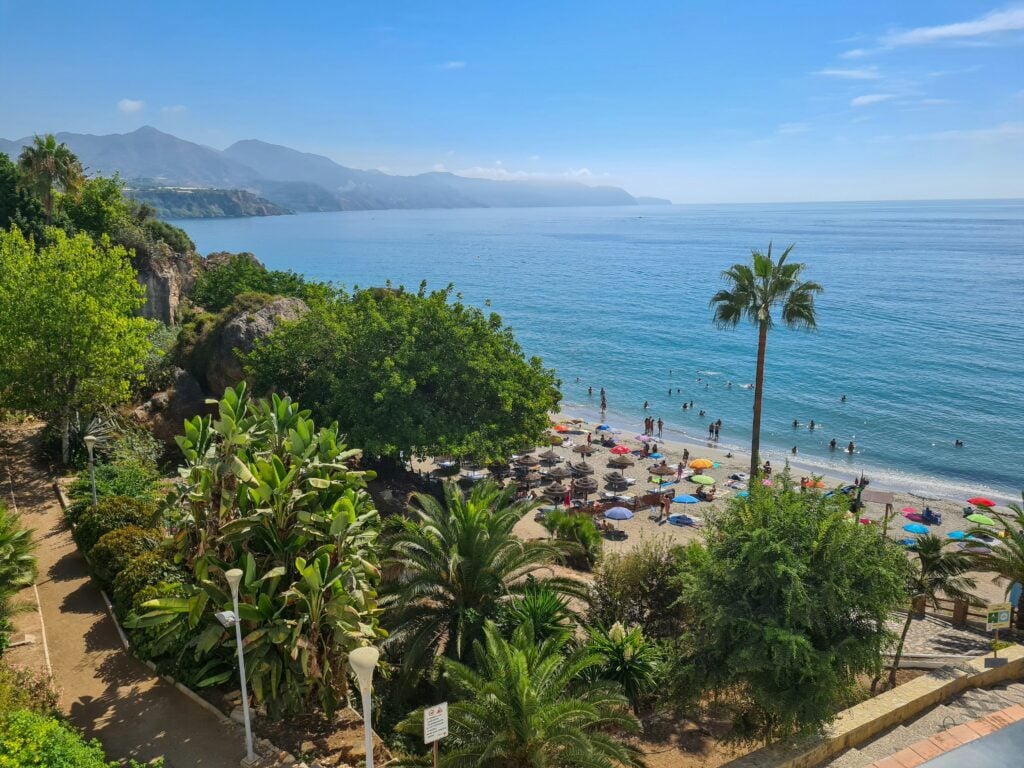
Nearby Nerja offers a very different experience, with beaches, coves and the famous Balcon de Europa viewpoint.
Europe’s subtropical garden
What truly distinguishes Axarquia is its climate.
The Junta de Andalucia describes the Malaga and Granada coastline as continental Europe’s principal area for tropical fruit cultivation.
Spain is one of the few European countries producing subtropical fruit commercially on a significant scale, with much of that activity concentrated along Andalucia’s Mediterranean coast.
Avocados, mangoes and custard apples grow across hillsides that also contain traditional Muscatel vineyards and almond trees.
Andalucia has around 5,500 hectares devoted to mangoes and approximately 18,000 hectares growing avocados.
The region accounts for around 90% of Spain’s mango-growing area and 80% of its avocado plantations.
Autumn is an especially rewarding time to visit, coinciding with the harvest of several tropical fruits while temperatures become more comfortable for exploring the inland villages.
Although popular destinations such as Nerja and Frigiliana can become busy, Axarquia generally feels less intensively developed than the western Costa del Sol, making it an appealing option for a quieter coastal and mountain escape.