
Hidden high in the Spanish Pyrenees is a monumental railway station that once transported Nazi gold, helped Jewish refugees escape the Holocaust and became a secret hub for Allied spies.
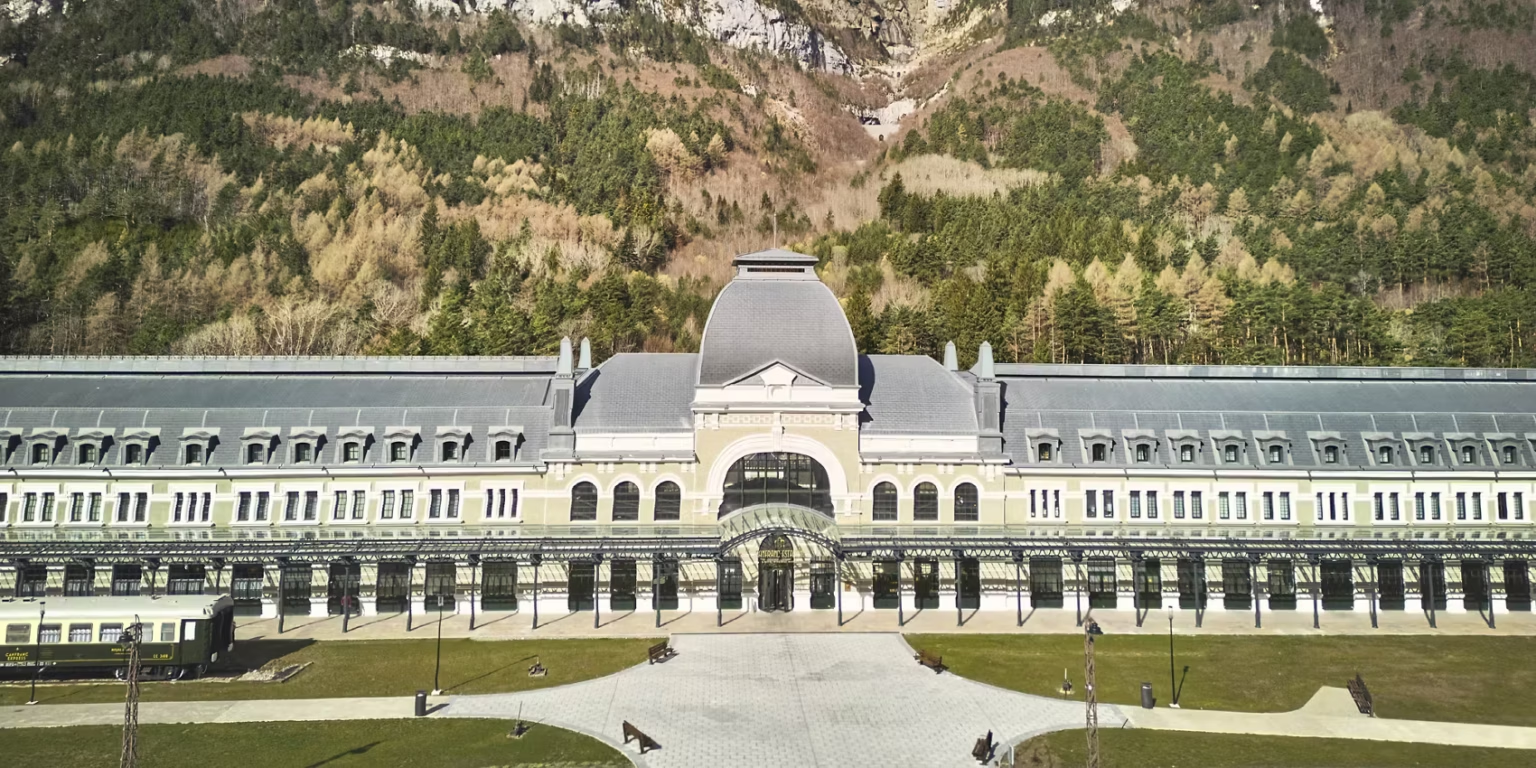
The International Station of Canfranc stands at an altitude of 1,195 metres in the narrow Los Arañones valley in Huesca, Aragon.
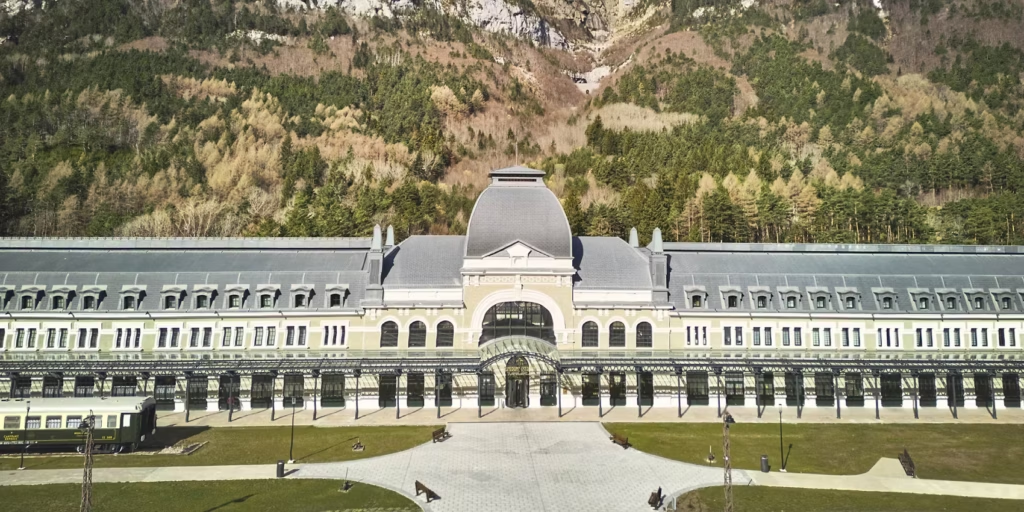
Its extraordinary 241-metre facade features 365 windows and a perfectly symmetrical design crowned by an imposing central dome.
After decades of abandonment, much of the historic station has been transformed into Canfranc Estacion, a Royal Hideaway Hotel, combining its extraordinary wartime history with modern five-star luxury.
Gateway between Spain and France
The international railway crossing was inaugurated in 1928 by Spain’s King Alfonso XIII and French president Gaston Doumergue.
Its immense scale reflected the ambition of creating a major route through the Pyrenees linking Spain with the rest of Europe.
However, its role changed dramatically after the Spanish Civil War and the beginning of the Second World War.
German forces and Francoist customs officials occupied the railway crossing, which became a crucial route for transporting wolfram from mines in Galicia into Nazi-controlled territory.
The mineral, also known as tungsten, was used to strengthen armour and military machinery.
Trainloads passed through Canfranc towards Germany, while gold looted by the Third Reich reportedly travelled in the opposite direction as payment.
Escape route and spy centre
The station also played a very different role during the final years of the war.
Thousands of Jewish refugees and political dissidents reportedly passed through Canfranc while trying to escape occupied Europe and reach Portugal, America or other safer destinations.
At the same time, the station became an important operating point for Allied intelligence networks.
Spies and resistance members reportedly used the enormous complex to monitor German shipments, exchange information and help fugitives cross the border.
Its isolated location and complicated system of tunnels, platforms, warehouses and customs facilities made it an unlikely but strategically valuable centre for both sides of the conflict.
From grandeur to abandonment
Canfranc’s international railway service came to an abrupt end in 1970 after a freight train derailed on the L’Estanguet bridge on the French side of the border.
Part of the railway was destroyed and never rebuilt, severing the international connection through the mountains.
The enormous station gradually fell into decline, with its abandoned platforms, broken windows and empty halls becoming an eerie monument to a lost age of European rail travel.
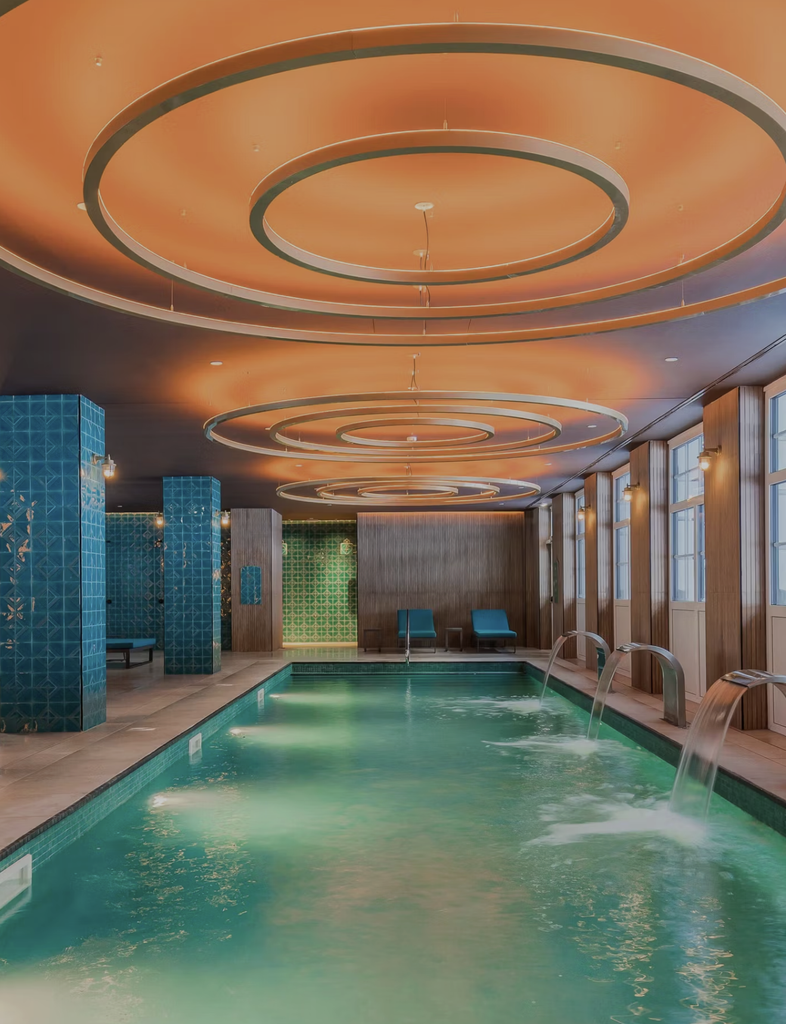
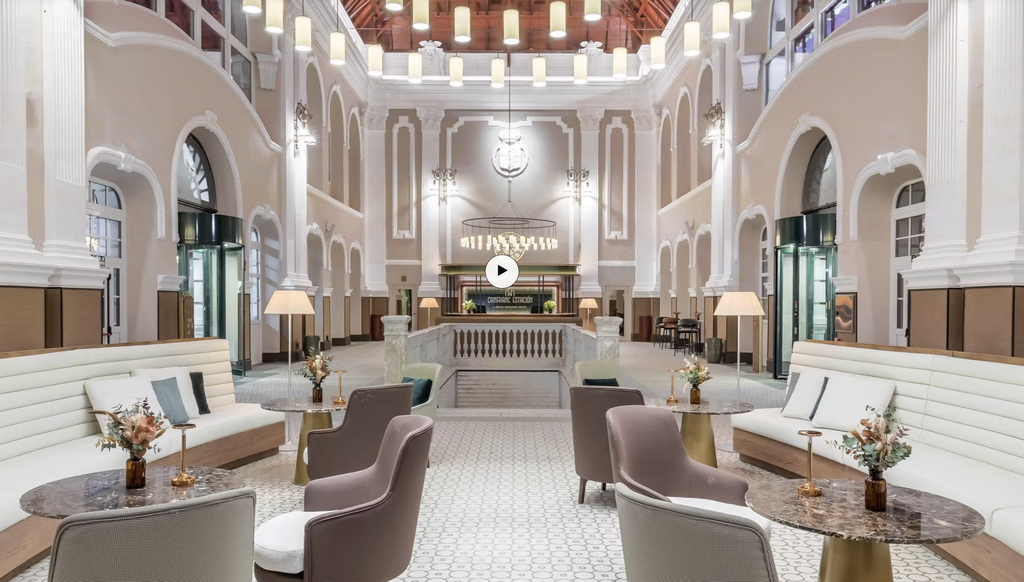
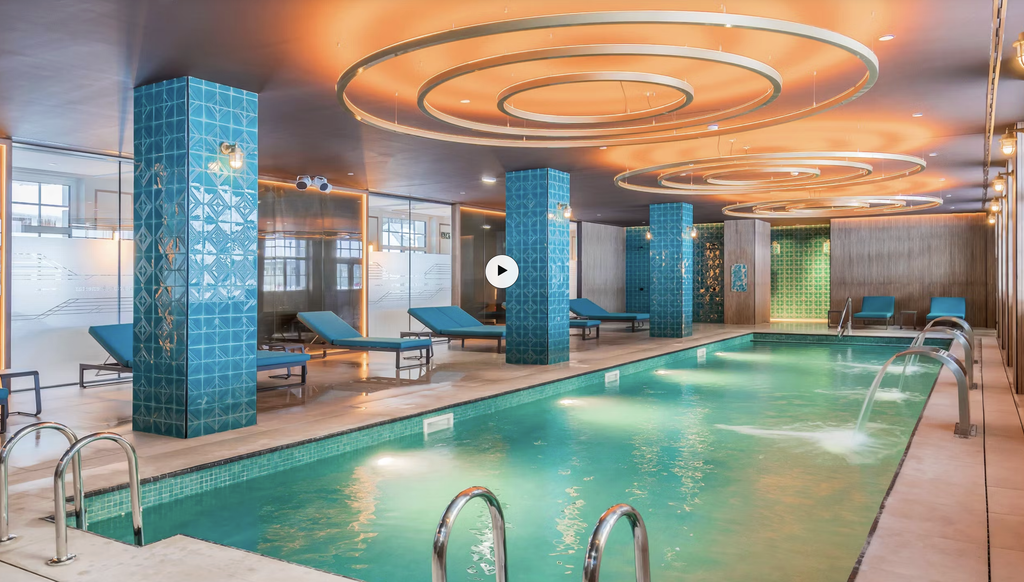
Following an extensive restoration, the main station building reopened as a luxury hotel while railway activity returned to a redeveloped section of the site.
Belle Epoque splendour
The building was inspired by French eclectic architecture and the grand railway terminals of the Belle Epoque.
Its steep slate roof, projecting windows and palatial dimensions evoke both Parisian architecture and the vast residences built during France’s Baroque and Napoleonic periods.
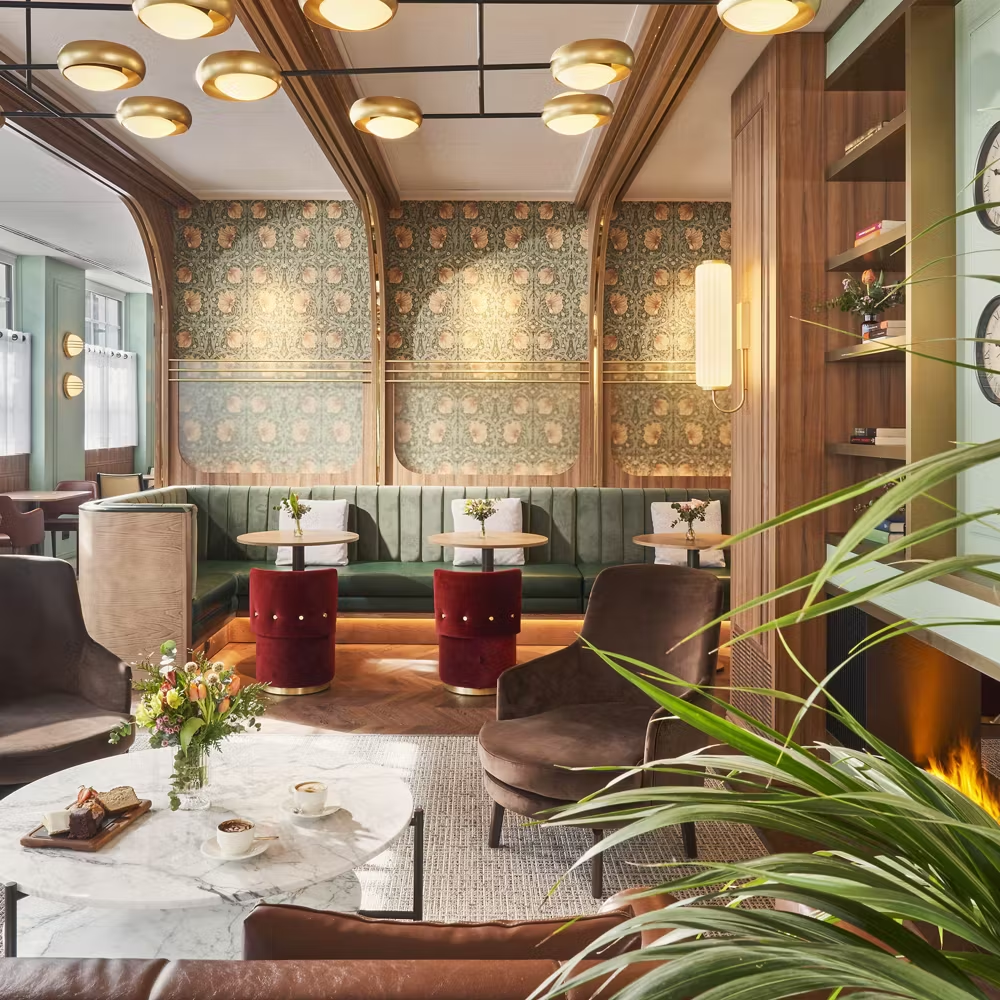
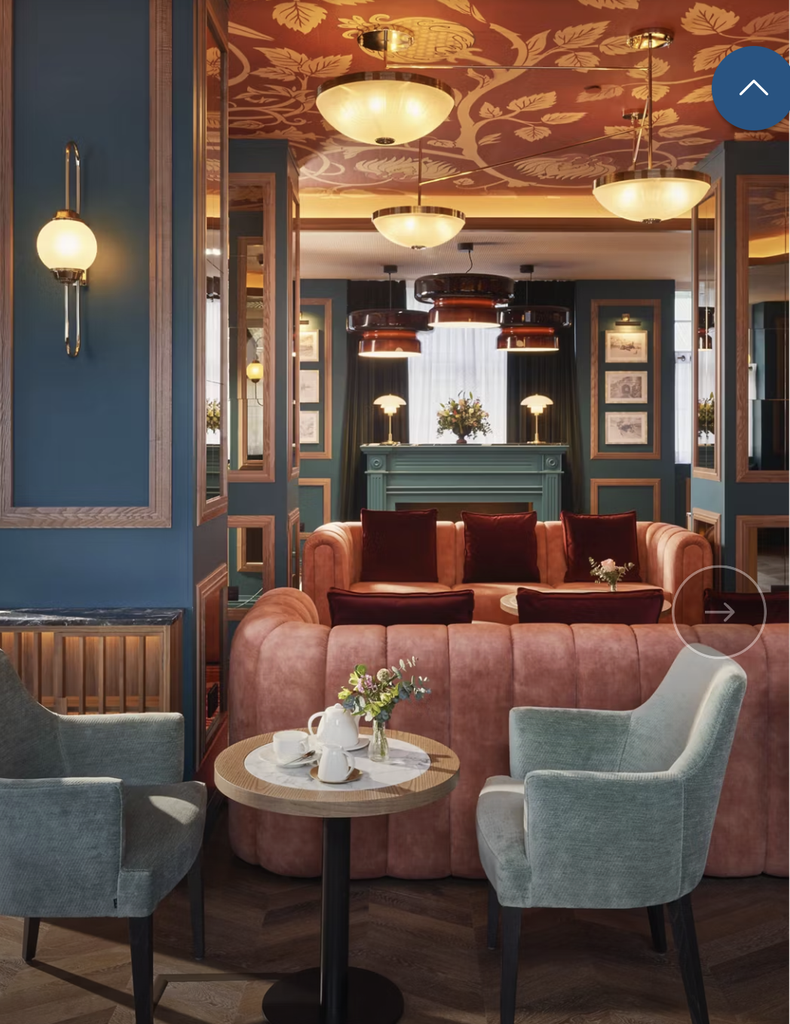
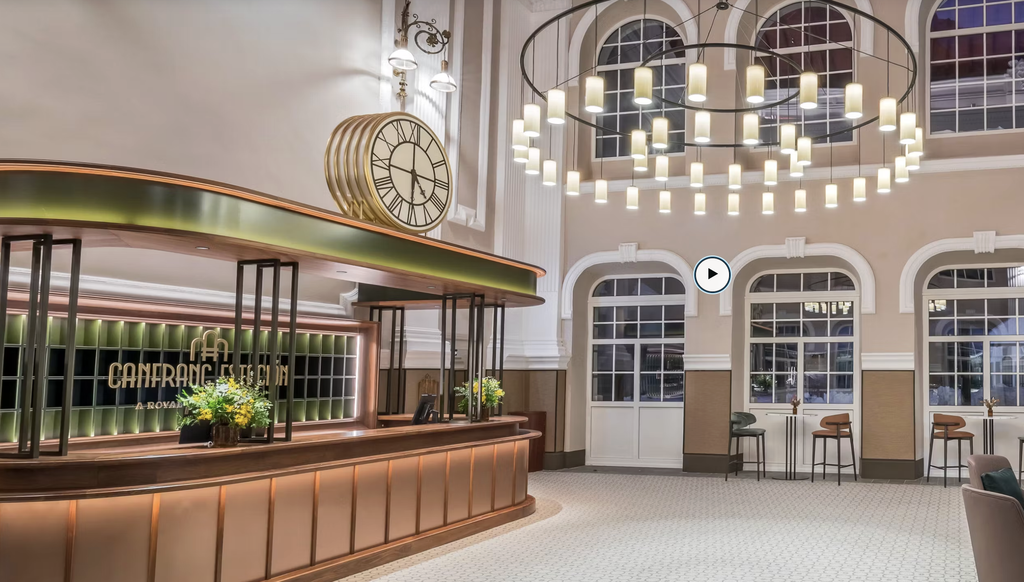
Inside, the restoration combines the elegance of the 1920s with contemporary luxury.
Rooms and corridors are decorated in ochre, bottle green and gold, while historic railway details include brass lighting, vintage luggage and original metal canopies.
Former train carriages have also been incorporated into the hotel’s design.
Parts of the old freight facilities remain visible, including the metal-framed warehouses where goods were transferred between Spanish and French trains.
Visitors can also explore the nearby bunkers built under Franco’s Pyrenean fortification programme to defend the border against a possible invasion.
Canfranc in autumn
The station is particularly striking during October and November, when the surrounding beech, oak and maple forests turn shades of gold, ochre and deep red.
Morning mist frequently descends into the valley, partly concealing the enormous building before giving way to views of the surrounding Pyrenean slopes.
Canfranc village itself is also worth exploring.
Its attractions include a medieval stone bridge, the Romanesque Church of the Assumption, the Renaissance Church of the Trinity and Pilgrims’ Hospital, and a 19th-century military fortress featuring underground galleries and a defensive moat.