
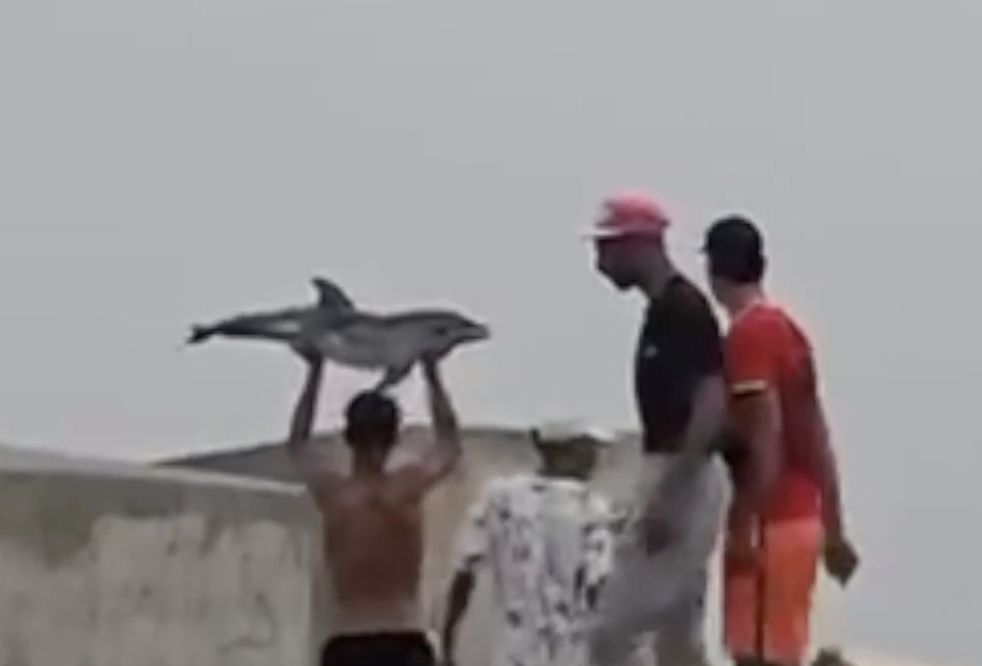
A video showing a baby dolphin being pulled from the sea in Ceuta before the animal was later found dead has sparked outrage in Spain.
The incident happened at Trampolin beach, where thousands of migrants have remained following the mass arrivals into the Spanish enclave on July 30.
Footage of the encounter was recorded by Ceuta-based influencer Juan Ruiz, who witnessed the incident and repeatedly urged those handling the dolphin to leave it alone, reports El Mundo.
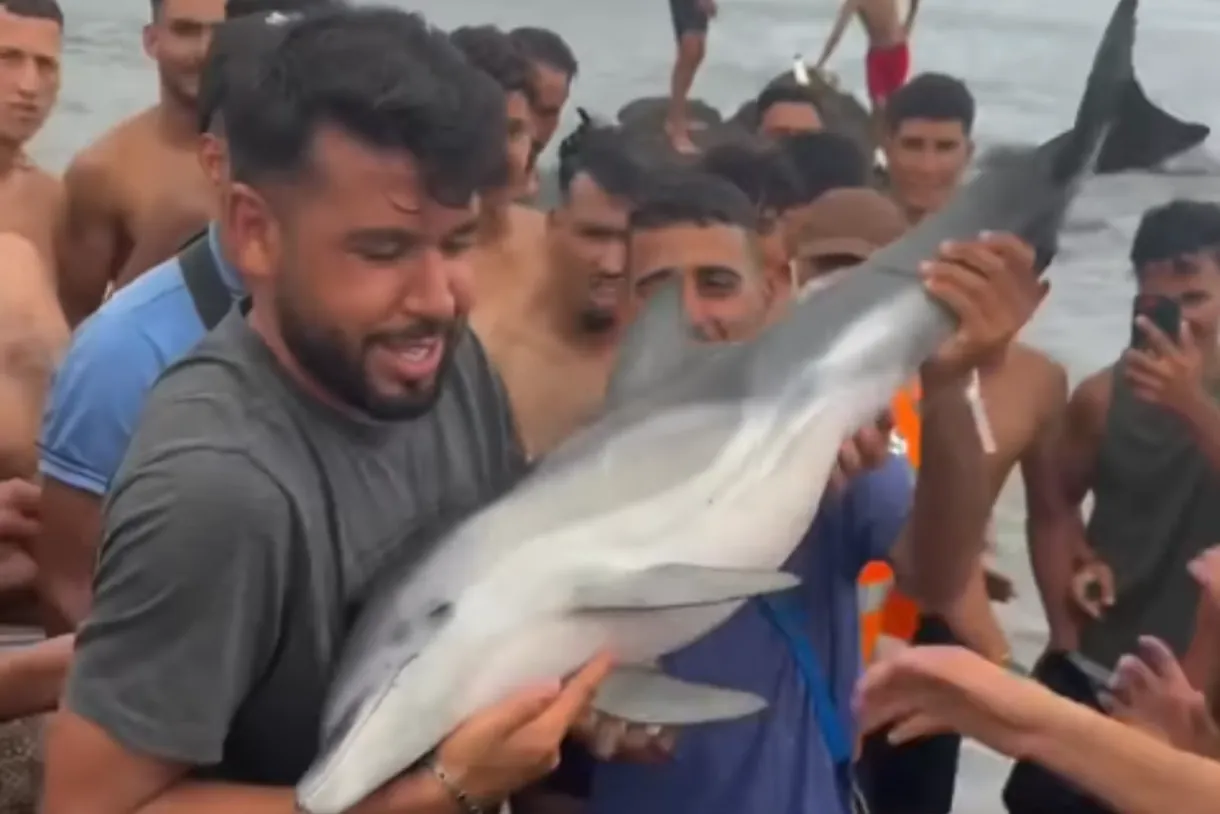
The young bottlenose dolphin can reportedly be seen still moving at the beginning of the footage after reaching the shoreline alive but apparently disorientated.
A group of people then pull the animal from the water and lift it into the air as others laugh and shout around them.
Ruiz can be heard warning them not to touch it.
‘No, you can’t eat that, it’s a dolphin!’ he tells the group at one point.
After the animal is returned to the sea, members of the group reportedly tell Ruiz that it is already dead and bleeding from its head.
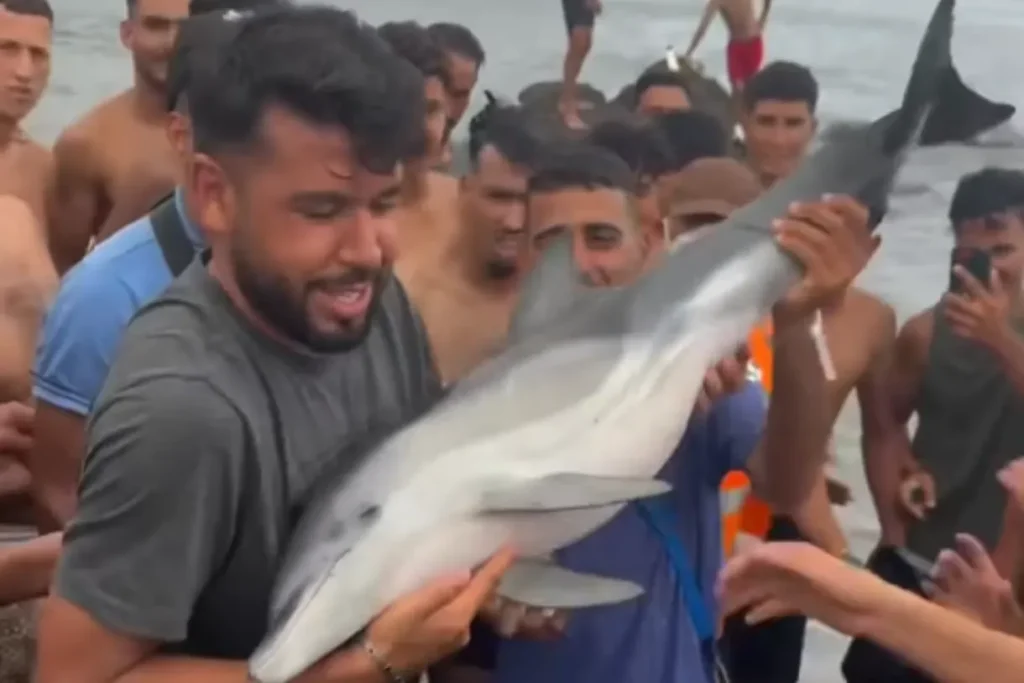
Ruiz then turns to the camera and says: ‘You’ve just seen that they’ve killed a dolphin.’
Environmental group DAUBMA has since filed a formal complaint with the Guardia Civil and made further allegations about what happened.
According to the association, the dolphin was forcibly removed from the water and struck on the head with a stick.
DAUBMA claims to have photographs, videos and social media screenshots documenting different stages of the incident, which have now been handed to investigators.
The organisation said one of the details raising suspicions about the animal’s death was blood visible beneath one of its eyes.
It also alleges that footage shows some of those present attempting to clean blood from the area.
The animal was a bottlenose dolphin (Tursiops truncatus), a protected species.
Spain’s Ministry for Ecological Transition (MITECO) lists the bottlenose dolphin among species subject to conservation protections.
Spanish environmental legislation provides for substantial fines for offences involving protected wildlife.
Under Law 42/2007 on Natural Heritage and Biodiversity, serious infringements can carry fines running into hundreds of thousands of euros, while the most serious offences can result in penalties of up to €2million.
Separate criminal liability, including potential prison sentences, can also arise in certain cases involving the killing or mistreatment of protected wildlife.
DAUBMA has formally asked the Guardia Civil to open proceedings, identify those allegedly involved and commission technical reports to establish precisely how the dolphin died.
It also wants the findings referred to Spain’s environmental prosecutors once the investigation has been completed.
The exact circumstances of the dolphin’s death have yet to be officially established.