
Orca interactions with boats in the Strait of Gibraltar have increased this year, according to a leading conservation group.
Renaud de Stephanis, president and coordinator of CIRCE (Conservation, Information and Research on Cetaceans), said encounters had previously fallen by as much as 80% following the introduction of recommendations for sailors.
However, he said there has been a renewed increase this summer, which he attributed to a failure to communicate ‘clear and updated guidelines’ to people navigating the area.
The encounters, which have occurred around the Iberian Peninsula since the summer of 2020, can result in significant damage to vessels, particularly their rudders.
However, De Stephanis stressed that the behaviour should be regarded as ‘play’ by the orcas rather than attacks.
What sailors should do
According to De Stephanis, one of the most effective ways of reducing the risk is for recreational vessels and sailing boats to navigate through shallow water of less than 30 metres whenever possible.
If orcas are spotted, he advises sailors not to stop the vessel but to continue moving towards shallower waters, which can discourage the animals from continuing the interaction.
CIRCE believes inadequate dissemination of official advice means some sailors remain unsure how to react when they encounter the animals.
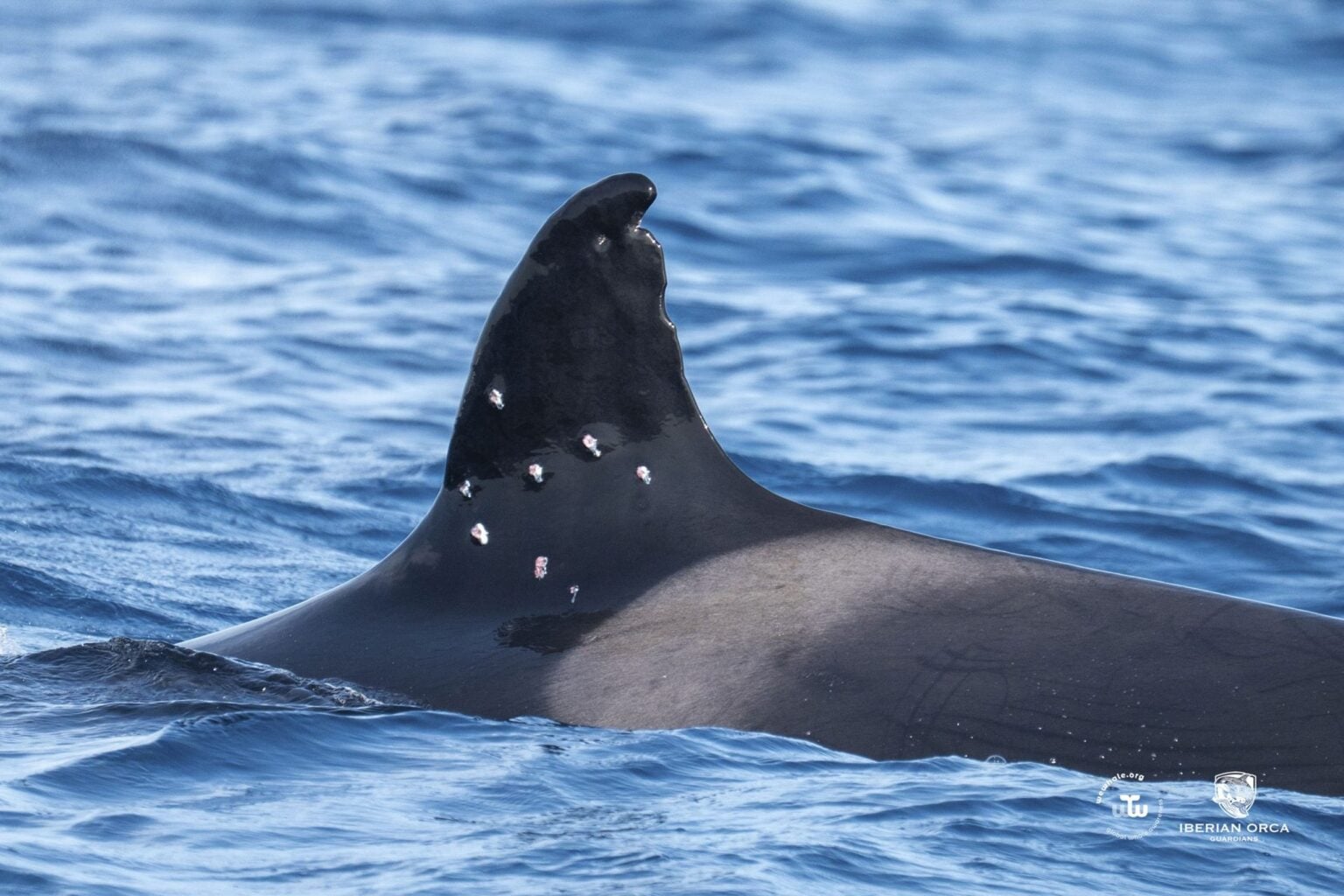
The organisation’s warning comes after an orca known as Toñi was recently discovered with injuries on its dorsal fin that appeared compatible with shotgun pellets.
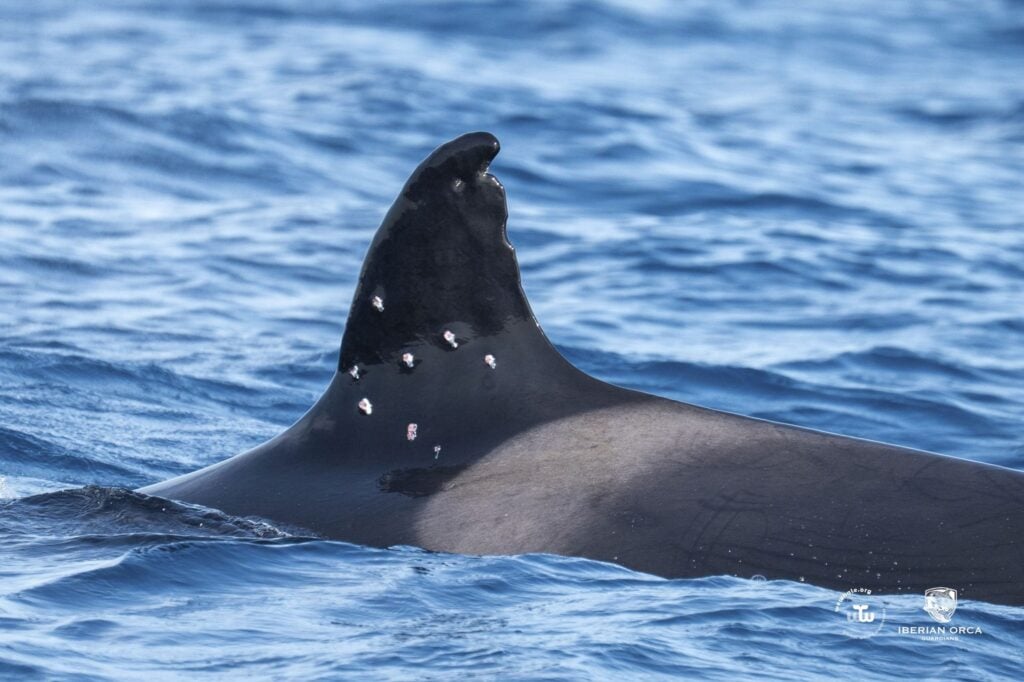
De Stephanis said the animal is being monitored and is currently ‘fine’, although conservationists are waiting for the wounds to heal.
He estimated that the injuries were sustained around three or four weeks ago.
Vulnerable population protected by law
The Strait of Gibraltar group is believed to comprise around 16 or 17 orcas, although only three have recently been sighted together.
De Stephanis said this was not necessarily concerning, as such separation is part of the species’ normal social dynamics.
The population found in the Strait of Gibraltar and Gulf of Cadiz is officially classified as vulnerable under Spain’s Catalogue of Threatened Species.
Spanish law prohibits deliberately killing, capturing, pursuing or disturbing the animals.
Breaches of wildlife protection legislation can result in fines of up to €2million, as well as potential criminal liability.
Interactions between the Iberian orca population and vessels have been recorded since the summer of 2020, particularly in Atlantic waters around Spain and Portugal.
Spain’s transport and environment ministries have issued guidance designed to minimise the risks to crews, vessels, navigation and the orcas themselves when the animals are sighted or begin interacting with a boat.