
Andalucia once again recorded more drug-trafficking arrests than any other region of Spain last year, with Malaga, Cadiz and Sevilla accounting for almost two-thirds of the total.
Some 5,267 people were arrested in the region for offences linked to drug trafficking in 2025, according to the latest annual statistics from the Interior Ministry’s Centre for Intelligence against Terrorism and Organised Crime (CITCO).
That represented 24.03% of all drug-trafficking arrests across Spain, although the figures also reveal a significant decline in the number of people being detained in the region.
In 2021, Andalucia recorded 8,082 arrests, which was equivalent to more than 35% of the Spanish total.
The number subsequently fell to 7,506 in 2022, 7,345 in 2023 and 6,725 in 2024, before dropping by a further 21.7% to 5,267 last year.
The decline is not unique to Andalucia. Across Spain, 21,918 people were arrested for drug trafficking in 2025, down from 24,012 the previous year and a recent peak of 25,527 in 2023.
However, one region is rapidly closing the gap.
Madrid recorded 5,238 arrests in 2025, representing 23.9% of the national total and putting it just 29 arrests behind Andalucia.
That is a dramatic increase from the 3,190 arrests recorded in Madrid in 2021.
The Valencia region came third with 3,968 arrests, or 18.1% of the Spanish total.
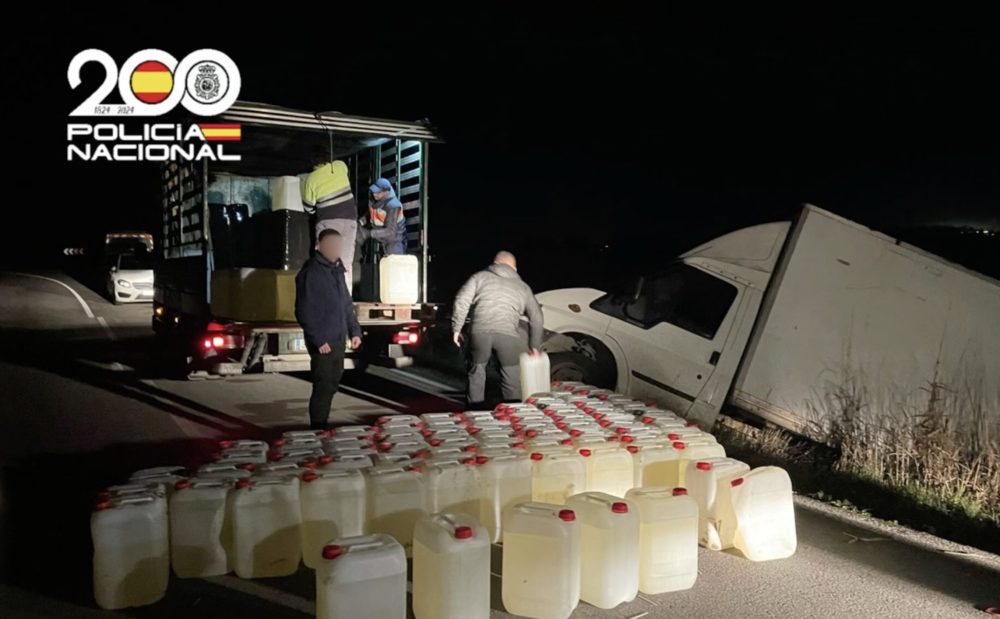
Malaga remains Andalucia’s drug trafficking hotspot
Within Andalucia, the figures show a particularly heavy concentration of arrests in three provinces.
Malaga, Cadiz and Sevilla together accounted for almost 65% of all drug-trafficking arrests in the region.
Malaga province – home to the Costa del Sol and a longstanding base for international organised crime networks – topped the table with 1,587 arrests, representing 30.15% of the Andalucian total.
Despite remaining comfortably in first place, arrests in Malaga fell by more than 15% compared with 2024.
Cadiz recorded the second-highest figure with 1,019 arrests, accounting for 19.35% of the regional total and representing a year-on-year decline of almost 27%.
Sevilla followed with 872 arrests, or 16.56% of the total, down around 22% on the previous year.
The remaining provinces were Granada with 620 arrests, Almeria with 451, Cordoba with 267 and Huelva and Jaen with 215 each.
Meanwhile, the number of drug-related complaints recorded by Spain’s security forces actually increased in Andalucia to 86,926, the highest figure in the country and narrowly ahead of Valencia’s 86,852.
Almost 200 tonnes of hashish seized
The CITCO figures also underline the extraordinary quantities of narcotics continuing to move through southern Spain.
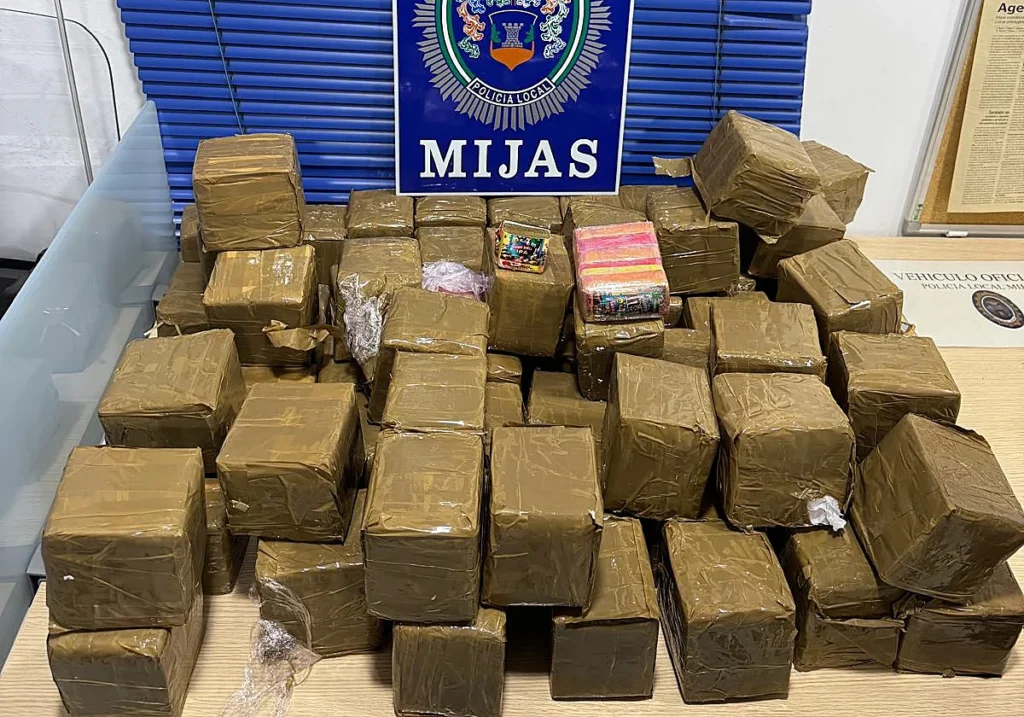
Security forces seized more than 198 tonnes of hashish in Andalucia during 2025, representing an increase of 38.6%.
The region’s proximity to Morocco and its long coastline have made the Strait of Gibraltar and surrounding areas one of Europe’s principal entry routes for cannabis resin.
Authorities have spent years attempting to disrupt the trade, including through the 2018 prohibition of the high-powered speedboats commonly known as narcolanchas.
More recently, Spain has also criminalised so-called petaqueo, which is the practice of supplying fuel to trafficking vessels at sea.
The Interior Ministry said the latest figures demonstrated the effects of increased police pressure on hashish smuggling routes.
Cocaine seizures halve
Elsewhere, authorities seized 25.6 tonnes of cocaine in Andalucia during 2025, accounting for approximately one-third of the total confiscated across Spain.
While still an enormous quantity, it was roughly half the 51.7 tonnes seized in the region in 2024, returning volumes to around their 2023 level.
The Interior Ministry attributed the fall partly to police operations targeting major trafficking organisations and maritime cocaine routes from across the Atlantic.
Andalucia also continues to dominate Spain’s illicit cannabis cultivation industry.
Police confiscated 461,796 marijuana plants in the region during 2025, accounting for half of all those seized across Spain.
However, that figure has also fallen dramatically in recent years.
In 2021, authorities seized more than 1.68 million cannabis plants in Andalucia.
Despite falling arrest numbers and marijuana seizures, the latest figures leave little doubt about the region’s continuing importance to Spain’s drug trade.
Read more Andalucia news at the Spanish Eye.