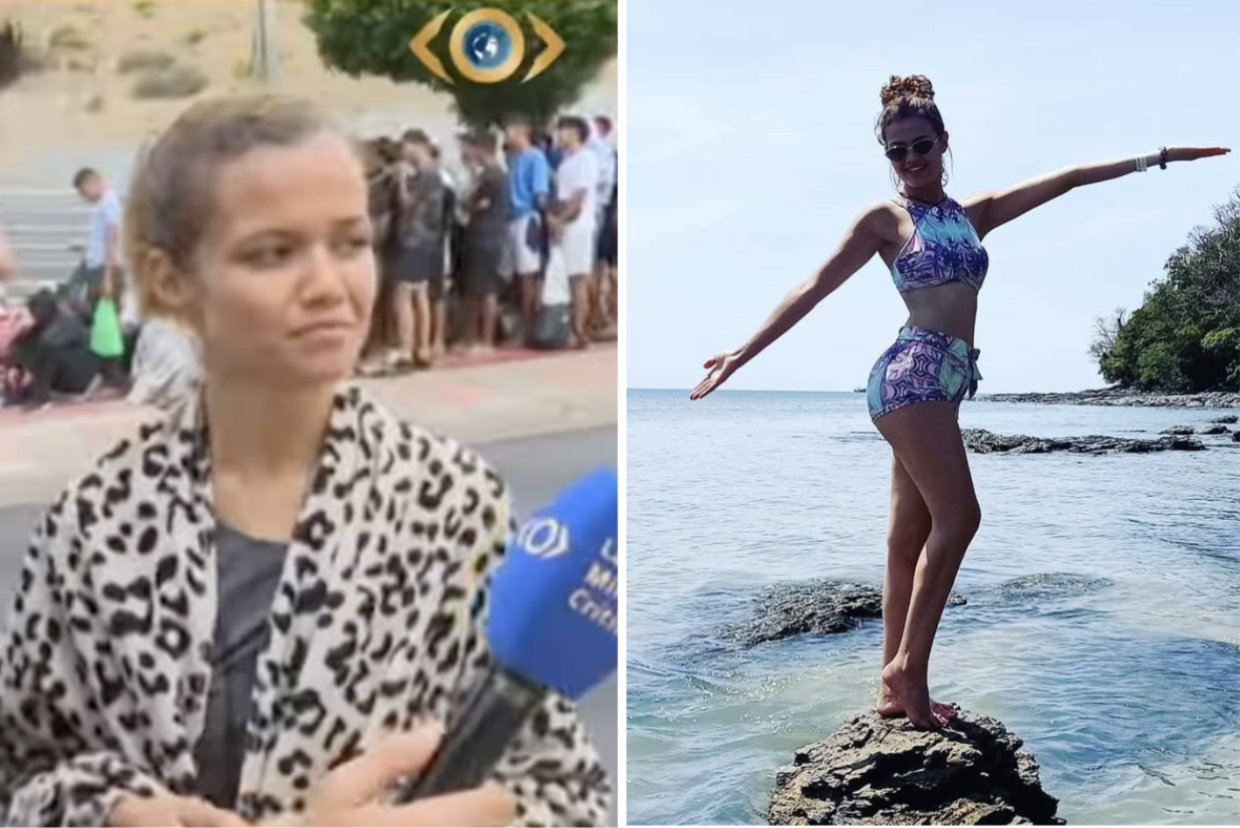

A young Moroccan woman who became one of the most recognisable faces of the migrant crisis in Ceuta is facing questions over her account of why she fled her homeland.
Wafae Atid, 28, has spent around three weeks sleeping outdoors in Ceuta after joining the tens of thousands of people who crossed the border from Morocco on July 30.
Speaking to cameras from a hillside in the Spanish enclave, Atid explained in English that she did not want to return home because of restrictions imposed on her by her family.
She said she had been prevented from studying, travelling and choosing how she dressed, adding that women were expected to remain at home.
Atid also said she had stopped believing in Islam and wanted to reach Barcelona, find work in hospitality and build a new life.
She appeared close to tears while recounting her story.
Atid has also spoken about the precarious conditions faced by female migrants sleeping rough in Ceuta.
She told Reuters that women had established a separate camp near a police station because they felt unsafe among the overwhelmingly male migrant population elsewhere.
However, attention has since turned to the extensive public record Atid herself created online before entering Ceuta.
A very different life on Instagram
Her social media profiles depict a well-travelled, cosmopolitan young woman whose lifestyle appears difficult to reconcile with at least some elements of her initial description of her life in Morocco.
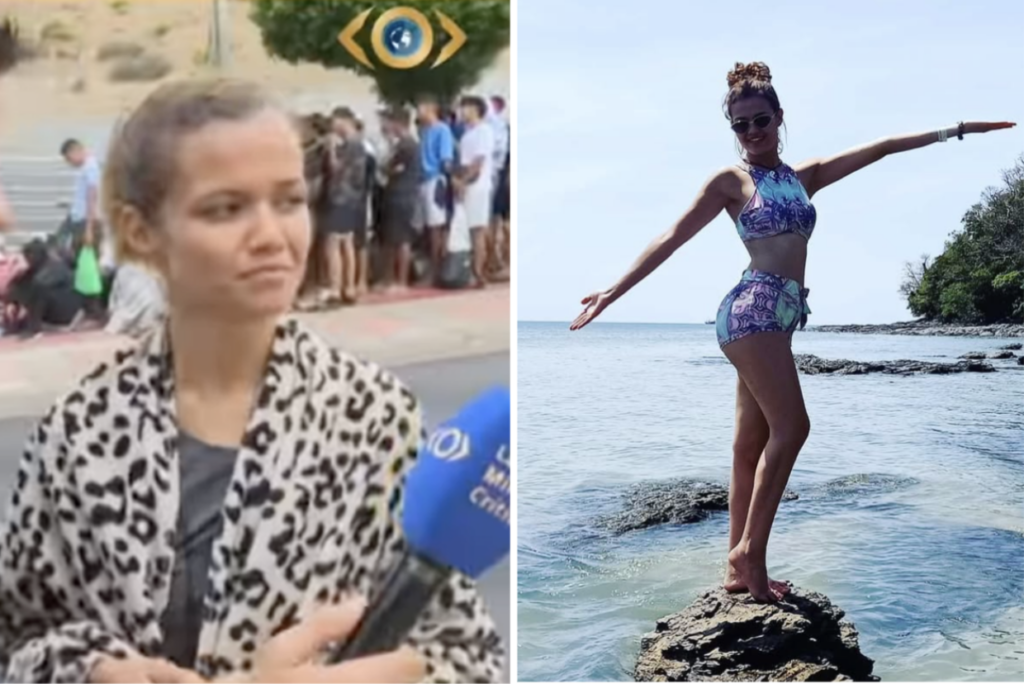
Photographs show the blonde-haired Atid wearing shorts and strappy tops in Dubai, posing on beaches and travelling abroad, while other images show her wearing traditional Moroccan clothing.
Her online professional history also indicates that she studied in Dubai and worked in modelling and hospitality, as well as spending time in Gulf countries.
In one Instagram post from a tropical beach, she wrote: ‘Life without freedom is miserable.’
Another photograph circulating online appears to show her posing alongside a portrait of Morocco’s King Mohammed VI.
While it does not prove that Atid did not experience familial, religious or social pressure behind closed doors, the images have raised questions about the sweeping impression created by her initial account that she had been denied the freedom to study, travel or choose how she dressed.
Moroccan outlet Le360 subsequently highlighted her previous lifestyle, prompting a wave of criticism – including abusive and degrading comments – on her social media accounts.
Atid has now responded to her critics herself.
‘Yes, that was my private life’
She acknowledged that she had previously travelled and enjoyed freedoms visible on her social media accounts, but insisted that this did not undermine her reasons for wanting to leave Morocco.
‘I would say 50% of those who emigrated and entered Ceuta are economically better off than me,’ she said.
‘There are people who have restaurants and cafes who entered Ceuta.’
Addressing criticism of her photographs directly, she added: ‘Don’t come and tell me, ‘You lived well, you travelled’. Yes, that was my private life and I could do those things. But that’s none of your business.’
Atid said what she was searching for was not simply greater wealth.
‘I was looking for security. I was looking for a mentality similar to mine,’ she said.
She also acknowledged travelling frequently to Gulf countries but said they did not offer the type of future she wanted.
‘I want a country that gives me papers, that treats me equally as a citizen and where I can stay forever,’ she said.
Speaking to Telecinco’s La Mirada Critica, she also explained how she moved to Dubai just before Covid-19, and was working there for some time.
However, she said she became ill, lost her job and moved back to Morocco.
The explanation puts a different emphasis on her motivations from some of her earlier public comments and has fuelled debate about why she entered Ceuta.
Economic aspiration alone does not normally establish a right to international protection in Europe, whereas persecution connected to religion, gender or other protected grounds can be legally relevant.
That distinction inevitably means asylum authorities must examine the individual circumstances and credibility of each claim.
A person’s social media presence can form part of that wider picture, but cannot by itself establish whether allegations of private persecution are true or false.