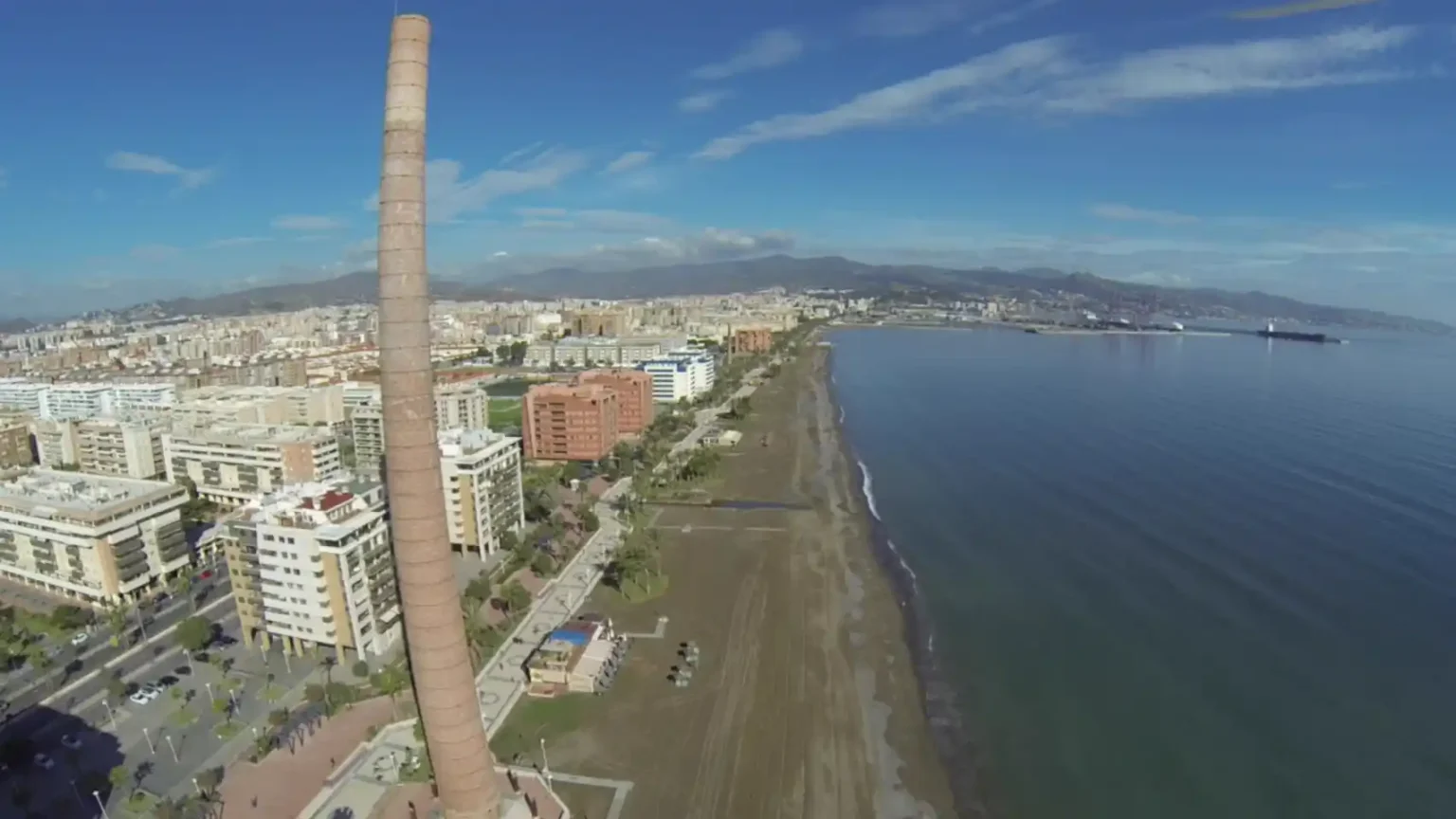

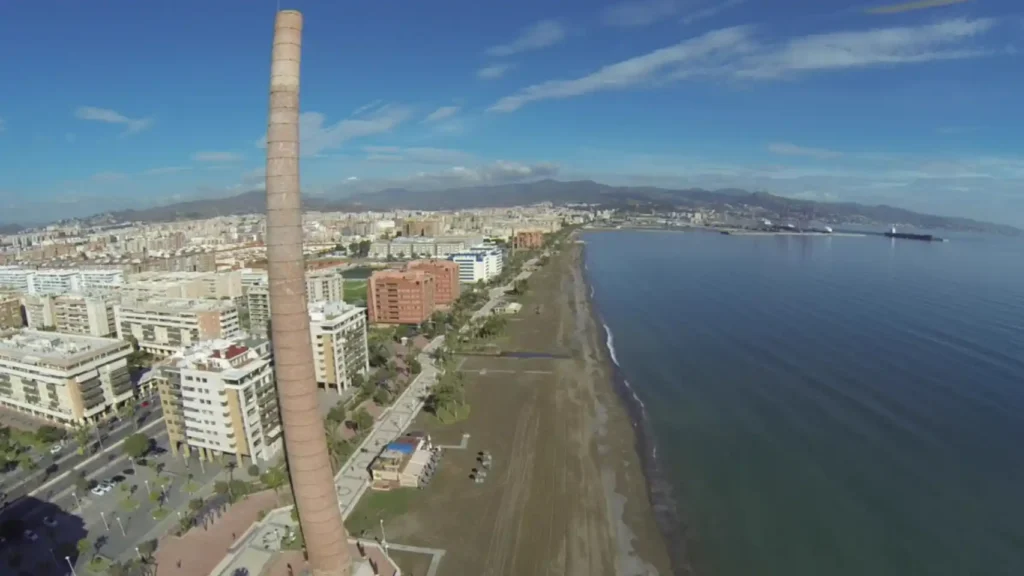
Chiringuitos and other businesses in Malaga have reported huge losses after sewage spills forced the closure of several beaches at the height of the summer season.
One chiringuito on La Misericordia beach said its reservations had plunged from 150 to just 50 as red flags kept swimmers out of the water.
The crisis, which has affected six beaches in Malaga city and another four in neighbouring Benalmadena, has also sparked a fierce political row over the state of the city’s sewage infrastructure.
The contamination followed intense rainfall during the early hours of Saturday, the first day of Malaga’s Feria, which caused sewage systems to overflow and discharge into the sea.
Tests subsequently detected excessive concentrations of E. coli, forcing authorities to prohibit swimming at several of the city’s busiest beaches during one of the most lucrative periods of the year.
Conditions improved on Tuesday when new tests by municipal water company Emasa showed a general reduction in E. coli levels.
That allowed El Palo and Campo de Golf-San Julian to reopen.
However, red flags remained in place at Guadalmar, Sacaba, La Misericordia and San Andres.
The closures have now lasted several days and chiringuito operators say the financial consequences are becoming increasingly severe.
‘This is a loss of money,’ workers at affected businesses told EFE.
Angel, a waiter at Casa Lucas on La Misericordia, said the restaurant had seen reservations collapse.
‘We’ve gone from having 150 reservations to 50, and you really notice that,’ he said, pointing towards the establishment’s empty terrace.
Alejandro, from La Campana Playa, said the impact went far beyond people simply deciding not to swim.
‘A lot of people come before going for a swim, for a beer, or afterwards for a coffee, but if they’re not swimming…’ he said.
Fears over damage to Malaga’s tourism image
The Junta de Andalucia’s Tourism Minister, Manuel Gavira, said his department has begun assessing the potential impact on hotels, restaurants, tourism businesses and Malaga’s international image.
The timing is particularly damaging, with the contamination occurring during August and coinciding with the city’s Feria.
‘The priority is to protect people’s health and restore normality as quickly as possible,’ Gavira, of Vox, said.
But he warned that this was the third such incident in less than a month and said it was necessary to determine the causes and take action to prevent further episodes.
The controversy has meanwhile descended into a political battle, with every opposition group on Malaga City Council, comprising PSOE, Con Malaga and Vox, attacking the local government.
Opposition politicians have described the closures as a potential ‘catastrophe’ for Malaga’s tourism image and demanded an investigation into Emasa’s management of the sewage system during the storm.
Council: ‘It’s a normal situation’
Malaga City Council has strongly rejected suggestions that the contamination was caused by deficiencies in its sewage network.
Environmental Sustainability councillor Penelope Gomez described what happened as ‘a normal and common situation’ for coastal cities following intense rainfall.
‘I want to make it very clear. It is not a deficiency in our sewage networks, it is a normal situation,’ she said.
Gomez argued that residents in Malaga were simply less accustomed to the phenomenon because heavy summer rainfall is relatively unusual.
‘In Catalonia, for example, they are very accustomed to beaches being closed in the days after a storm,’ she said.
‘What happens here is that we’re not used to it raining in summer.’
‘How much is Malaga losing?’
PSOE spokesman Mariano Ruiz Araujo said the episode undermined Malaga’s attempts to market itself as an international tourism destination.
Con Malaga spokeswoman Toni Morillas also demanded an investigation into Emasa’s response to the storm.
‘We cannot accept as normal that every time it rains, overflow systems open and contaminated water, waste and wipes end up reaching the sea,’ she said.