
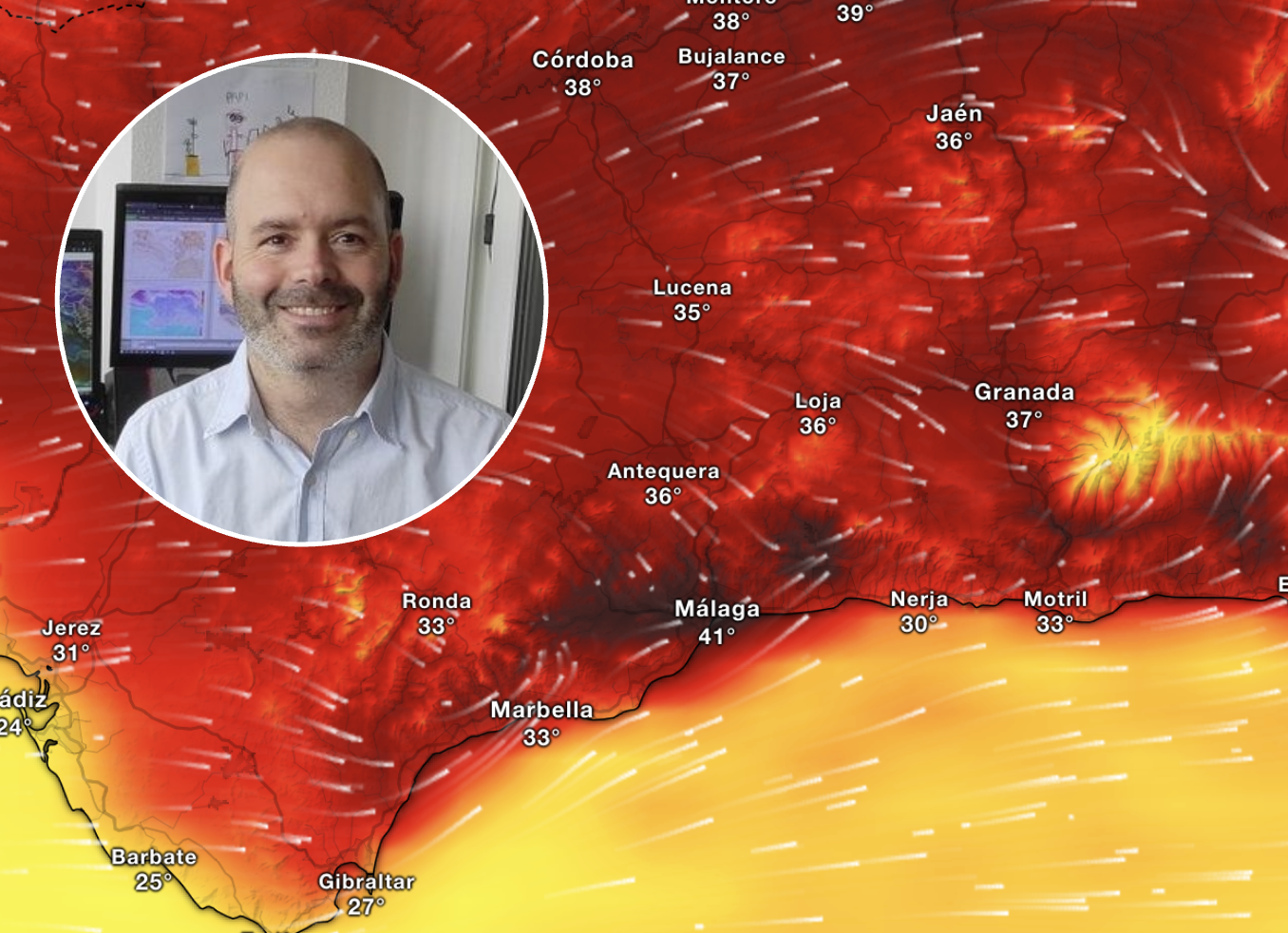

Spain’s suffocating heat this year is ‘nothing normal’ and could continue for weeks, state weather agency Aemet has warned.
According to the service’s top meteorologist and spokesman Ruben del Campo (pictured above inset), the first half of this summer has already been the hottest ever recorded.
Speaking to EFE, he said Spain has seen ‘almost no respite’ from extreme temperatures since the start of June, with many parts of the country experiencing unusually intense heat since the end of May.
‘Since June 1 there has hardly been a single day with temperatures below average,’ he said. ‘There has been virtually no break.’
His comments come as Aemet issued its third official heatwave warning of the summer.
Hottest start to summer on record
According to AEMET, the period between June 1 and July 15 has been the warmest first half of summer since records began.
It has surpassed the previous record-holders – 2025, 2022 and 2015.
Del Campo said the defining feature of this year’s weather has been not just the high temperatures, but their persistence.
‘In much of Spain, the intense heat didn’t begin in June – it started at the end of May, and since then there has been very little relief.’
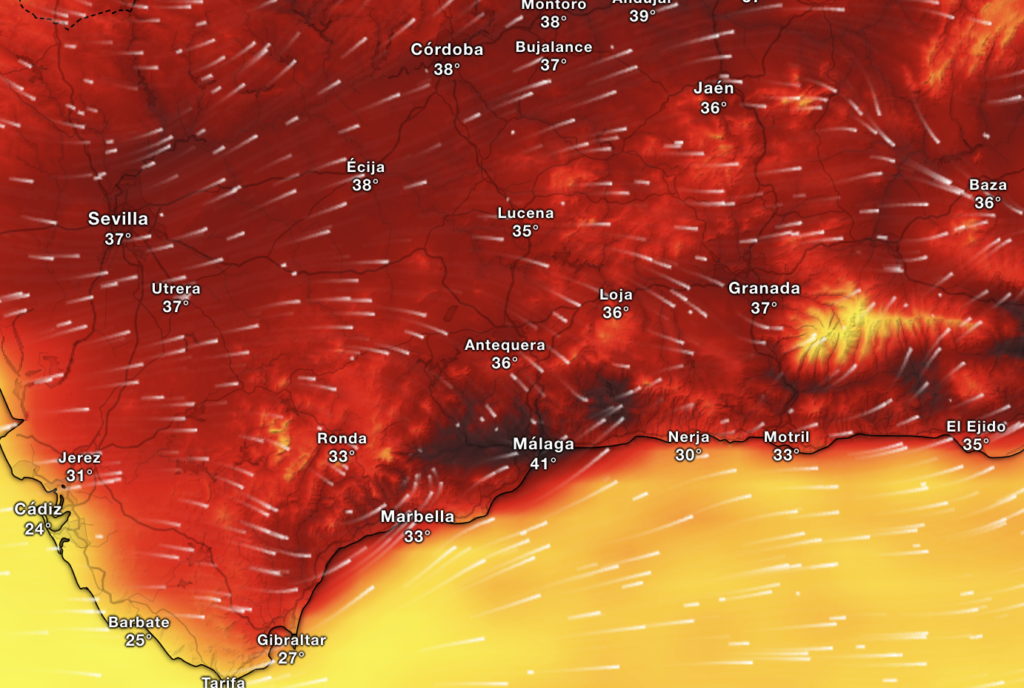
Heatwaves are becoming far more common
The meteorologist said Spain has seen a dramatic increase in the frequency, intensity, duration and geographical spread of heatwaves in recent decades.
While June heatwaves were almost unheard of between 1975 and 2000, they are now five times more common than they were during that 25-year period.
He pointed to the summers of 2022 and 2025 as recent examples of prolonged extreme heat.
Spain experienced 41 heatwave days in 2022 and 36 days in 2025.
‘In 2022, almost two out of every five summer days were officially classified as being part of a heatwave,’ Del Campo said.
‘In 2025, it was around one in every three.’
Why is it staying so hot?
According to Aemet, a combination of powerful high-pressure systems, atmospheric stability, weak winds and clear skies has allowed the heat to persist for weeks.
On some occasions, very hot air has also arrived from North Africa, further pushing up temperatures.
However, Del Campo said the dominant factor has been the repeated formation of strong anticyclonic ridges over the Iberian Peninsula, trapping hot air over Spain.
Climate change is making heatwaves worse
Del Campo said Spain now experiences around 15 more heatwave days every summer than it did in the 1970s.
Modern heatwaves also affect an average of three more provinces than they once did and have become steadily hotter, with extreme temperatures increasing by around 0.3C per decade.
‘That may not sound like much, but when we’re talking about extreme temperatures, it’s a very significant increase,’ he said.
He added that human-caused climate change is clearly driving the warming of both the atmosphere and the oceans, while scientists are also investigating whether it is increasing the frequency of the weather patterns that produce prolonged heatwaves across Spain.
More heat likely in August
Looking ahead, Del Campo warned there is little sign of sustained relief.
Forecasts for August and the remainder of the summer continue to point towards above-average temperatures, meaning further heatwaves cannot be ruled out.
‘There could also be thunderstorms that bring some temporary relief,’ he said, ‘but above-normal temperatures remain the most likely scenario for the rest of the summer.’




Brilliant and very informative…thank you.