
Marbella is finally set to approve an urban development plan after 40 years of chaos marked by corruption and illegal construction.
The update is expected to open up 13 million square metres of land that will bring more homes, businesses and infrastructure.
An extraordinary council meeting will be held on September 18 to give final approval to the Plan General de Ordenacion Municipal (PGOM).
As well as classing more land as ‘developable’, the new framework will provide developers and property owners with much-needed legal certainty.
It will also make Marbella the first municipality in Andalucia to approve its general planning framework under the region’s new LISTA planning law.
Despite its transformation into one of Europe’s most valuable luxury property markets, the municipality is still operating under an urban development plan dating from 1986.
Attempts to replace that four-decade-old framework have repeatedly become entangled in the city’s extraordinary planning history.
Marbella was governed by the Grupo Independiente Liberal (GIL) between 1991 and 2006, an era synonymous with widespread planning corruption and illegal development.
The crisis culminated in the Spanish government dissolving Marbella Town Hall in 2006.

A development plan drawn up under the GIL administration in 1998 was never approved by the Junta de Andalucia.
Another attempt came in 2010, when the PP administration approved a revised PGOU designed, among other things, to address around 16,500 illegally built homes dating from the GIL era through a compensation system.
But that plan was annulled by Spain’s Supreme Court in 2015, forcing a return to the 1986 planning framework.
Work on the latest replacement began in 2020, initially under Andalucia’s former LOUA planning legislation.
The process was then adapted after the region approved its new LISTA land law in December 2021.
Under LISTA, planning is divided between the PGOM, which establishes the municipality’s broader development model, and a separate Plan de Ordenacion Urbana (POU) dealing specifically with urban land.
The PGOM received initial approval in March 2023, while the preliminary POU was approved in January 2024.
Now, after obtaining more than 60 favourable sectoral reports required during the process, the PGOM is heading for its definitive council vote.
Urban land to increase
One of the biggest changes concerns the amount of Marbella classified as urban land.
The 1986 plan provides for approximately 40 million square metres, while the new PGOM will increase that figure to around 53 million square metres.

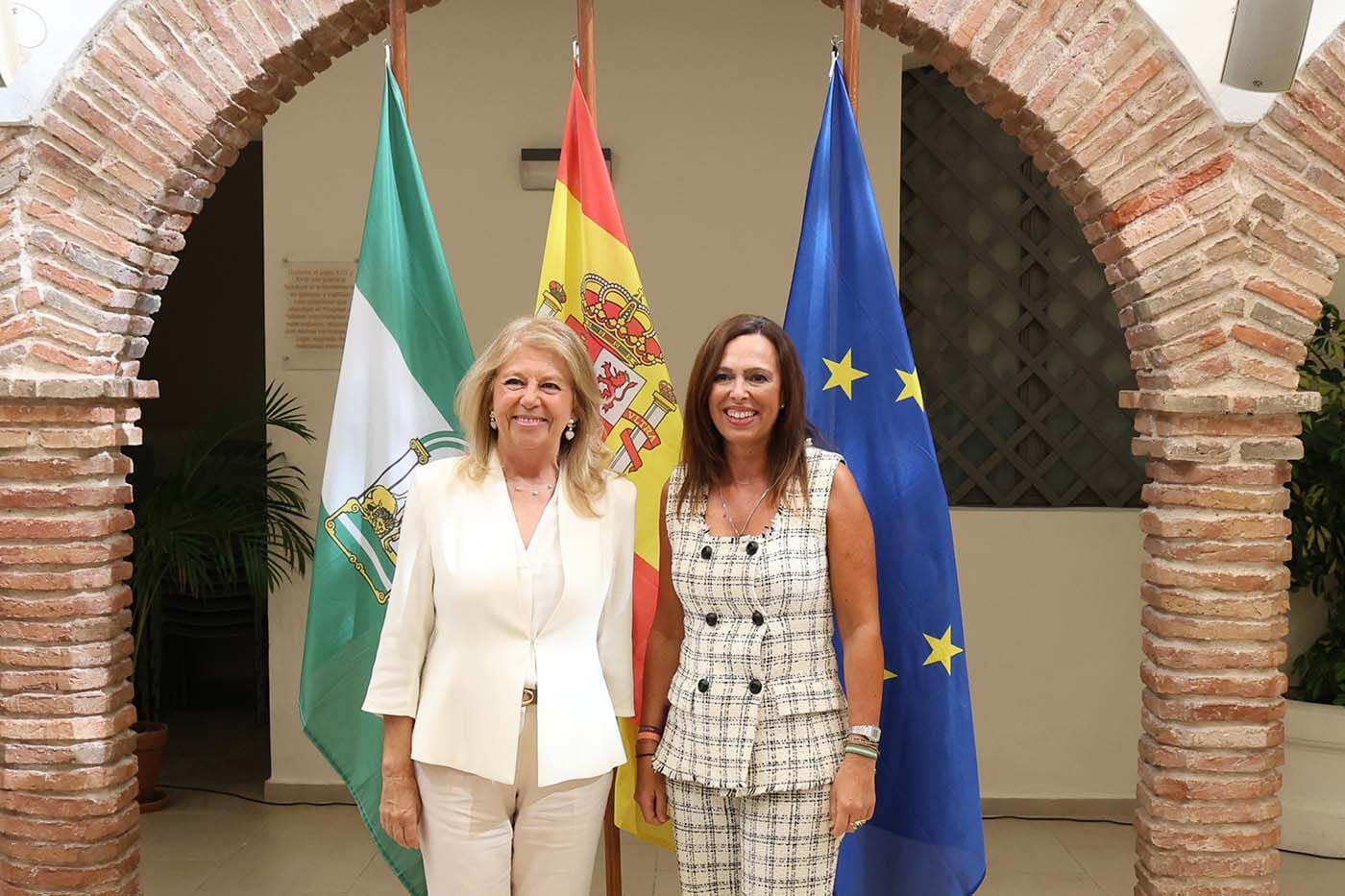
Mayor Angeles Muñoz said the additional capacity would allow Marbella to plan new infrastructure and facilities, expand green spaces and facilitate the construction of housing.
Housing affordability is a particularly important part of the argument being made for the new model.
Muñoz said Marbella needs to make it easier for young people and those who work in the municipality to actually afford to live there, amid intense pressure on the local housing and rental markets.
‘I think all of this brings down the price of housing, but above all it provides us with major facilities,’ she said.
Potential strategic projects that could be accommodated under the new planning framework include a new Palace of Justice, as well as road improvements and other infrastructure.
Andalucia’s Housing and Territorial Planning Minister Rocio Diaz said the PGOM would finally provide Marbella with the ‘legal certainty’ it needs in urban planning.
Developers welcome new plan
Business and property groups have also welcomed the impending approval.
Ricardo Arranz, president of the Andalucian Federation of Developers and Residential Tourism, said greater legal certainty would make Marbella more attractive to investors.
But he also called for ‘common sense’ when approving future developments, arguing that access roads, parking and other infrastructure must keep pace with construction.
Arranz highlighted the traffic congestion experienced in parts of Marbella, particularly during the summer, and said the new framework needed to address infrastructure problems alongside development.
He also argued that planning should be reviewed every four or five years to assess what is and is not working.
Juan Jose Gonzalez, president of business organisation CIT Marbella, described definitive approval of the PGOM as a ‘turning point’ for the city.
Read more Andalucia news at the Spanish Eye.