
Pedro Sanchez has issued a warning over the growing ‘far-right threat’ in Europe after Germany’s AfD secured a firm election victory in the region of Saxony-Anhalt.
The Alternative for Germany (AfD) stormed to first place in Sunday’s election in the eastern state, winning 43.8% of the vote.
It finished more than 26 points ahead of the Christian Democratic Union (CDU) of German Chancellor Friedrich Merz, which secured just 17.2%.
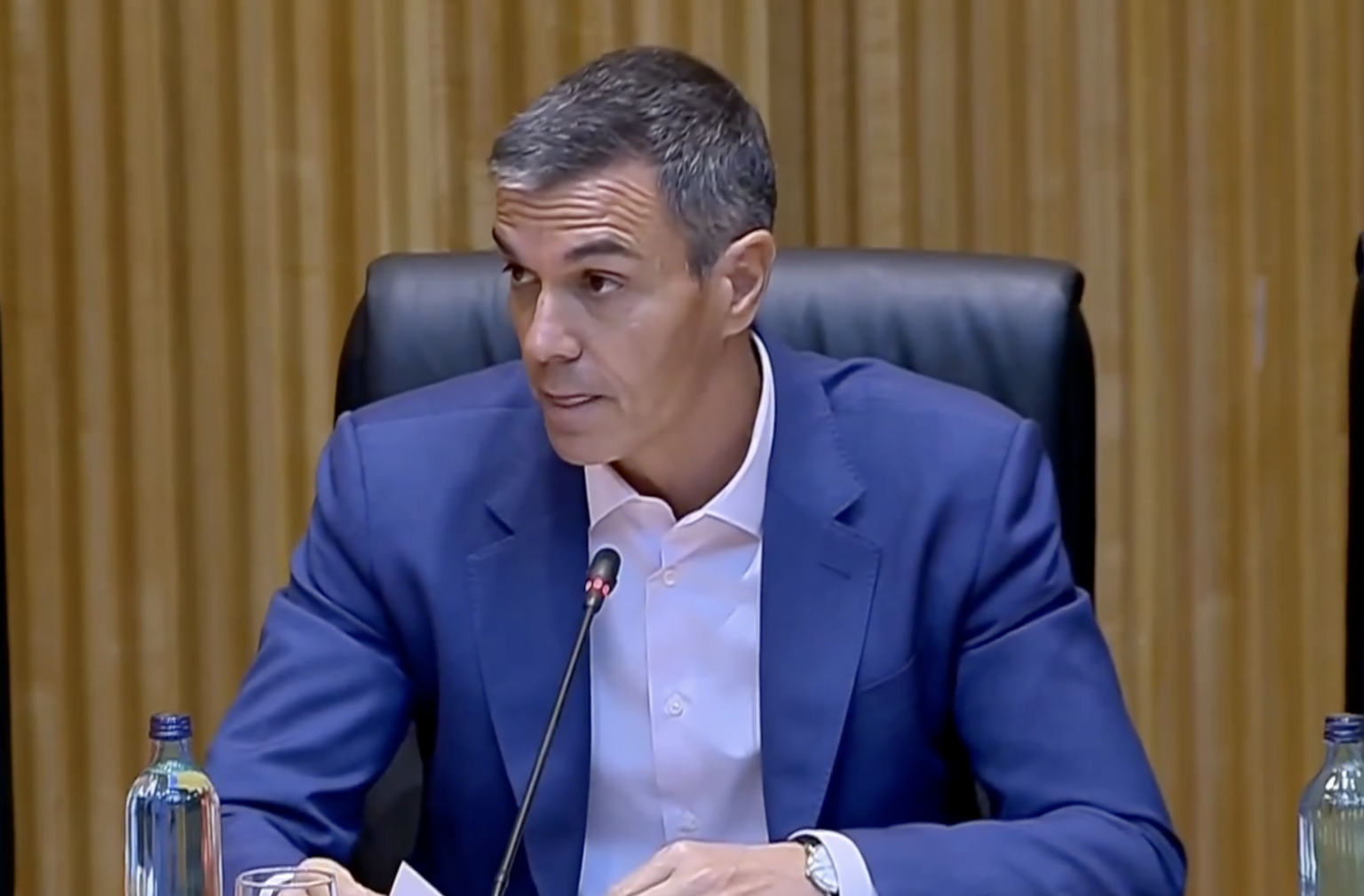
Reacting to the result on Monday, Sanchez said it should serve as a warning for Spain and the rest of Europe.
‘What we saw yesterday in Saxony-Anhalt is a warning that the far-right threat is gaining ground in Europe and the world,’ the Spanish PM said.
Sanchez blamed the advance in large part on what he described as the ‘surrender’ of Europe’s traditional right.
Speaking in Congress at the beginning of Spain’s new political term, the PSOE leader argued that the result demonstrated why progressive governments and policies were ‘more necessary than ever’.
He presented his own coalition government as being at the ‘forefront of the advance against the reactionaries’.
The AfD’s result represents a resounding victory for the hard-right party in Saxony-Anhalt.
It took 43.8% of ballots, compared with 17.2% for the CDU, 9.3% for the Social Democratic Party (SPD), 8.9% for the Greens and 8.6% for The Left.
The left-wing Sahra Wagenknecht Alliance (BSW) received 5.3%.
Despite the scale of the AfD victory, its regional leader Ulrich Siegmund fell three seats short of the absolute majority required to govern alone.
‘More necessary than ever’
Sanchez seized on the result to make the case for the continuation of his own left-wing government in Spain.
He said the German election was also a ‘confirmation’ that ‘a progressive coalition government is more necessary than ever’.
‘The data backs us up,’ Sanchez added.
‘We’ve been at it for eight years and, next year, another four.’
The latter comment also appeared to signal Sanchez’s determination to remain in power following Spain’s next general election, which is due in 2027 if the current legislature runs its full course.
The intervention comes as Spain faces its own debate over the growing electoral strength of the hard-right Vox party.
Recent opinion polls have shown Santiago Abascal’s party gaining support, while immigration has become an increasingly prominent political issue following the migrant crisis in Ceuta.
A recent More in Common poll put Vox on 20.3%, up 3.2 percentage points from its previous survey.
A separate 40dB poll for El Pais and Cadena SER put the party lower, at 17.8%, but found that combined support for Vox and the conservative Partido Popular had reached 50.2% for the first time in the polling series.