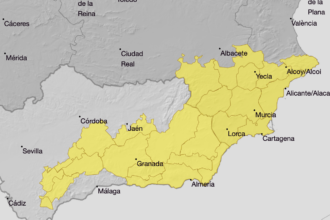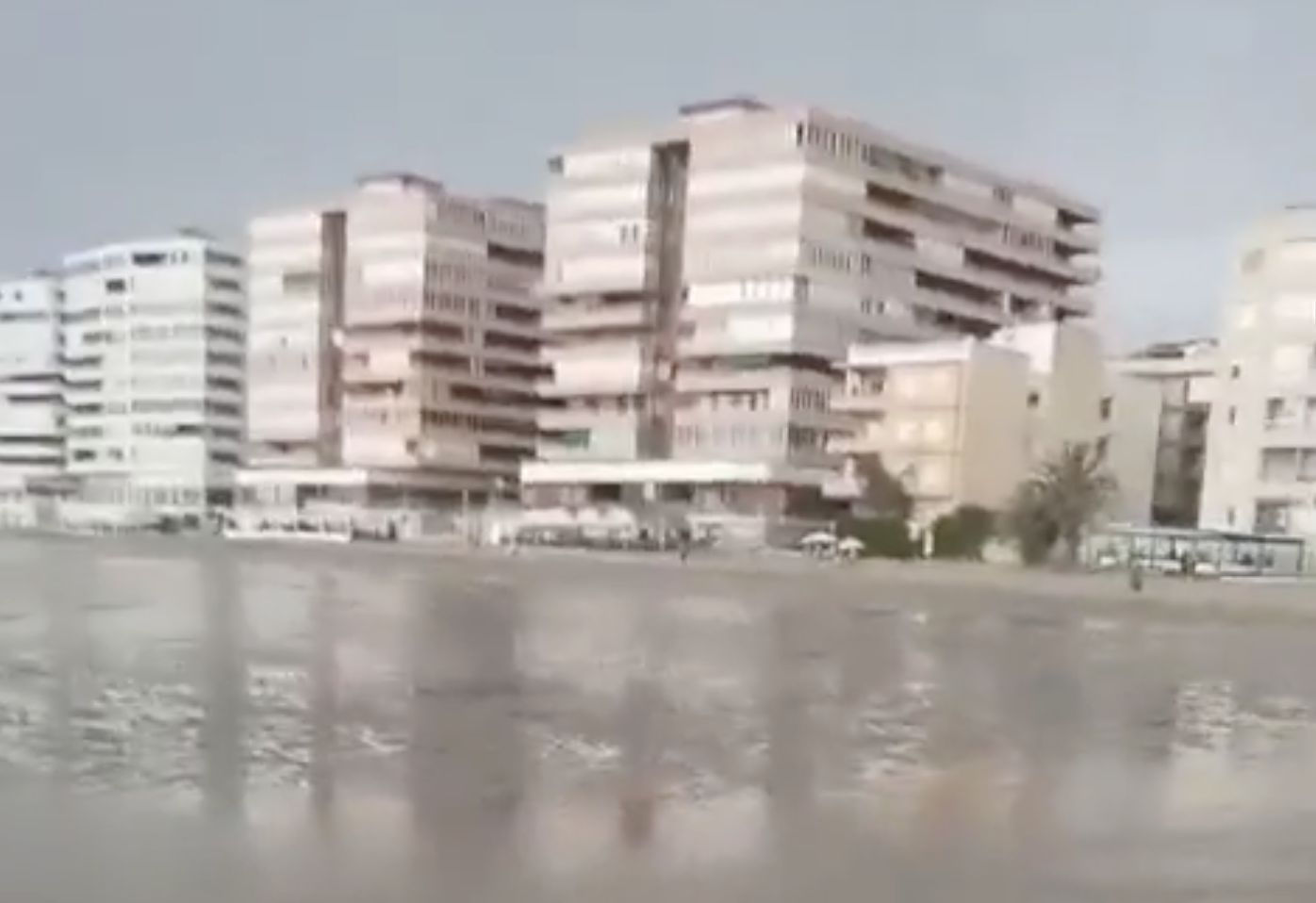

Beachgoers in Torrevieja witnessed an extraordinary sight on Friday as the sea suddenly retreated from the shoreline during a meteotsunami event.
Footage from Torrevieja and Guardamar del Segura, in Alicante province, showed the water pulling dramatically away from beaches, exposing stretches of seabed that would normally be submerged.
The unusual phenomenon prompted both town halls to raise red flags and temporarily ban swimming.
Unlike an earthquake-generated tsunami, a meteotsunami is caused by rapid changes in atmospheric conditions, which can generate sudden fluctuations in sea level.
The phenomenon can cause the shoreline to retreat significantly before the water moves back in, potentially creating strong currents and dangerous conditions for swimmers, small boats and vessels tied up in ports.
Authorities therefore urged people to stay out of the water while the risk remained.
Why did the sea suddenly retreat?
State weather agency Aemet has explained that these events can be associated with atmospheric gravity waves, which can transfer energy into the sea and produce abrupt changes in water level.
Despite their dramatic appearance, meteotsunamis are not unprecedented along Spain’s Mediterranean coastline.
A similar event was observed earlier this week, when the sea suddenly retreated at Santa Pola and Xabia on Monday.
Aemet said such incidents can be reported through its SINOBAS system as a ‘rare maritime phenomenon’.
The agency has also pointed to an event on July 23, 2017, when four reports of sudden sea-level rises were recorded in Torrevieja, La Marina de Elche, Santa Pola and El Campello.
The retreat of the sea during a meteotsunami should not be treated as an invitation to walk onto the newly exposed seabed, because the water level can change again rapidly.
Murcia also affected
The phenomenon was not confined to the Costa Blanca, with dramatic sea-level changes also recorded further south in the neighbouring Region of Murcia on Friday afternoon.
Footage shared by weather monitoring account MeteOrihuela showed the effects in La Manga, in San Javier.
According to the account, the Mediterranean initially fell or retreated slightly before the water level suddenly surged back towards the shore.
The video shows people standing on the unusually exposed shoreline moments before the water rapidly advances again, showing why authorities warn against approaching the sea when a meteotsunami is taking place.
Beaches closed as precaution
Torrevieja and Guardamar del Segura councils opted to close their beaches to swimming because of the possibility of further sudden oscillations.
Such fluctuations can produce rip currents and other unexpected movements of water, as well as problems around harbours and moorings.
The precautions were expected to remain temporary, with the episode forecast to come to an end later on Friday.