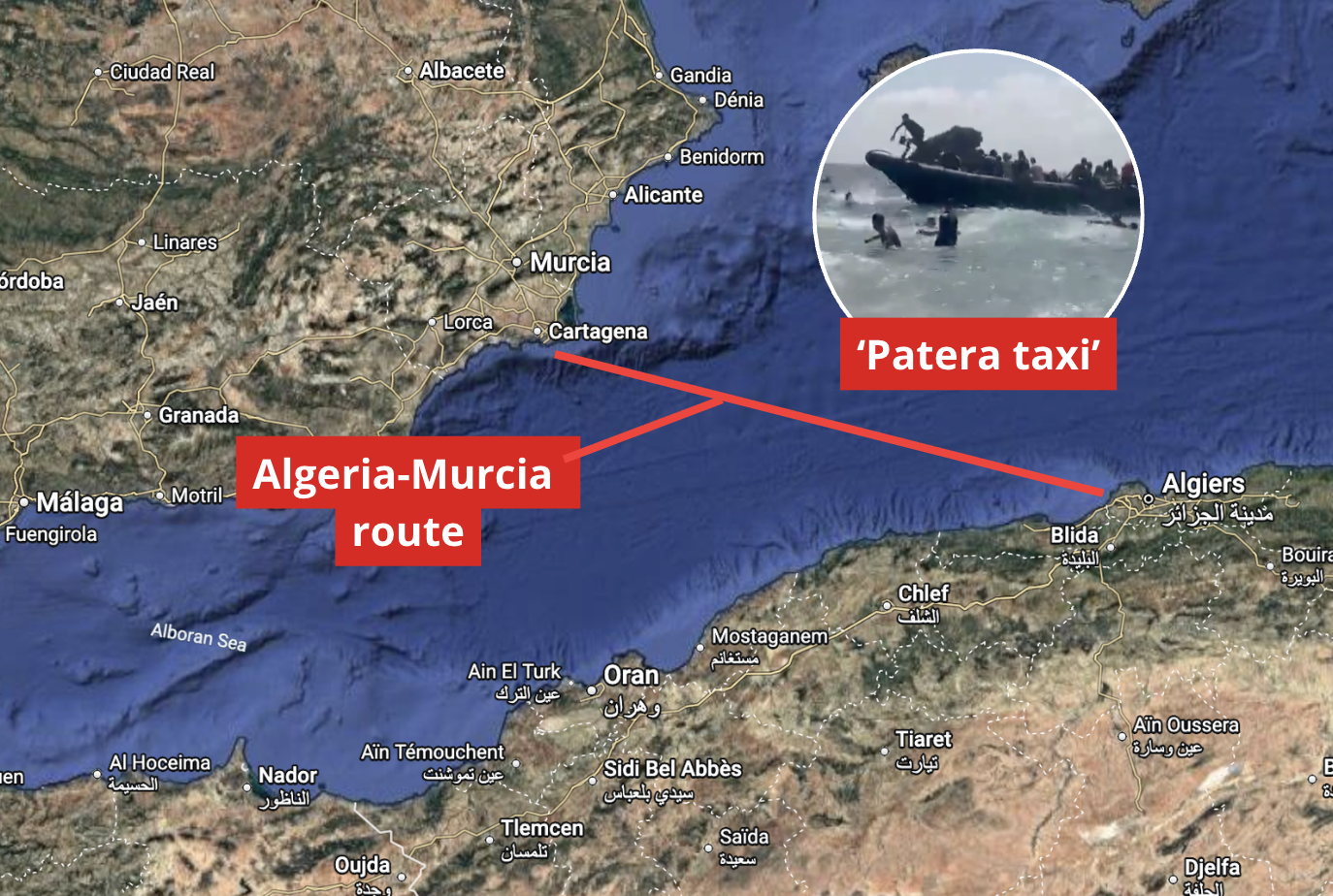

At least two high-speed ‘migrant taxi boats’ dropped passengers along the coast of Murcia in a matter of hours on Saturday, it has emerged.
The latest arrivals took place in Cartagena, just days after a large speedboat carrying 62 migrants, including 15 minors, arrived at a beach packed with holidaymakers in the same municipality.
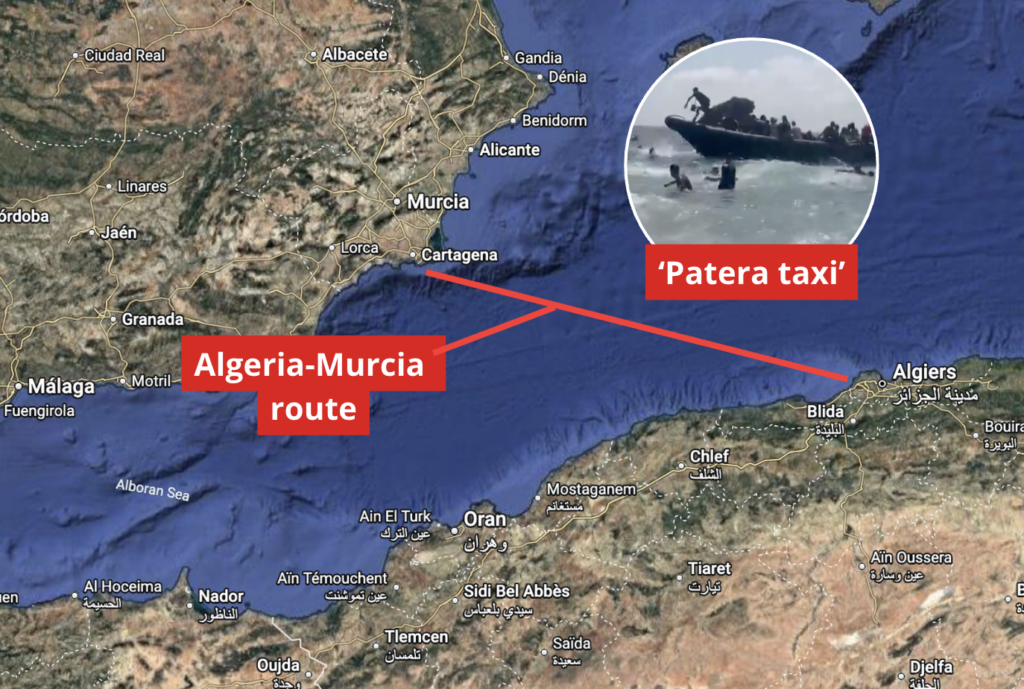
Unlike conventional migrant boats, the so-called pateras-taxi are powerful speedboats, generally travelling from Algeria, which can make the journey to southeastern Spain in a matter of hours.
The first of Saturday’s incidents occurred at around 11am at Punta Negra, between Cala Reona and Calblanque.
The vessel approached the coastline before its passengers were ordered to jump into the sea.
According to reports, the migrants were dropped in water shallow enough for them to make their way towards land, while the boat’s driver – who reportedly covered his face – immediately turned around and headed back out to sea.
Guardia Civil officers were deployed to the area and subsequently found some of the newly arrived migrants walking through scrubland close to the landing point.
Second boat arrives hours later
But just a few hours later, the same scene was repeated elsewhere along Cartagena’s coastline.
At around 3.45pm, witnesses at Cala de Huncos reported seeing another speedboat arrive before around 10 people disembarked.
Once again, the vessel immediately left the area after dropping off its passengers.
Authorities were working to locate the arrivals so they could be taken to Cartagena’s Temporary Attention Centre for Foreigners (CATE), where their identities and circumstances can be established.
Irregular entry into Spain is generally an administrative immigration offence rather than a criminal offence, meaning those who cannot otherwise legally be detained may be released after the applicable procedures have been completed.
Powerful boats capable of rapid crossings
The vessels are markedly different from the overcrowded and often barely seaworthy boats traditionally associated with irregular Mediterranean crossings.
So-called taxi boats are typically fast planing craft equipped with powerful 150hp or 200hp engines, allowing them to cross between Algeria and Spain rapidly.
Their speed also makes interception significantly more difficult.
The boats can resemble vessels used by drug trafficking organisations to move narcotics across the Mediterranean.
Passengers pay smugglers thousands of euros for the faster crossing, with police sources saying prices have increased significantly from the roughly €2,500 charged several years ago.
Once the passengers have been dropped off, the boat and its pilot can return to North Africa rather than being abandoned on the Spanish coast.
While such operations have traditionally been more associated with the Strait of Gibraltar and Alboran Sea, authorities have seen them become increasingly common along the Murcia coastline.
Guardia Civil union warns of lack of resources
The latest arrivals have intensified concerns about Spain’s ability to intercept the vessels before they reach shore.
The Unified Association of Guardia Civil officers (AUGC) in Murcia has complained of a shortage of maritime resources available to police the coastline.
According to the union, there is currently only one fast patrol boat available in the area – and it is out of service due to a breakdown.
Murcia regional president Fernando Lopez Miras has described the situation as ‘outrageous and unacceptable’ and accused Spain’s central government and its regional delegation of ‘absolute passivity’.
He has demanded an urgent reinforcement of surveillance and controls along Murcia’s coastline.