Andalucia has officially declared a state of ‘extreme necessity’ over the relentless spread of invasive Asian algae that has been choking its coastline for more than a decade.
The regional government says the move will help struggling coastal towns cope with the huge financial burden of clearing the seaweed, which continues to wash up in vast quantities along beaches.
At the centre of the crisis is Rugulopterix okamurae, an aggressive species known for its rapid spread and ability to colonise large areas of seabed on both sides of the Strait of Gibraltar.
Local authorities have been forced to carry out constant clean-up operations, often at significant cost, just to keep beaches usable.
Now, under the emergency declaration, municipalities will be exempt from paying a national landfill tax of €30 per tonne when disposing of the algae, in a move designed to ease the pressure on already stretched budgets.
Officials say the volume of algae is unpredictable and overwhelming, requiring urgent and repeated action, but disposal remains a major challenge.
‘The only viable option right now is landfill,’ the Junta said, pointing out that recycling or reusing the biomass is still limited due to its high salt and sand content, instability and the need to neutralise it to prevent further spread.
The algae has now reached all five coastal provinces – Cadiz, Huelva, Malaga, Granada and Almeria – with the worst impact felt in Cadiz and western Malaga.
Beyond the environmental damage, the economic impact is growing.
Fishermen say the algae clogs nets and disrupts traditional fishing methods, forcing them to stop work to clear equipment and carry out repairs, cutting into already tight margins.
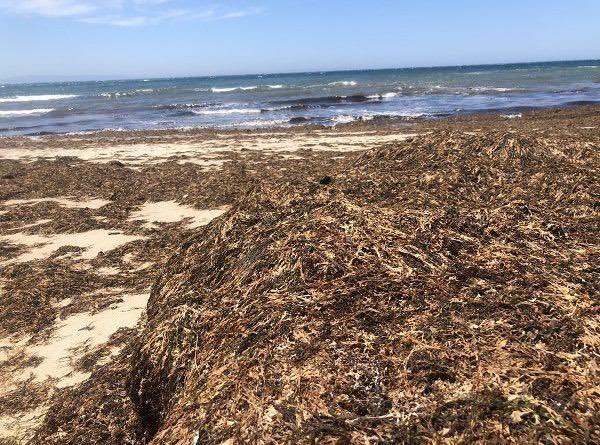
On land, the problem is just as visible. Large accumulations on beaches create foul smells, hygiene concerns and an unattractive landscape, hitting tourism – a key pillar of the local economy.
Despite the scale of the issue, there is still no long-term solution.
Researchers are now exploring whether the algae could be repurposed for industrial or agricultural use, potentially turning a costly problem into an opportunity. But for now, those options remain in early stages.
Read more Andalucia news at the Spanish Eye.