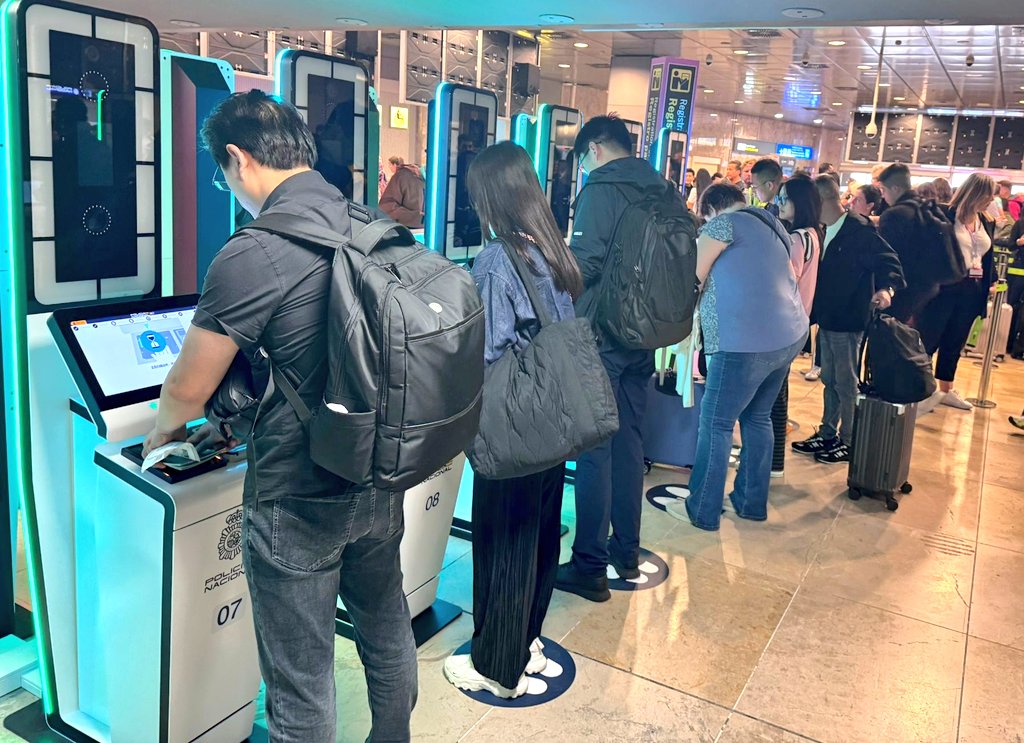

British passengers arriving in Spain are facing delays of up to three hours at major airports, as the EU’s new Entry/Exit System (EES) continues to cause disruption just weeks after its official rollout.
With spring travel still driving high passenger numbers, long queues have been reported at Palma de Mallorca Airport, Adolfo Suarez Madrid-Barajas Airport and Malaga Airport.
Airport operator AENA has now introduced contingency measures to ease pressure on the system.
Frontline staff have been authorised to redirect families and passengers with reduced mobility to traditional passport stamping desks when queues at biometric kiosks exceed 25 minutes.
In addition, slot coordination teams are now allowed to stagger flight arrivals during peak periods – a measure trialled in Malaga last weekend.
While these steps fall short of the temporary suspension of the EES seen in Greece, they mark Spain’s first significant operational adjustment to the EU-wide system.
Industry warns of ongoing pressure
Travel industry groups such as ABTA have welcomed the measures but warn that staff shortages could continue throughout the summer unless more border personnel are deployed.
Meanwhile, Michael O’Leary, chief executive of Ryanair, has described the rollout as a ‘disaster’ and is tightening check-in deadlines to account for unpredictable queues.
What travellers should do
Travel experts are advising passengers to plan ahead while the system stabilises:
- Arrive at least three hours before departure if you have not yet completed EES registration.
- Check live queue updates, which are published every 30 minutes on AENA’s website.
- Allow extra time for connections, especially for flights within the Schengen area departing from Spain.
Preparing before you travel
For those concerned about documentation, platforms like VisaHQ provide updated entry requirements, digital application support and document services to help travellers arrive prepared and minimise delays.
As the summer season approaches, the effectiveness of these early measures will likely determine whether disruption eases or becomes a longer-term issue for travellers passing through Spain’s busiest airports.