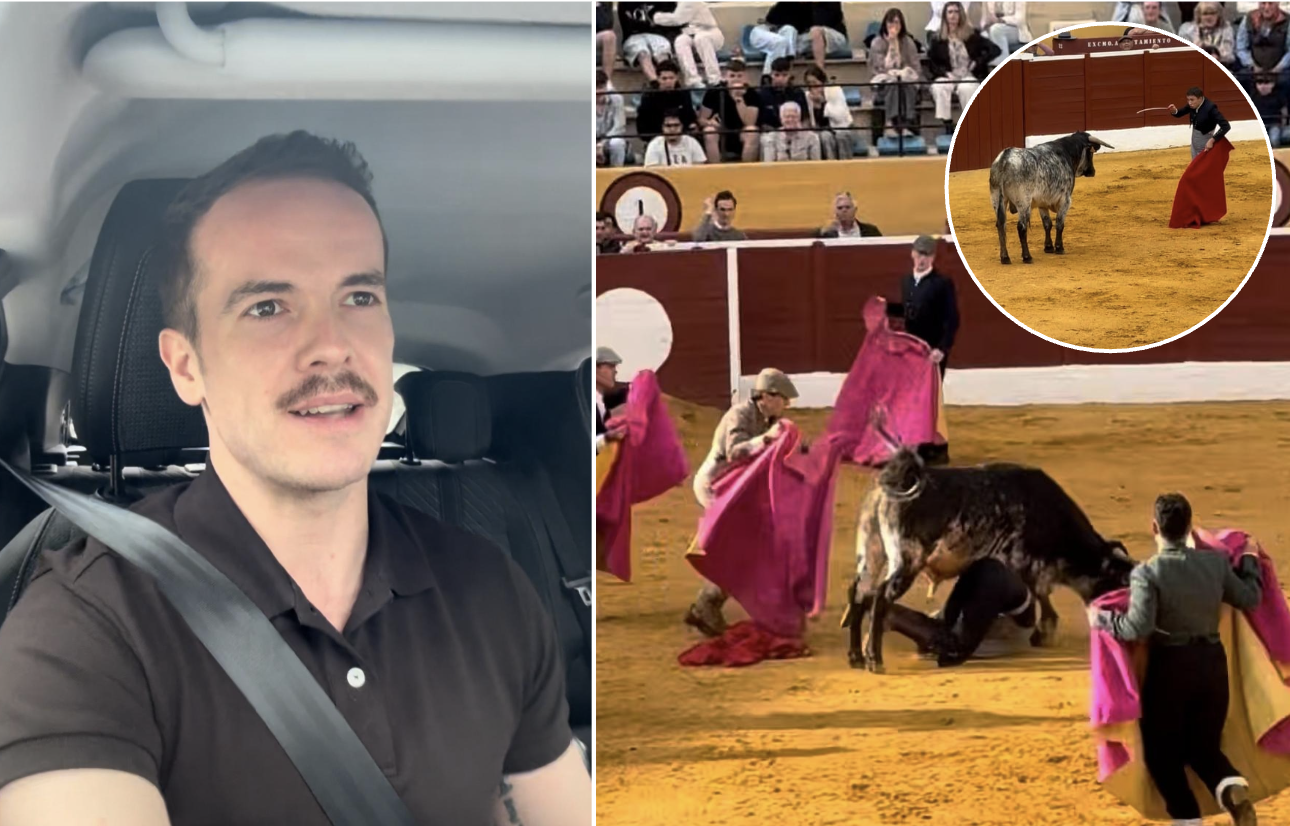

A controversial bullfighting training event in Marbella saw teenage matadors struggle to kill young bulls, with two participants trampled during the spectacle witnessed by The Spanish Eye.
Around 200 spectators attended the event at the Plaza de Toros de Marbella on Saturday evening.
It was a notably low turnout for what organisers describe as a key platform for developing future bullfighting talent.
Chaos in the ring
The event formed part of the XXVIII Cycle of Becerradas, a training circuit for students from Andalucian bullfighting schools.
Six young bulls (añojos) from the El Rodeo ranch were used in the session, but what unfolded in the ring was far from polished.
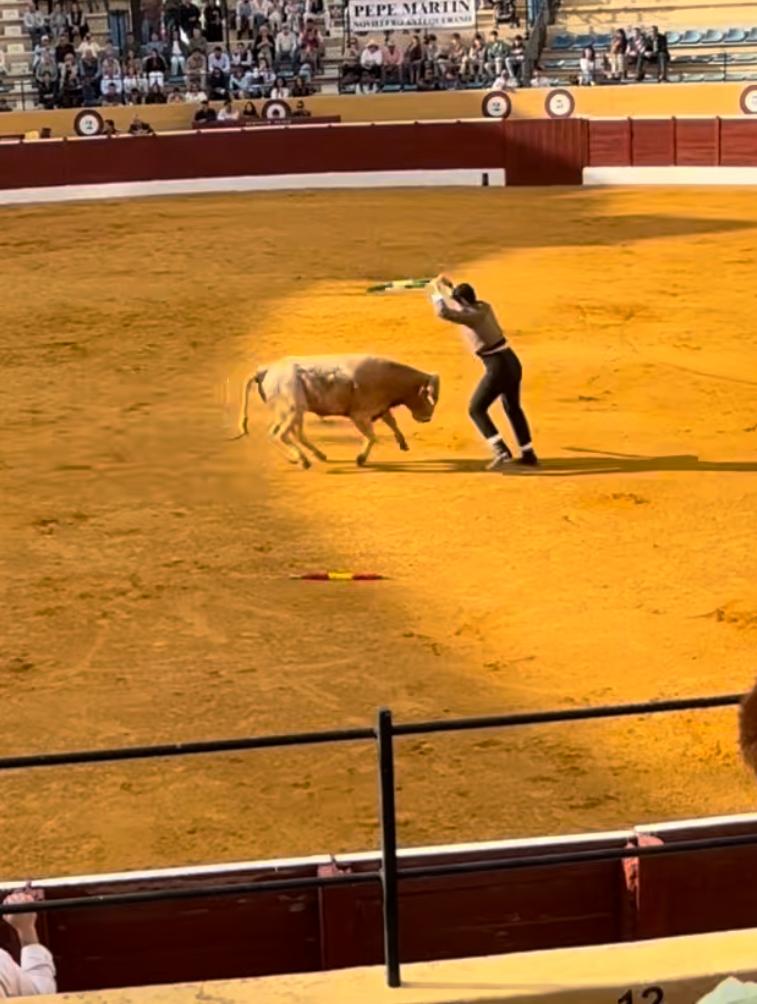
Several trainee matadors required multiple attempts to deliver the final killing blow, prolonging the suffering of the animals.
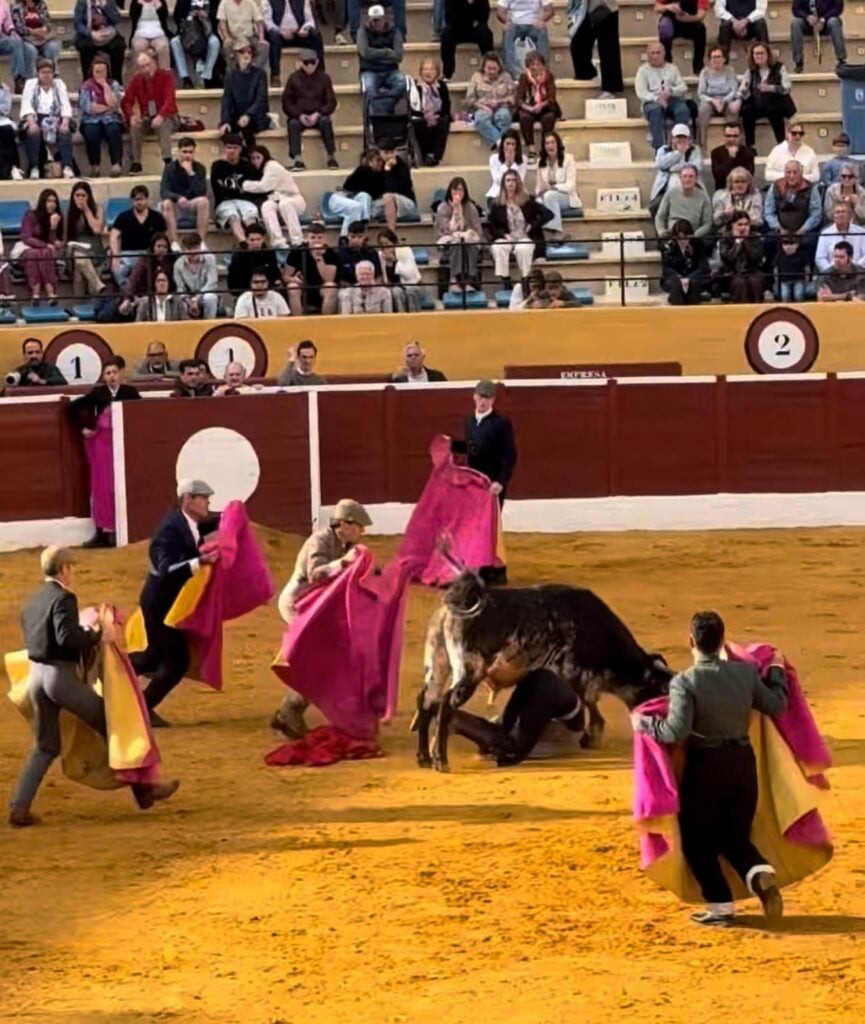
In two separate incidents, teenage participants were knocked down and trampled by bulls after misjudging their positioning.
Both escaped without serious injury, but the moments highlighted the risks involved in these early-stage training events.
Mixed performances
Despite the difficulties, a handful of participants showed flashes of promise.
Some were awarded two ears – a traditional accolade in bullfighting – after stronger performances with the cape and muleta.
The lineup included young hopefuls from schools across Andalucia, such as Ronda, Antequera and Algeciras, all competing for progression within the circuit.
Backed by institutions but under scrutiny
The event was organised by the Asociacion Andaluza de Escuelas de Tauromaquia Pedro Romero, with backing from regional authorities and support from organisations including Canal Sur.
Promoted as a way to preserve and develop bullfighting culture, the becerradas format places inexperienced teenagers in real bullring conditions, something that continues to spark debate.
Tradition vs reality
While supporters argue these events are essential for training the next generation, critics point to scenes like those witnessed in Marbella as evidence of unnecessary risk – both to participants and animals.
For those in attendance, the evening offered a raw look at the reality behind bullfighting’s future: a mix of ambition, inexperience, and controversy played out in front of a dwindling crowd.
Most becerristas, aged between 16 and 18, dream of following in the footsteps of stars like Andres Roca Rey, a 28-year-old Peruvian who can earn up to €400,000 per fight.
But the road to becoming a fully-fledged matador is long, brutal and often unrewarded. Beginners fight calves (becerros) as part of the becerradas circuit, sometimes paying for the chance to perform.
If they show promise, they move on to novilladas with bigger bulls, though pay remains rare until the milestone alternativa ceremony officially ordains them as professional matadors.
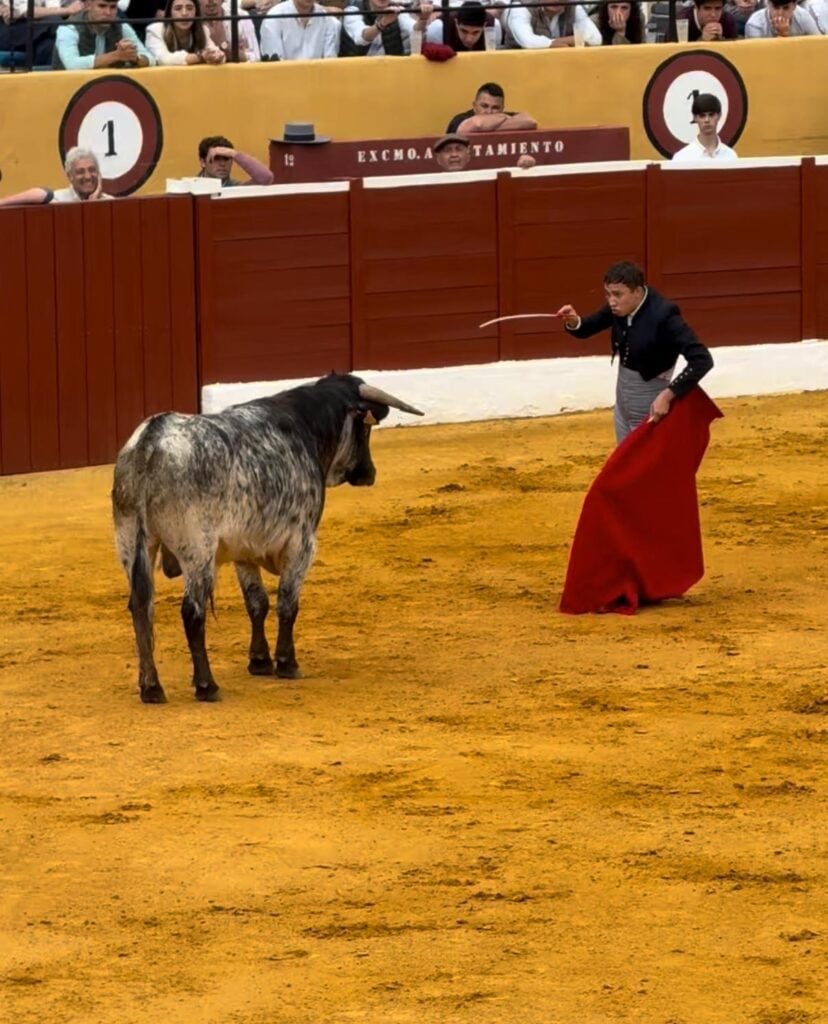
For many years, they face enormous risk with little financial return.
Only a handful ever make it to the top, but those who do can secure fame, wealth and access to high society.
Critics call it ‘the ultimate cruelty’
Animal rights campaigners say becerradas are the darkest side of the bloodsport.
‘Becerradas are even more controversial because they are performed on animals that are babies, typically ranging from six months to one year old… It’s the ultimate cruelty,’ said PACMA national secretary Javier Sanabria, speaking to the Spanish Eye previously.
‘Novillos are animals between two and four years old. The Spanish Animal Protection Law condemns the use of animals of that age for any type of work, but that same law makes an incomprehensible exception for bulls. As if bulls weren’t animals and didn’t suffer.’
Read more Andalucia news at the Spanish Eye.