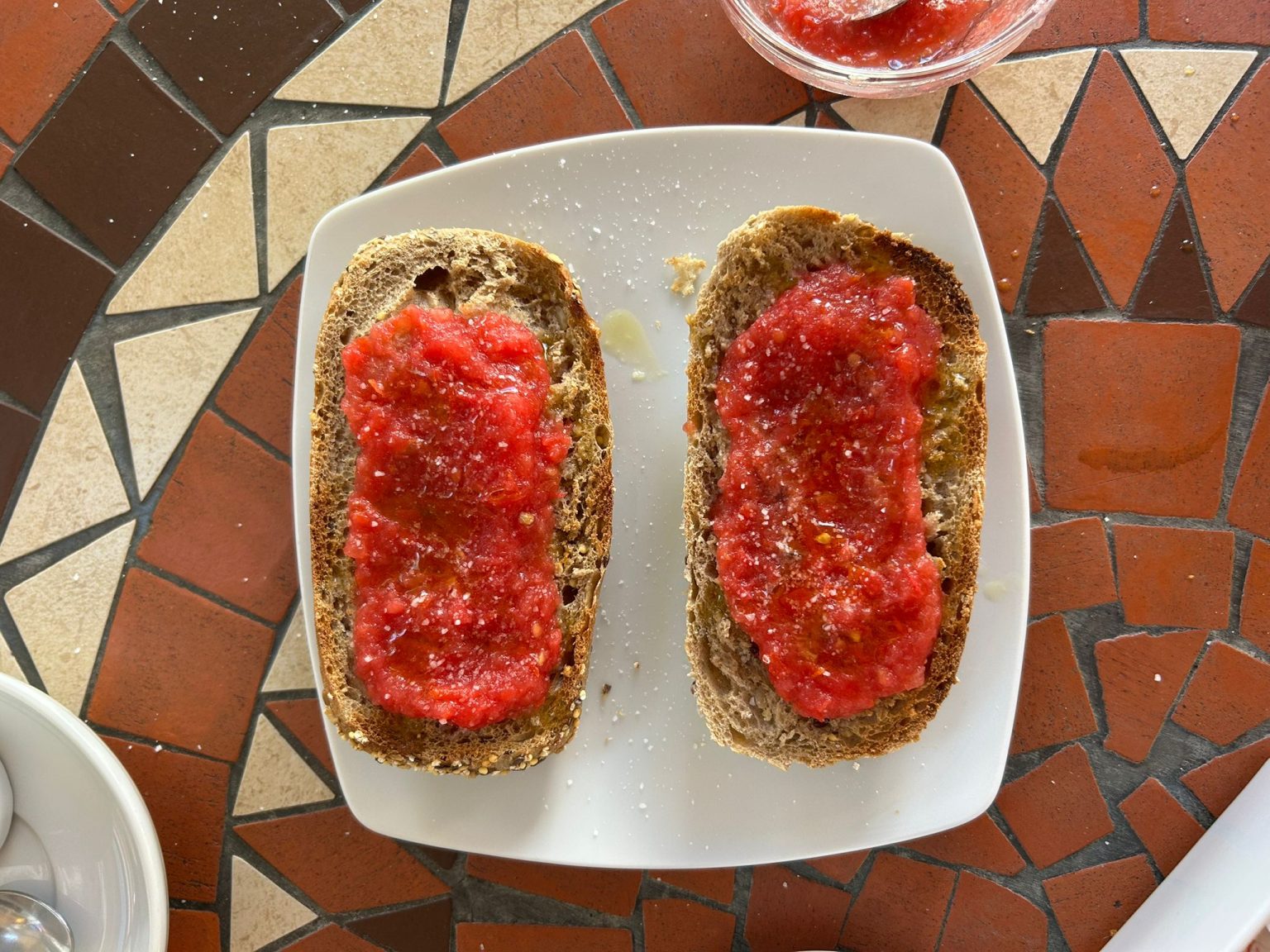

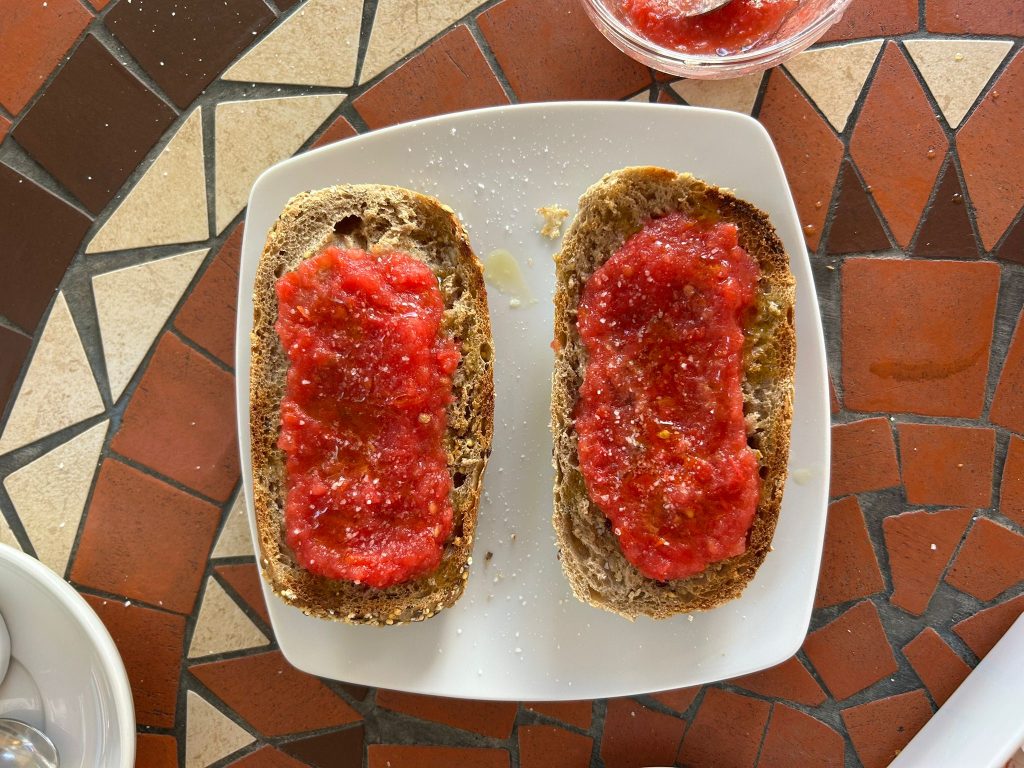
It is perhaps the simplest dish you will find on any Spanish breakfast table – a slice of toasted bread, rubbed with ripe tomato and drizzled generously with olive oil.
Yet pan con tomate y aceite de olivo has become one of the country’s most enduring culinary icons, loved by locals and expats alike from Barcelona to Benalmadena.
Below we look at its history and how it is actually good for your heatlth.
A peasant’s invention
The story of pan con tomate begins in fields of rural Catalonia. Historians trace its origins back to the late 19th century, when farmers faced with stale bread found a clever way to soften it.
By rubbing the rough surface with garlic and overripe tomato, then finishing with a splash of olive oil and a pinch of salt, they transformed leftovers into something fresh, nourishing and full of flavour.
The dish was not a recipe in the formal sense but a practical solution to avoid waste. Tomatoes, introduced to Spain from the Americas in the 16th century, had by then become a staple of the Mediterranean diet.
Olive oil, meanwhile, had been produced on the Iberian Peninsula for millennia, with Andalucia now accounting for almost half of the world’s supply.
From Catalonia to all of Spain
Although most closely associated with Catalonia, where it is known as pa amb tomàquet, the dish spread across Spain during the 20th century.
In Andalucia it became a breakfast favourite, served alongside coffee in roadside cafes, or ventas, and often accompanied by thin slices of cured ham.
During the lean years after the Civil War, pan con tomate was a godsend: inexpensive, nutritious and filling.
By the 1970s, it had crossed class boundaries and appeared in restaurants, where it was celebrated as a symbol of honest, rustic Spanish cooking.
The Mediterranean diet on a plate
Nutritionists today hail pan con tomate y aceite de olivo as a perfect example of the Mediterranean diet.
Rich in antioxidants, healthy fats and fibre, it is both heart-friendly and sustaining. Unlike heavier English fry-ups, it provides slow-release energy without leaving you sluggish – which perhaps explains why Spaniards can linger over breakfast and still start their day full of vigour.
A ritual of its own
Part of the dish’s charm lies in its ritual. In many bars you are given the ingredients separately: toasted bread, a small dish of grated tomato, a bottle of extra virgin olive oil and a little salt.
Diners prepare it themselves, each bite slightly different depending on the drizzle of oil or rub of garlic.
Enduring appeal
For expats living in Andalucia, pan con tomate y aceite de olivo often becomes a beloved part of their new life. It is cheap, healthy, and available on almost every street corner.
As simple as it seems, this dish captures the essence of Spanish cuisine: resourceful, rooted in the land, and unfailingly communal.
Read more Andalucia news at the Spanish Eye.