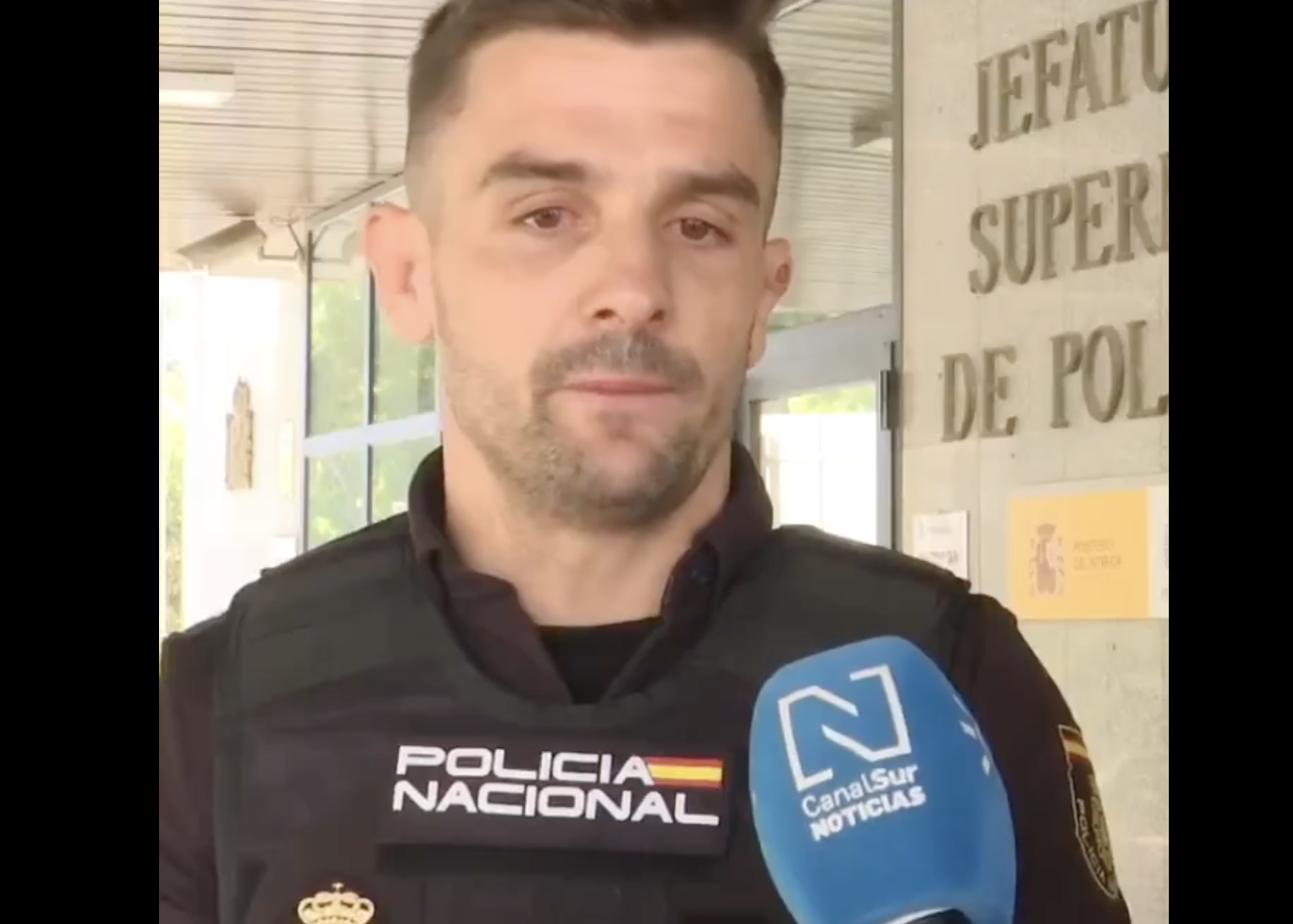

A Policia Nacional officer travelling home to his wife and newborn daughter has described pulling passengers from wreckage and comforting the dying after the Toledo rail disaster.
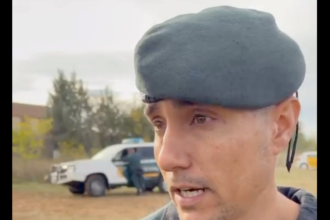
Jose Luis Moris was in carriage eight of the Iryo train struck near Urda on Wednesday, escaping with scratches before joining fellow passengers in the rescue effort.
Speaking through tears to Canal Sur and later TVE, he recalled using fire extinguishers and tourniquets from his own first-aid kit to help those trapped and injured.
‘You don’t think. You simply do what you can,’ he said. ‘You go in, pull people out and stay with those you can’t get out.’
Jose Luis had finished work in Madrid and was returning to Sevilla, where his wife and their newborn daughter were waiting.
He boarded intending to sleep. After the train stopped, he initially assumed the delay would last only a few minutes.
Then came an enormous noise, which he likened to an angle grinder cutting through something, followed by the impact.
Suitcases fell and passengers screamed. His carriage suffered less severe damage, and his first action was to message his wife to say he was alive.
Looking outside, he saw smoke and fire. He opened an emergency exit and encouraged passengers to leave.
Only once outside did he grasp the scale of the disaster.
‘When I looked to the right, I saw the tragedy. The train was completely overturned. Horrible,’ he recalled.
After identifying himself as a police officer to an Iryo staff member, he headed towards the overturned carriages.
One was beginning to burn. He collected two extinguishers and retrieved his backpack, which contained tourniquets he carried because of his work.
With another young man, he began tackling the flames and helping people out.
Before the emergency response was fully established, he estimated that around 15 to 20 passengers were assisting, including several police officers and an emergency medical technician.
During one rescue, they heard a young man trapped beneath a seat whose leg had been severed.
They moved seats and debris to reach him, while a livestock fence made getting casualties away from the wreckage more difficult.
Jose Luis applied tourniquets and helped evacuate passengers until emergency crews took over.
As specialist teams got to work among exposed metal and debris, he turned his attention to comforting victims alongside fellow fellow officers Carmela and Noelia.
‘Each of us stayed with a victim,’ he said. ‘Some were more seriously injured, others less so, and some were close to dying. We stayed with them.’
They held casualties’ hands as medical teams assessed their injuries and arranged evacuation.
Although his physical injuries were minor, Jose Luis said he was struggling emotionally.
‘You can see images on social media, you can see a thousand things, but getting there and seeing that… nobody is prepared for it,’ he said.
He recalled hearing a woman calling for help whom they could neither locate nor reach.
His own family endured hours without further news while he helped at the scene. Because he had joined the rescue effort, his survival had not initially been recorded, prompting the Guardia Civil to call and check whether he was alive.
He has since remained in contact with the family of the young American passenger who lost his leg.
Jose Luis stayed with him partly because few people nearby spoke English, and the injured man asked him to contact his mother.
‘I spoke to his family yesterday. He is seriously ill in hospital, but alive,’ he said.
He has also kept in touch with Carmela and Noelia.
‘It was a comfort knowing that other people – brothers and sisters, so to speak – were beside you.’