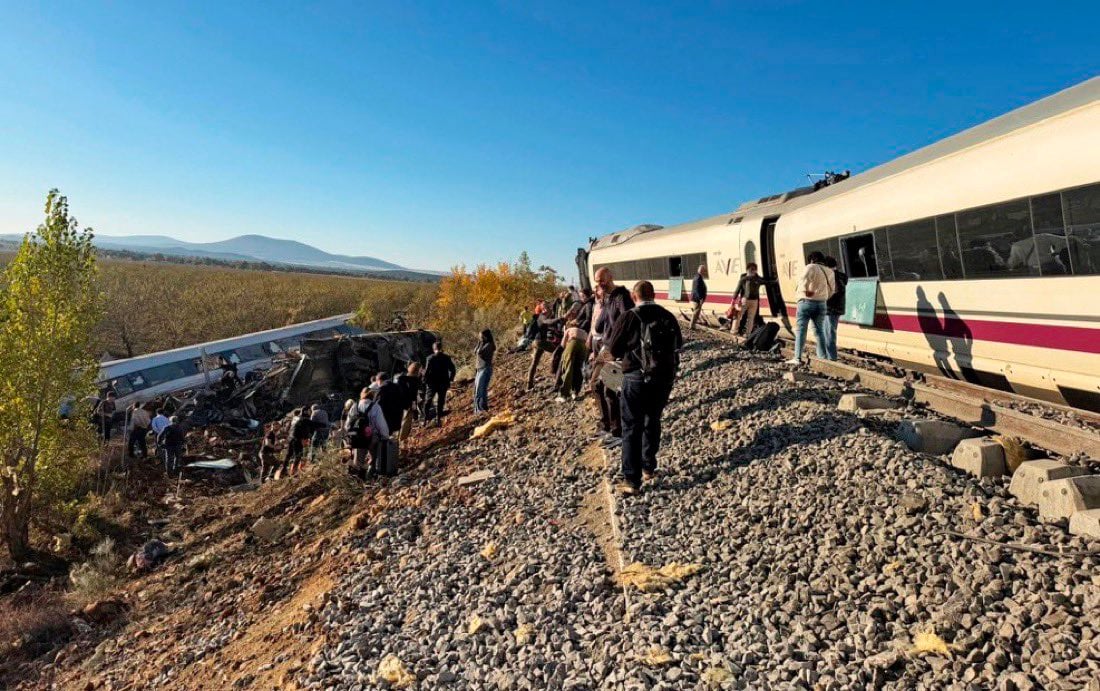

Four Americans are among 12 foreign nationals confirmed killed in the Toledo rail disaster, authorities have confirmed.
Investigators have now identified 66 of the 69 people killed in Wednesday’s collision near Urda, including all 54 Spanish victims, according to Castilla-La Mancha government spokeswoman Esther Padilla.
The foreign victims identified include four US citizens and one person each from Argentina, Canada, the Czech Republic, France, Japan, Mexico, Portugal and Tunisia.
Families of two Australians and another Japanese citizen whose missing-person reports remained active were expected to arrive in Spain to help complete the identification process.
Padilla said forensic teams in Toledo and Ciudad Real were continuing their work to establish the identities of all those killed.
Of the 66 identifications completed, 53 were made using fingerprints and 13 through DNA analysis.
At the time of the update, 60 families had been informed, with notification of the remaining six being arranged. The bodies of 47 victims had been made available to their relatives.
Families are notified personally before the numbers are updated publicly.
Meanwhile, 29 injured passengers remained in hospitals across Castilla-La Mancha, including nine in intensive care and 20 on general wards.
A further 10 patients are being treated in Madrid, two of them in intensive care. One injured passenger had also been transferred to Andalucía.
Authorities said 81 injured people had been discharged.
In Castilla-La Mancha, 17 patients remain at Toledo University Hospital, five at Mancha Centro Hospital in Alcázar de San Juan, six in Ciudad Real and one in Albacete.
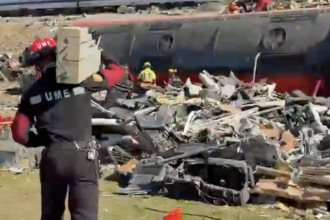
The Guardia Civil is continuing to search the crash site for human remains, with around 50 officers involved in the operation.
The AVE carriages have been removed from the tracks, while three Iryo carriages remain at the site, according to the force.
Damaged carriages were being moved to a secure area to allow investigators to search the ground metre by metre. Dog teams, drones and Judicial Police officers are assisting.
A security perimeter remains in place under the investigating judge’s orders to prevent unauthorised access.
Psychologists are also providing support to bereaved families throughout the process.