
The death toll from the Toledo train disaster has risen to at least 74.
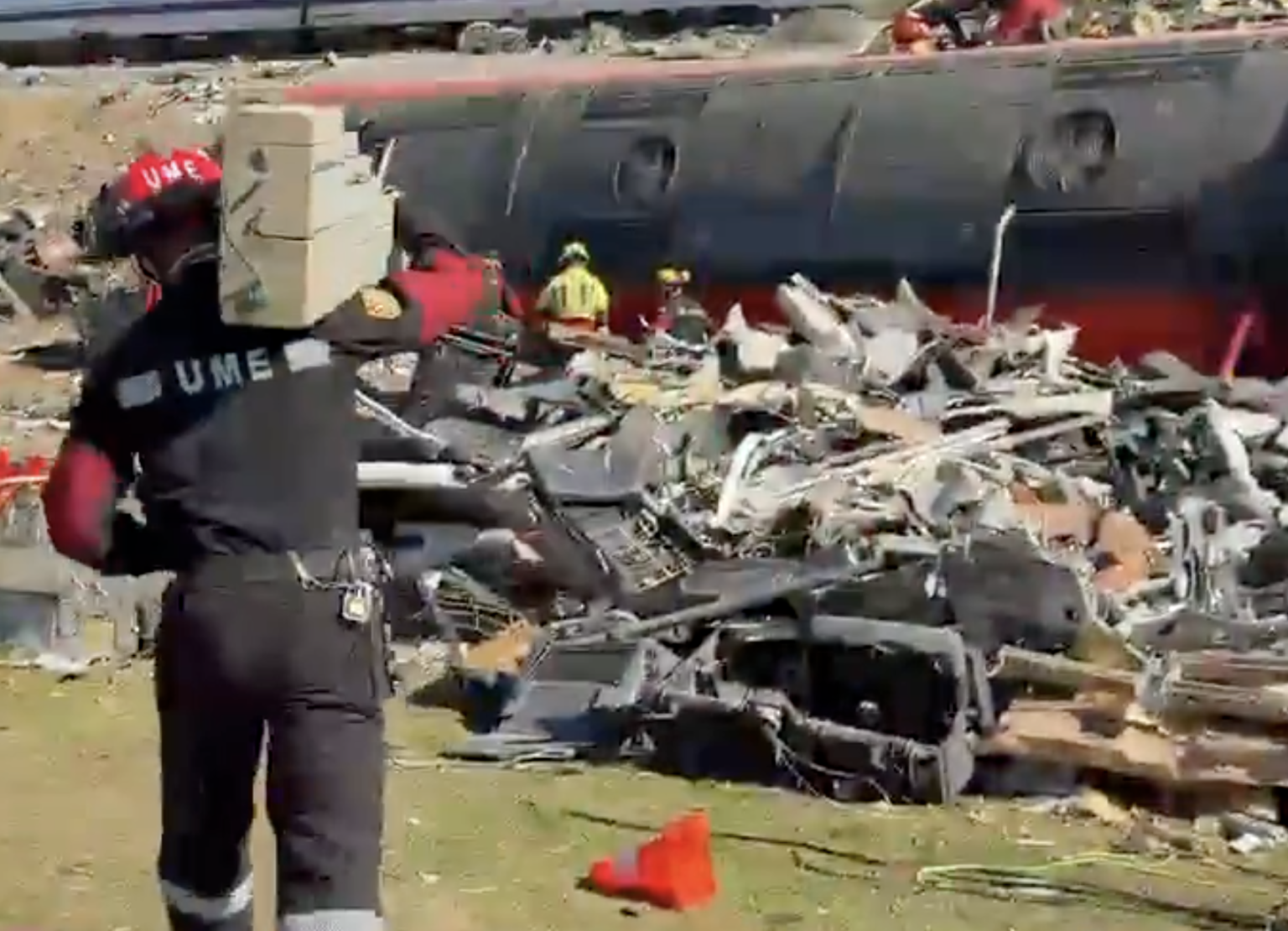
Rescue teams are still searching the wreckage more than 24 hours after the collision amid fears more bodies could be found.
Some 15 people are reported to be in a very serious condition following the crash between a Renfe AVE train and an Iryo service near Urda on Wednesday morning.
Guardia Civil officers and almost 200 members of Spain’s Military Emergency Unit, the UME, are working through the devastated carriages, using heavy machinery and drones equipped with thermal sensors.
The search is focused particularly on the rear carriages of the Iryo, which derailed and fell down an embankment after being struck from behind.
Large cranes are helping teams reach areas that remain inaccessible beneath the wreckage. Families are still awaiting news of passengers who have not been located.
Specialist search dogs are also being brought into the operation. Dogs trained to find survivors have already searched the site, although those initial searches did not locate anyone else alive.
Access must first be made safe before handlers and their animals can enter the most severely damaged sections.
Alongside the recovery operation, Guardia Civil forensic specialists are creating a three-dimensional reconstruction of the crash site using aerial images.
The work will document the positions of the trains, damage to the carriages and other evidence relevant to establishing how the collision happened.
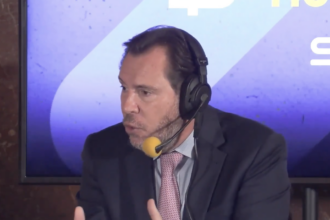
Officers have questioned staff from Adif’s Atocha control centre, including the operator whose decision Transport Minister Oscar Puente has publicly scrutinised.
Investigators are examining whether a signalling failure followed by an incorrect instruction to resume running contributed to the collision, according to sources cited by El Español.
Specialist Guardia Civil units are gathering evidence alongside the separate technical investigation by Spain’s Railway Accident Investigation Commission, the CIAF.