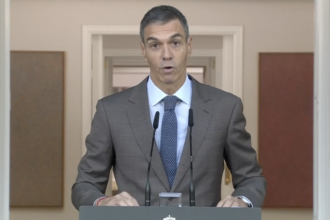
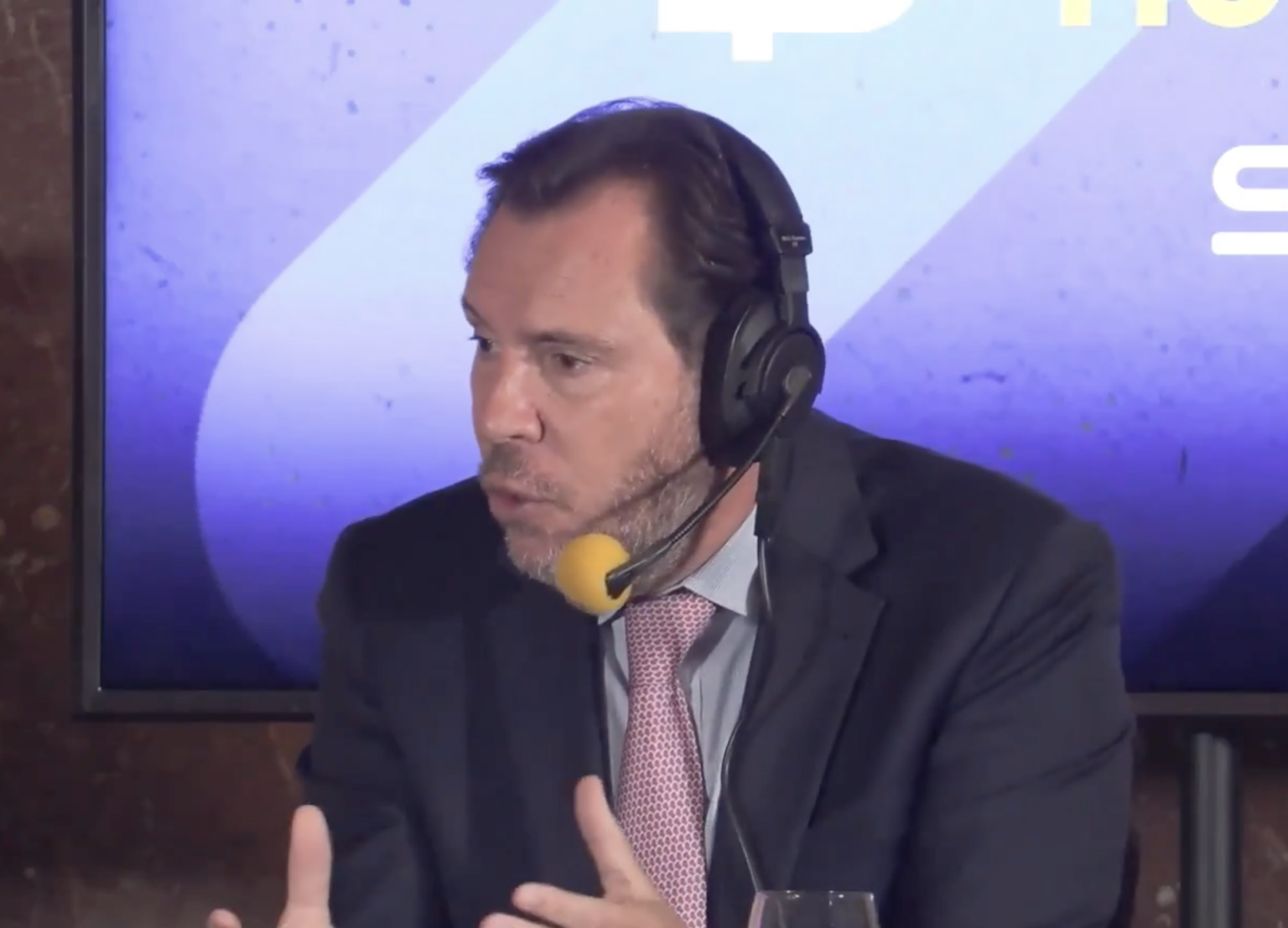

Embattled Transport Minister Oscar Puente has ruled out resigning after the Toledo rail disaster.
He vowed to remain in his position while revealing how it is believed the accident occurred.
According to Puente, an Adif controller initially authorised trains to resume as normal after a signalling failure, even though the rules required them to proceed cautiously, at no more than 40km/hr.
A driver on another train questioned that instruction, telling the controller that services could only continue under restricted, sight-based running conditions.
The controller then corrected the instruction. However, the AVE involved in the crash had already received the original permission to run normally.
According to Puente, its driver acted on that authorisation, and the train reached 200km/hr before smashing into the stationary Iryo service.
Speaking at a press conference, Puente described the collision as ‘inconceivable’ but defended Spain’s railway system as safe and reliable.
According to his account, computer problems caused the LZB train-protection system around Urda station to fail at approximately 8.30am, stopping six trains across a 69-km section.
At 8.36am, an operator at Adif’s Atocha control centre authorised trains to resume normal running.
Puente said this contravened the rules, which required restricted, sight-based running at a maximum of 40km/hr.
A driver on another service, which was not involved in the crash, questioned the instruction and pointed out the requirement to proceed under those restrictions.
The controller then corrected the order. However, according to the minister, the AVE driver followed the original authorisation and resumed normal running before the collision.
Why the corrected instruction did not prevent the crash remains a central question for investigators.
Puente acknowledged that no functioning safety system prevented the erroneous instruction from leading to the collision in the circumstances he described.
Nevertheless, he declined to assign individual responsibility.
‘I have not attributed blame to anyone. I have described the established facts,’ he said.
‘The investigation will clarify it. As minister, I am simply setting out the facts.’
Despite ruling out his resignation, Puente acknowledged limits to railway safeguards, including those involving equipment, infrastructure and human actions.
‘Our railway system is reliable and safe,’ he insisted, arguing that its standards were comparable with those of neighbouring countries.
He offered condolences to bereaved families and expressed solidarity with those affected.