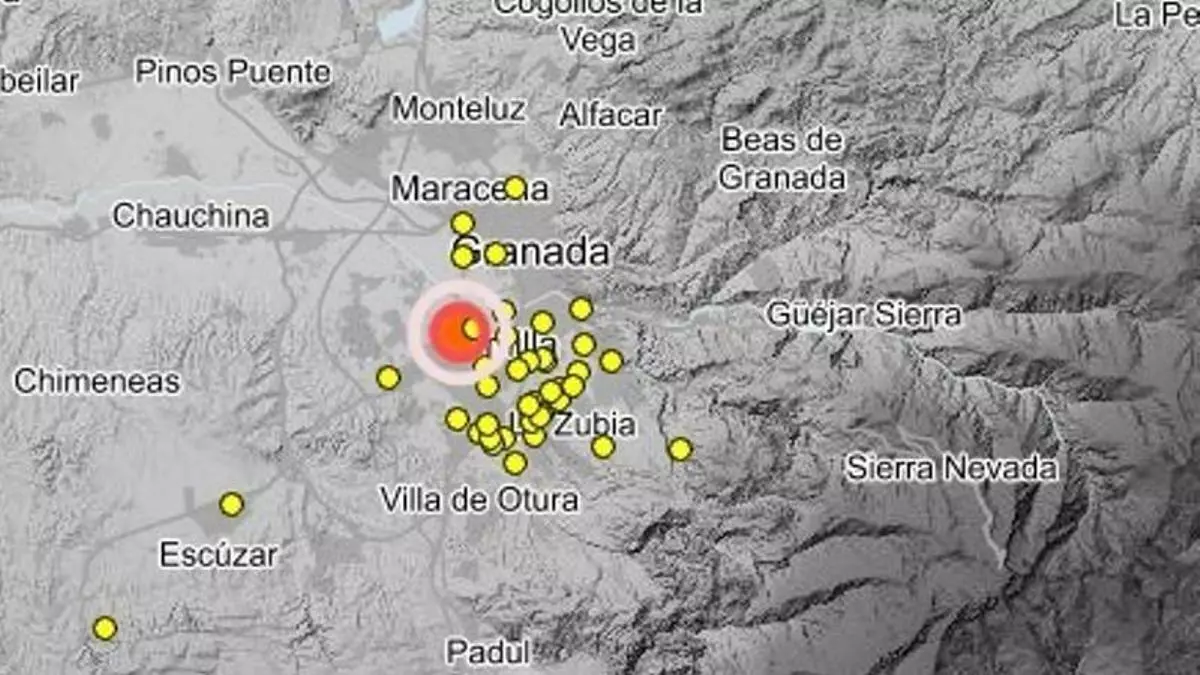

A new earthquake has rattled Granada and its surrounding metropolitan area.
The 3.1-magnitude tremor hit on Wednesday morning, just a day after authorities downgraded the region’s seismic emergency plan.
The quake was felt shortly before 8am, with its epicentre in Churriana de la Vega, according to provisional data from the National Geographic Institute (IGN).
It occurred at a relatively shallow depth of around five kilometres and was felt by residents across Granada city and neighbouring municipalities.
The latest quake forms part of the extraordinary Alhendin seismic swarm, which has produced more than 1,500 earthquakes since August 14.
Granada Local Police acknowledged Wednesday morning’s earthquake on social media, while residents described the anxiety caused by weeks of repeated tremors.
One resident called for earthquake drills to be held in schools, saying families had spent the past month struggling to sleep because of fears surrounding the seismic activity.
The swarm began on August 14 before producing its two most powerful earthquakes on August 15 and 18, both reaching magnitude 4.8 Mw.
More than 1,500 earthquakes have subsequently been detected around the epicentral area, although the overwhelming majority have been relatively small, generally around magnitude 2 or below.
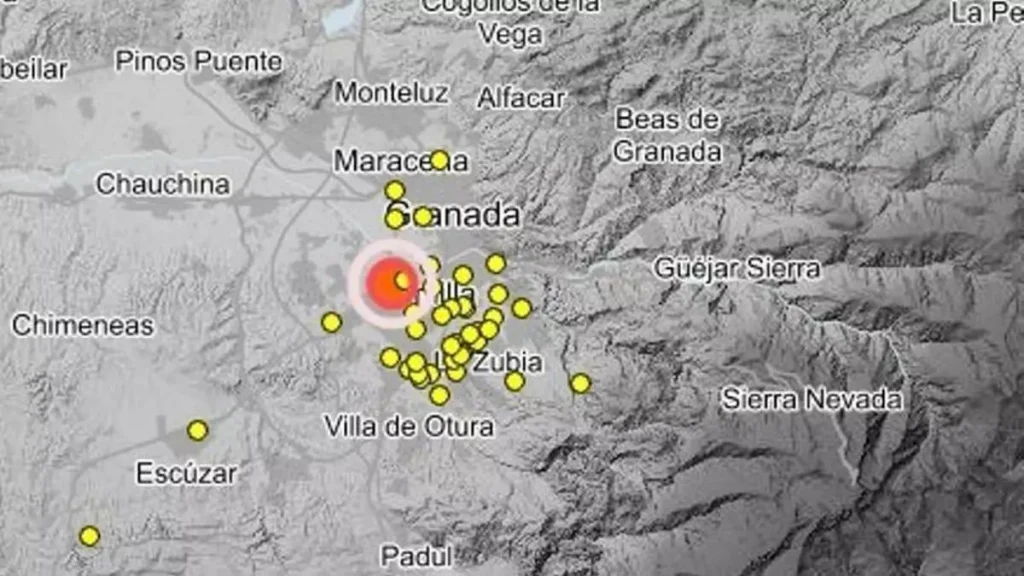
Some of the stronger tremors have also been clearly felt across neighbouring Malaga province.
Reports of shaking have previously come from Malaga city, Fuengirola, Nerja, Torrox, Velez-Malaga, Torre del Mar, Rincon de la Victoria, Cartama, Algarrobo and Competa.
Emergency plan downgraded
Wednesday’s earthquake came just one day after the Junta de Andalucia deactivated the emergency phase of its Granada earthquake response plan.
The plan was downgraded from operational situation 1 to the pre-emergency phase, operational situation 0, following an overall reduction in seismic activity.
Data from the ongoing swarm have shown a general decline in activity, with the amount of seismic energy released each day falling exponentially since August 20.
That decline became more pronounced during the past week, according to the report.
Read more Andalucia news at the Spanish Eye.