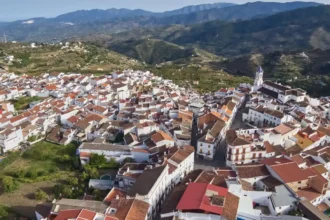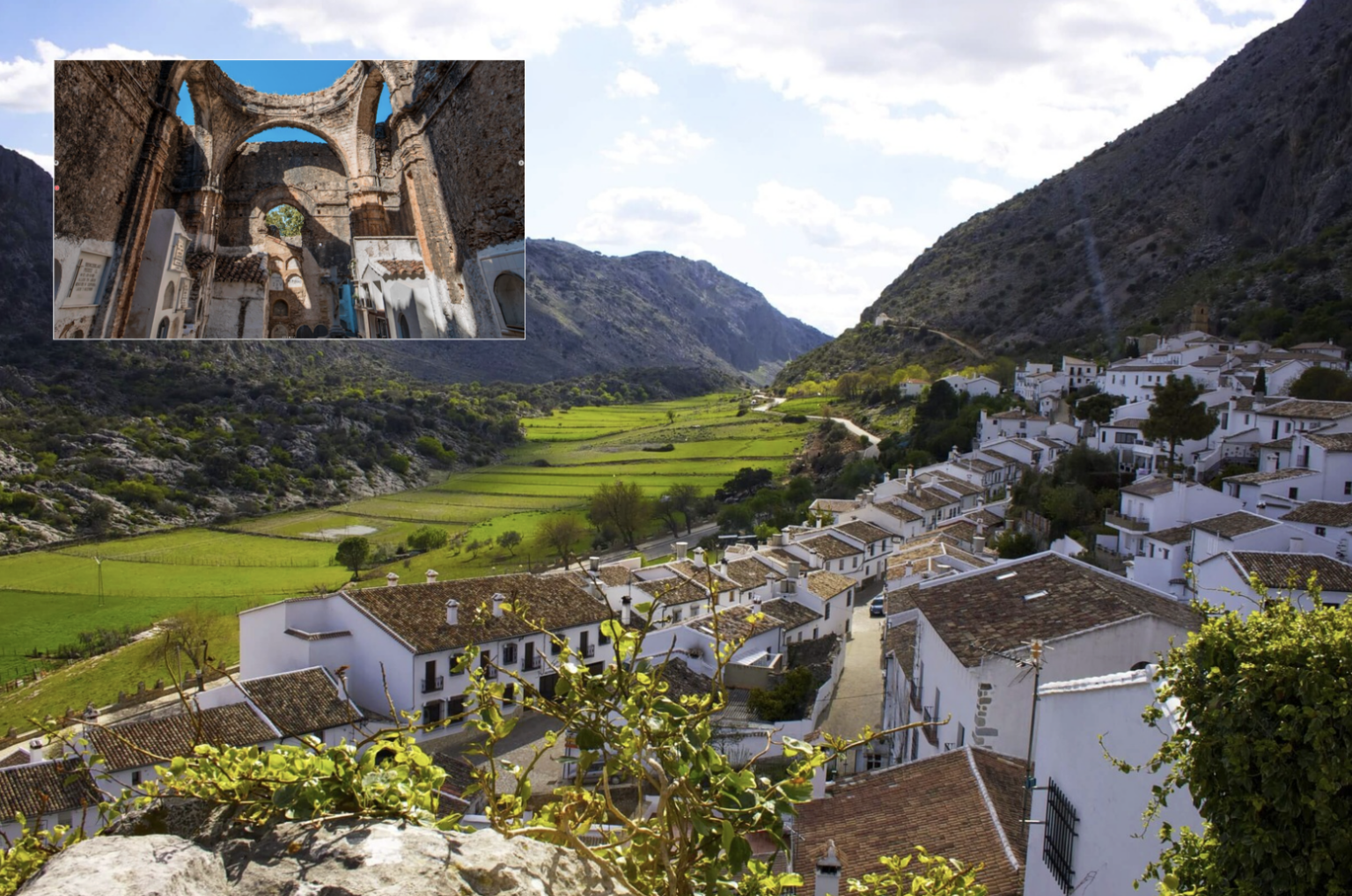

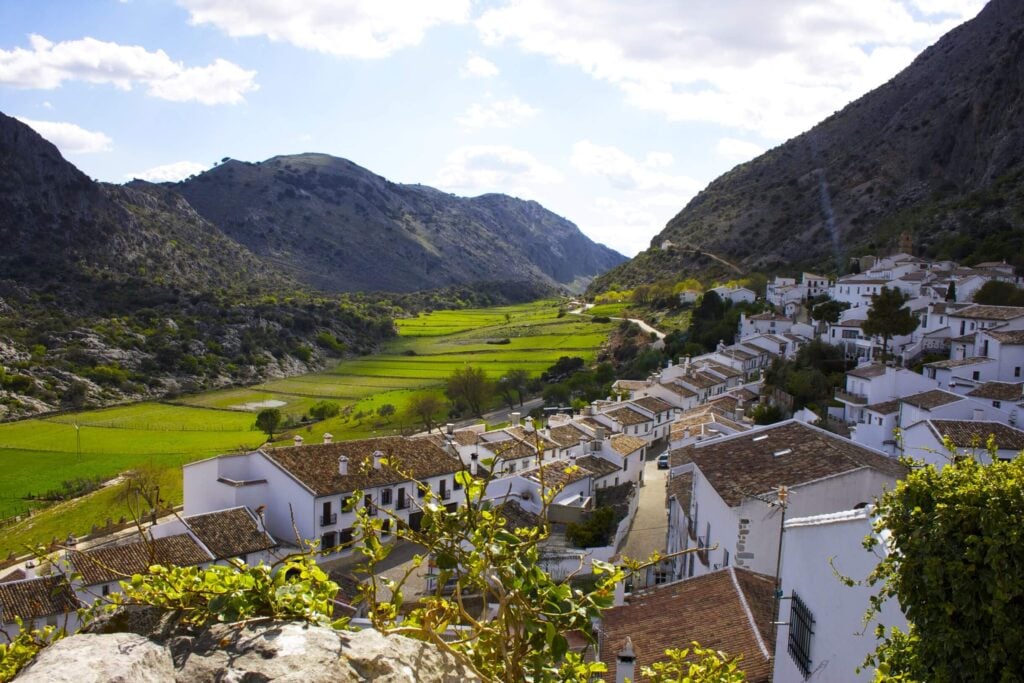
If you love exploring the lesser-known pueblos of Andalucia, look no further than this mountain-top village in Cadiz.
Hidden in the Sierra de Grazalema, it is the smallest town in the province, counting fewer than 500 residents, according to the latest census.
Villaluenga del Rosario sits 858 metres above sea level and is surrounded by the Caillo, Libar and Castillo mountain ranges.
Its entire municipal territory lies within the protected Sierra de Grazalema Natural Park, making it an attractive escape for walkers and nature lovers.
Despite its tiny size, Villaluenga has been recognised by the Pueblos Magicos de España network and is frequently described as one of Spain’s most beautiful villages.
Its steep streets and traditional whitewashed houses conceal historic churches, medieval remains and one of the most unusual cemeteries in Andalucia.
A cemetery inside a ruined church
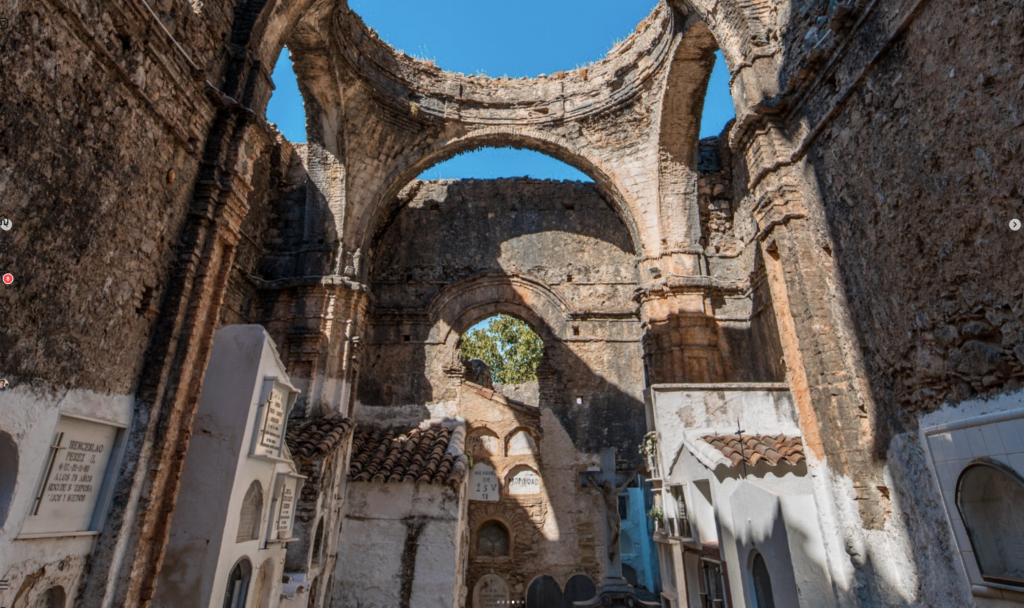
Villaluenga’s most distinctive attraction is found inside the remains of the former Church of El Salvador.
The religious building was burned and left in ruins during the Peninsular War at the beginning of the 19th century. Its roof was destroyed, but the stone walls and arches remained standing.
The abandoned interior was subsequently converted into the village cemetery, producing an extraordinary scene in which white tombs sit beneath the open sky and among the surviving remains of the church.
The enclosed space has repeatedly been named among the most beautiful and unusual cemeteries in Spain.
Although it remains an active burial ground rather than a conventional tourist attraction, visitors can view its striking exterior.
An unusually shaped bullring
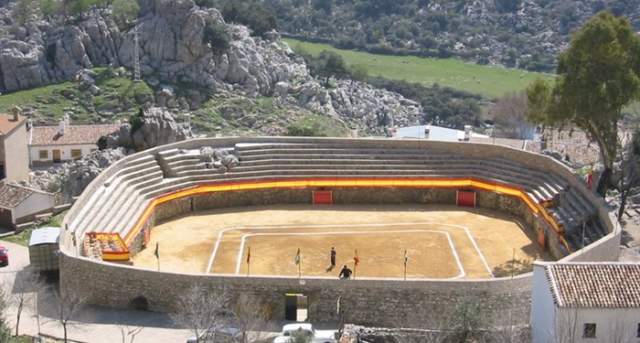
The village also possesses an 18th-century bullring believed to be among the oldest in Cadiz province.
Unlike a conventional circular arena, Villaluenga’s ring is polygonal and has seating formed from locally sourced stone.
Other buildings include the Church of San Miguel, the chapels of San Gregorio and El Calvario and the town hall.
Remains linked to a medieval road and an old aqueduct provide further evidence of the community’s long history.
Villaluenga’s origins have traditionally been traced to the Muslim period, although archaeological discoveries show that humans occupied its surrounding landscape much earlier.
The home of payoyo cheese
Villaluenga del Rosario is perhaps best known among food lovers for its cheese.
The village is closely associated with the indigenous payoya goat, a hardy breed adapted to the mountainous terrain of the Sierra de Grazalema and Serrania de Ronda.
Its milk is used to produce rich artisan cheeses which have won prizes in Spain and abroad.
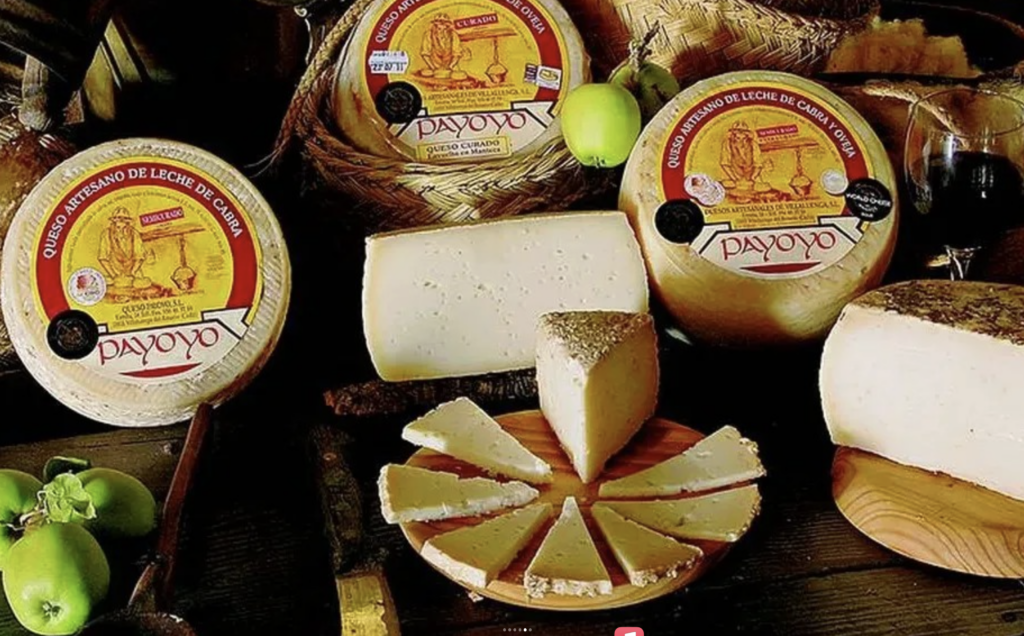
Varieties range from fresh and lightly cured cheeses to intensely flavoured wheels matured for several months. Some are coated in paprika, olive oil, rosemary, bran or lard during the ageing process.
The town celebrates its cheese-making tradition through the annual Andalucian Artisan Cheese Fair, which attracts producers and visitors from across the region.
Several shops in Villaluenga sell locally made cheeses, providing visitors with an opportunity to taste and purchase them directly in the area where they are produced.
Local restaurants also serve mountain dishes featuring goat, pork, mushrooms, stews and produce from the surrounding countryside.
Walking and caves
Villaluenga’s position inside the Sierra de Grazalema makes it an excellent base for outdoor activities, especially during spring and autumn.
The limestone landscape contains numerous caves, chasms and underground systems, making the area particularly important for speleology.
Among its best-known natural landmarks is the Sima de Villaluenga, a deep pothole connected to kilometres of underground passages. It should only be approached or explored with appropriate expertise and equipment.
A more accessible excursion is the trail to the Llanos del Republicano, a broad mountain plain surrounded by limestone peaks.
Access restrictions may apply to certain trails within the natural park, while weather can change rapidly in the mountains. Visitors should consult official park information before setting out and should not enter caves or chasms without a qualified guide.
Despite being in southern Spain, the Sierra de Grazalema records exceptionally high rainfall. Walkers should carry suitable clothing even when the nearby coast is warm and sunny.
Villaluenga del Rosario is approximately 35 minutes from Grazalema, 45 minutes from Ronda and around 90 minutes from Marbella.
The journey from Cadiz city takes roughly one hour and 40 minutes, while Jerez is approximately 90 minutes away by car.