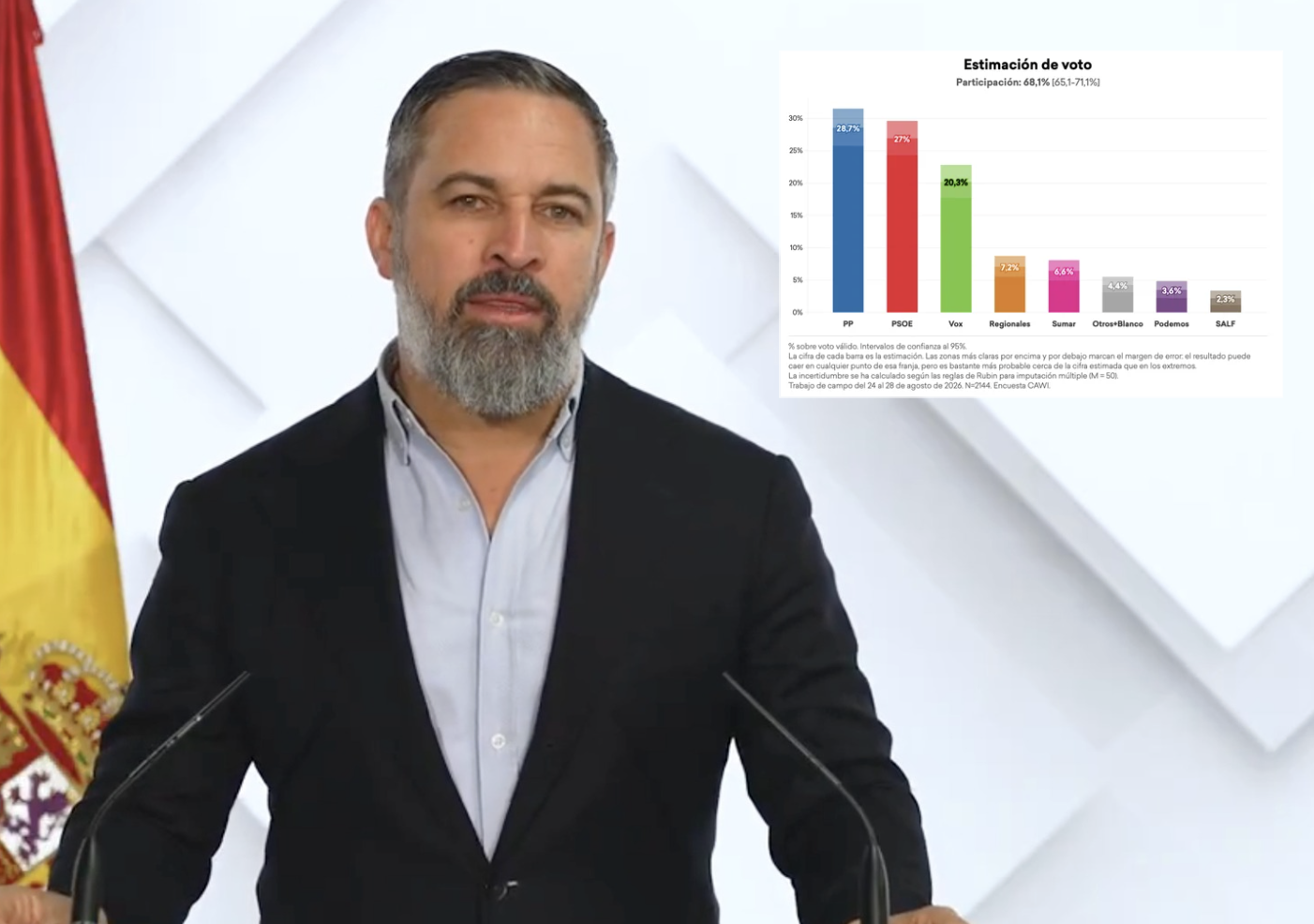

Spain’s hard-right Vox party has seen a significant surge in support following the Ceuta migrant crisis, a new poll suggests.
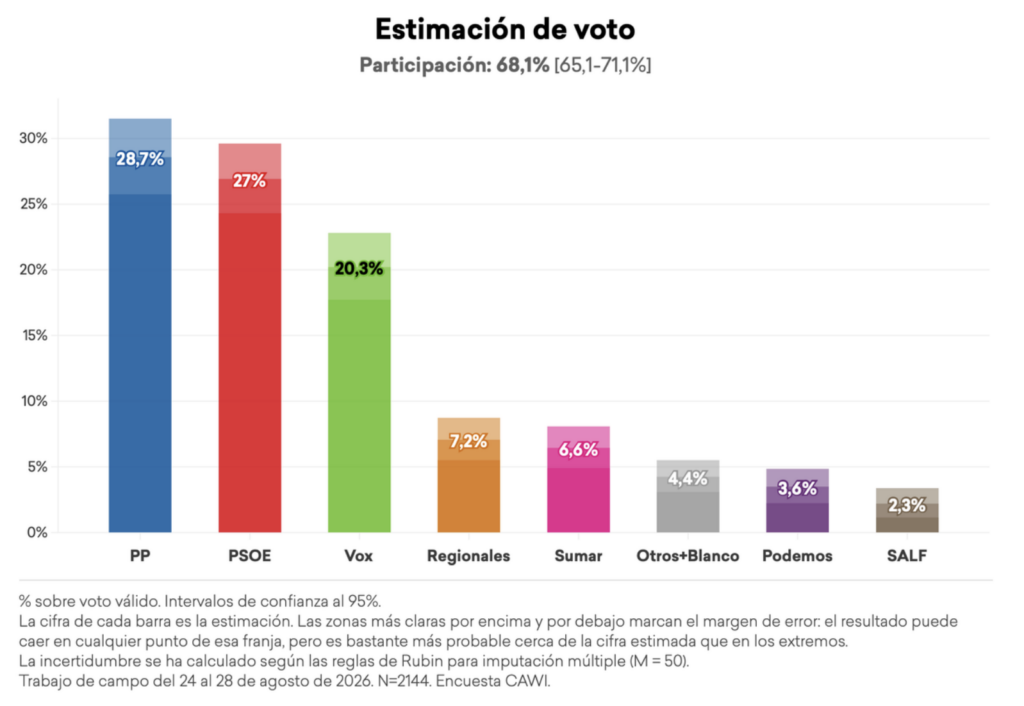
Support for Santiago Abascal’s party has grown to 20.3%, up 3.2 percentage points from 17.1% in the previous poll.
The findings come from the latest Pulso Electoral by research organisation More in Common, with fieldwork carried out between August 24 and 28.
It came almost a month after 72,000 people stormed the Morocco-Spain border in Ceuta on July 30 and 31, sparking a humanitarian and political crisis.
Spain must hold a general election no later than August 22 next year.
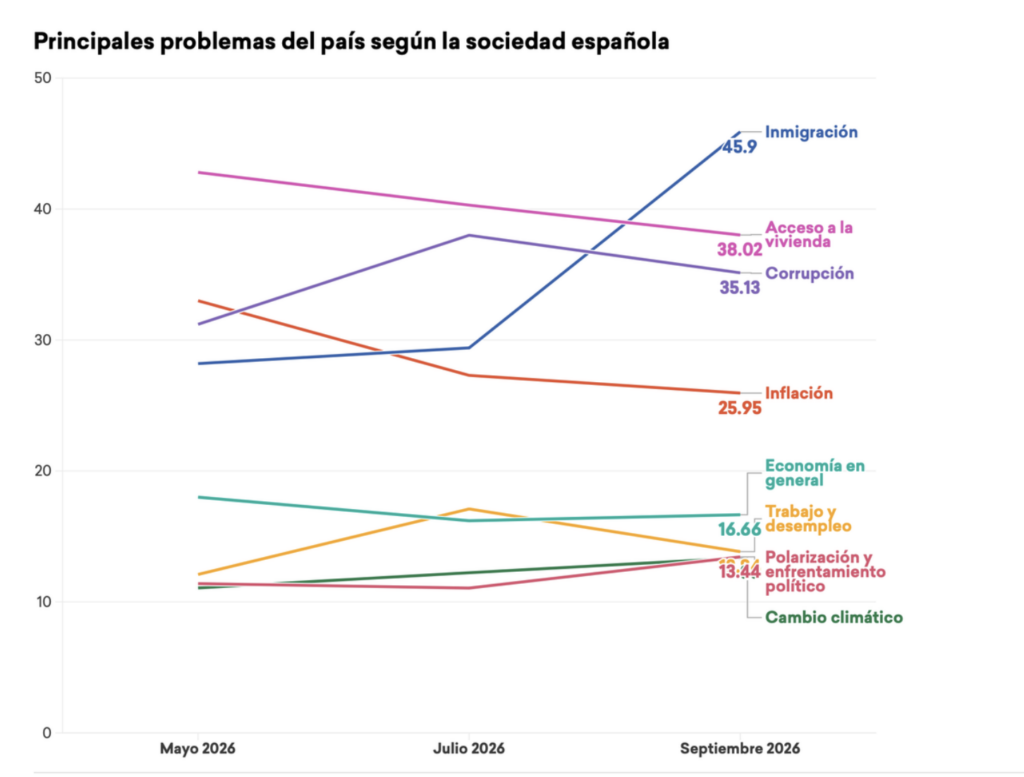
In the poll, some 45.9% of respondents named immigration among Spain’s three biggest problems, an increase of 16 percentage points in just two months.
It has consequently overtaken housing as the issue causing the greatest concern among voters.
The shift is particularly pronounced among people who remain undecided about how they would vote.
Some 42.6% of undecided voters now identify immigration as one of the country’s biggest problems, representing an astounding increase of 20.7 percentage points since the previous survey.
Among Vox voters, the figure reaches 75.7%, compared with 55.1% among supporters of the conservative Partido Popular (PP).
Concern is not restricted to the political right, however, with 30.8% of PSOE voters and 18.8% of Sumar supporters also naming immigration as a major issue.
Vox gains as PP tumbles
While Vox recorded the biggest increase of any major party, Alberto Nuñez Feijoo’s PP suffered the largest fall.
The PP remains in first place but has dropped from 31.3% to 28.7%, a decline of 2.6 percentage points.
Prime Minister Pedro Sanchez’s PSOE, meanwhile, has moved in the opposite direction, climbing 1.3 points from 25.7% to 27%.
It means the gap between Spain’s two biggest parties has collapsed from 5.6 points to just 1.7.
Sumar also suffered a significant setback, falling from 8.2% to 6.6%, while Podemos edged upwards from 3.3% to 3.6%.
The figures suggest that much of the movement is taking place within Spain’s existing political blocs rather than between left and right.
In particular, some former PP voters appear to be migrating towards Vox.
The proportion of people who backed the PP in the 2023 general election and would now vote Vox has increased from 11.6% to 14.2%.
At the same time, the proportion of former PP voters who would remain loyal to Feijoo’s party has fallen from 80.2% to 73.1%.
Vox, by contrast, would retain an extraordinary 91% of its 2023 voters, according to the study.
Despite the PP’s losses, the overall right-wing bloc remains comfortably ahead.
Combined support for the PP, Vox and SALF stands at around 51.3%, compared with approximately 37% for PSOE, Sumar and Podemos.
Vox far above its 2023 result
Perhaps the most striking comparison is with Spain’s last general election.
Vox secured just 12.4% of the vote in July 2023. The new poll puts the party at 20.3%, almost eight percentage points higher.
That makes Abascal’s party by far the strongest performer compared with the last general election among Spain’s major national parties.
It also leaves Vox just 6.7 points behind the PSOE. At the 2023 election, more than 19 percentage points separated the two parties.
The poll follows a turbulent summer in which immigration became one of the defining political issues in Spain following the Ceuta migrant crisis.
Vox has consistently placed immigration, border control and security at the centre of its political messaging.
The latest figures suggest the party is benefiting from the increased prominence of those issues, while simultaneously taking support from its principal rival on the Spanish right.
The survey also paints a gloomy picture of the wider national mood.
Some 55% of respondents believe Spain is heading in the wrong direction, compared with just 23% who believe it is heading in the right one.
Meanwhile, 70% believe Spain is either ‘divided’ or ‘very divided’, the highest level recorded by More in Common since 2021.