
Spain has announced a €35.6million plan to fortify the border of Ceuta amid the unprecedented migrant crisis.
Interior Minister Fernando Grande-Marlaska unveiled a package of ‘extraordinary’ measures on Friday, including extending the border breakwaters at El Tarajal and Benzu, installing a permanent system of anchored buoys at sea and increasing aerial surveillance using drones.
The government also plans to deploy light rapid-intervention boats and remotely operated underwater equipment, significantly increasing Spain’s ability to monitor and respond to attempted crossings by sea.
The announcement comes almost a month after the extraordinary events of July 30 and 31, when Marlaska says some 72,000 people crossed irregularly into Ceuta.
Around 5,000 migrants remain in the city, according to figures given by the minister to Congress on Friday, including approximately 1,500 minors.
€35.6million border upgrade
Marlaska said Spain has requested European funding for the €35.6million programme, with reports indicating that 90% of the investment would be co-financed by the EU.
The most visible changes will take place at El Tarajal and Benzu, the two ends of Ceuta’s land border with Morocco where the frontier reaches the sea.
The breakwaters will be extended, while permanent anchored buoys will provide an additional maritime containment system.
The measures will be backed by drones, intervention vessels and underwater technology.
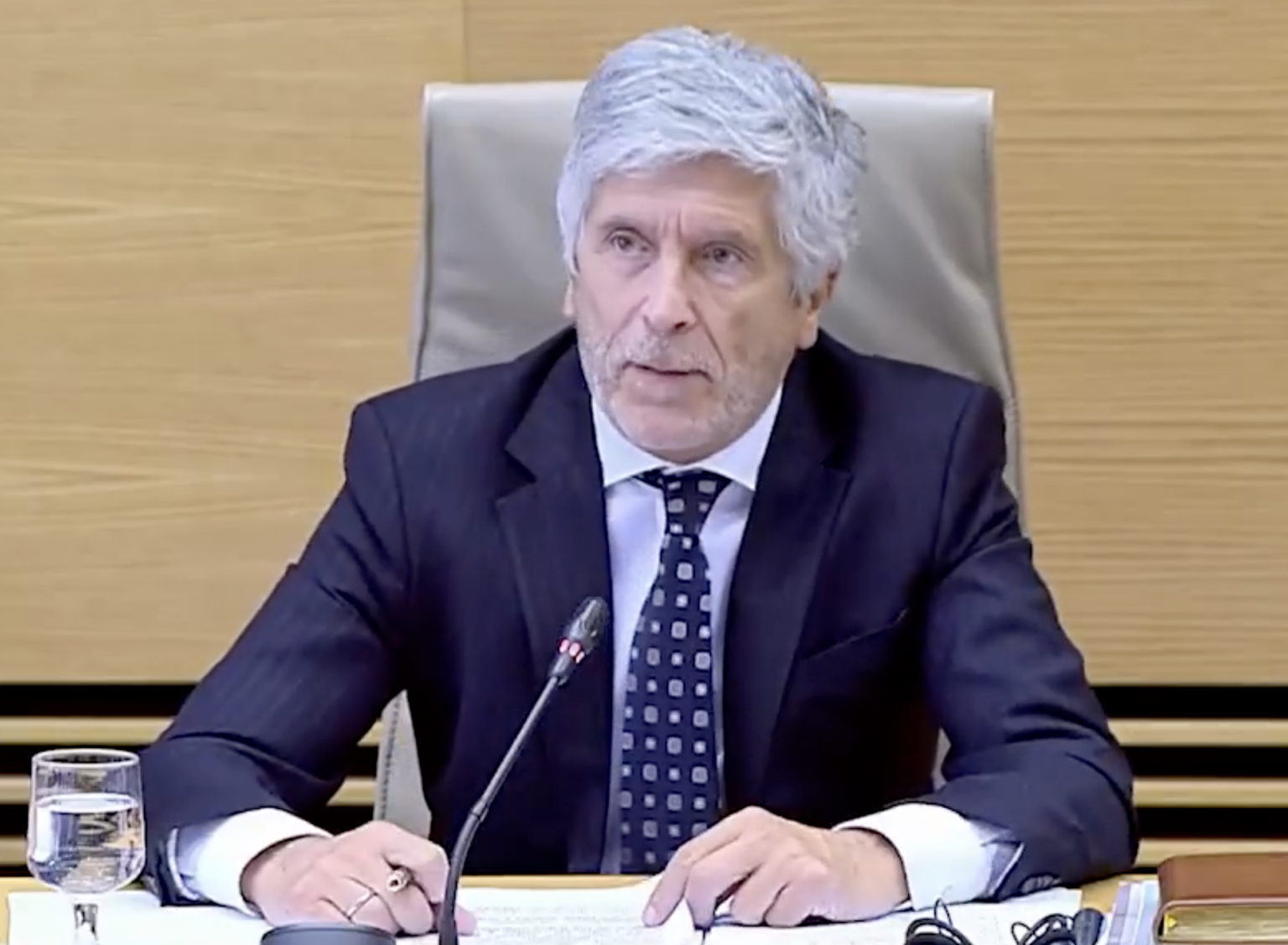
Marlaska acknowledged during his appearance before the Interior Committee of Spain’s Congress that the government needed to ‘draw lessons’ from what happened at the end of July.
He did not initially address the controversy over whether Spain’s intelligence services had provided advance warning of the scale of the impending crossings.
Defence Minister Margarita Robles has maintained that the CNI carried out its duties and that warnings were communicated, although she has distinguished these from a formal intelligence report predicting the enormous influx.
More than 1,600 police and Guardia Civil deployed
The Interior Minister also revealed that more than 1,600 Policia Nacional and Guardia Civil officers are currently operating on the ground in Ceuta, supported by Spain’s Armed Forces.
He said the government had begun strengthening security before the mass crossings, with 70 additional Guardia Civil officers deployed from July 8 following a Supreme Court ruling concerning migrants entering Ceuta by swimming.
The operation was then dramatically expanded following the events of July 30.
Marlaska described the crisis as one of Spain’s greatest recent challenges in terms of border and migration management.
Government praises Morocco
The minister also strongly defended Morocco’s role during and after the crisis, describing cooperation between the two countries as ‘sustained and effective over the years’.
He said Moroccan authorities had intercepted more than 2,700 irregular departures by sea towards Spain during 2026, and described Morocco as an ‘absolutely reliable partner’.
The government has maintained that most of the 72,000 people who crossed into Ceuta subsequently returned to Morocco, while thousands remain in the Spanish territory.