
Spain is facing a ‘critical day’ in its battle against devastating wildfires in Madrid and Avila.
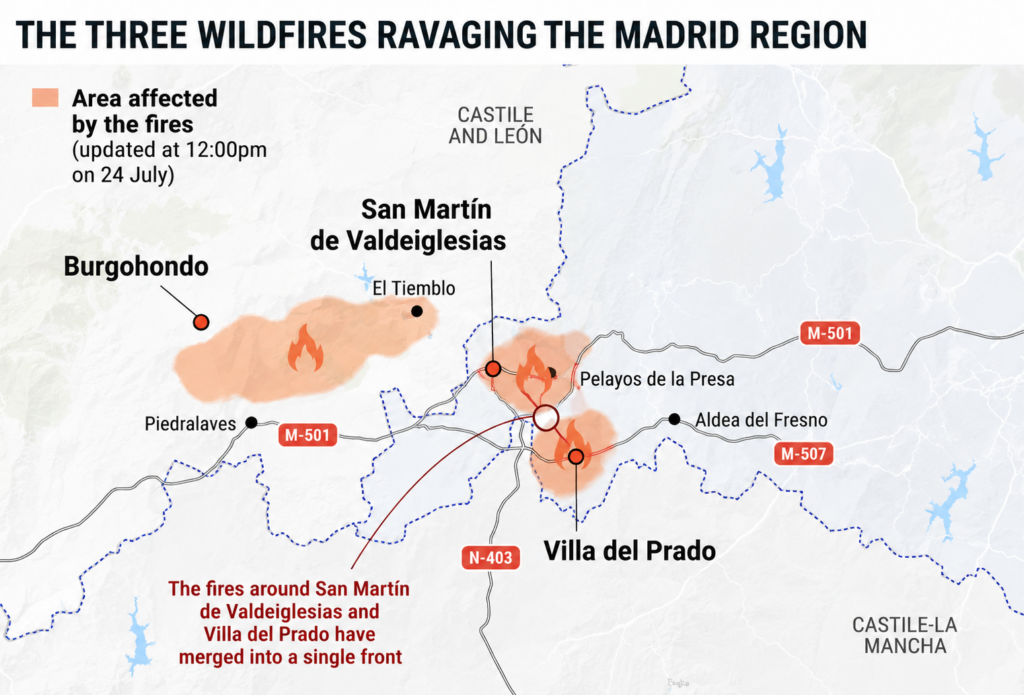
It comes after three blazes in the Madrid region merged into a single front, raising fears they could join the inferno in neighbouring Avila.
The fires in Almorox, San Martin de Valdeiglesias and Villa del Prado merged on Friday afternoon, in what is now being referred to as the Sierra Oeste fire.
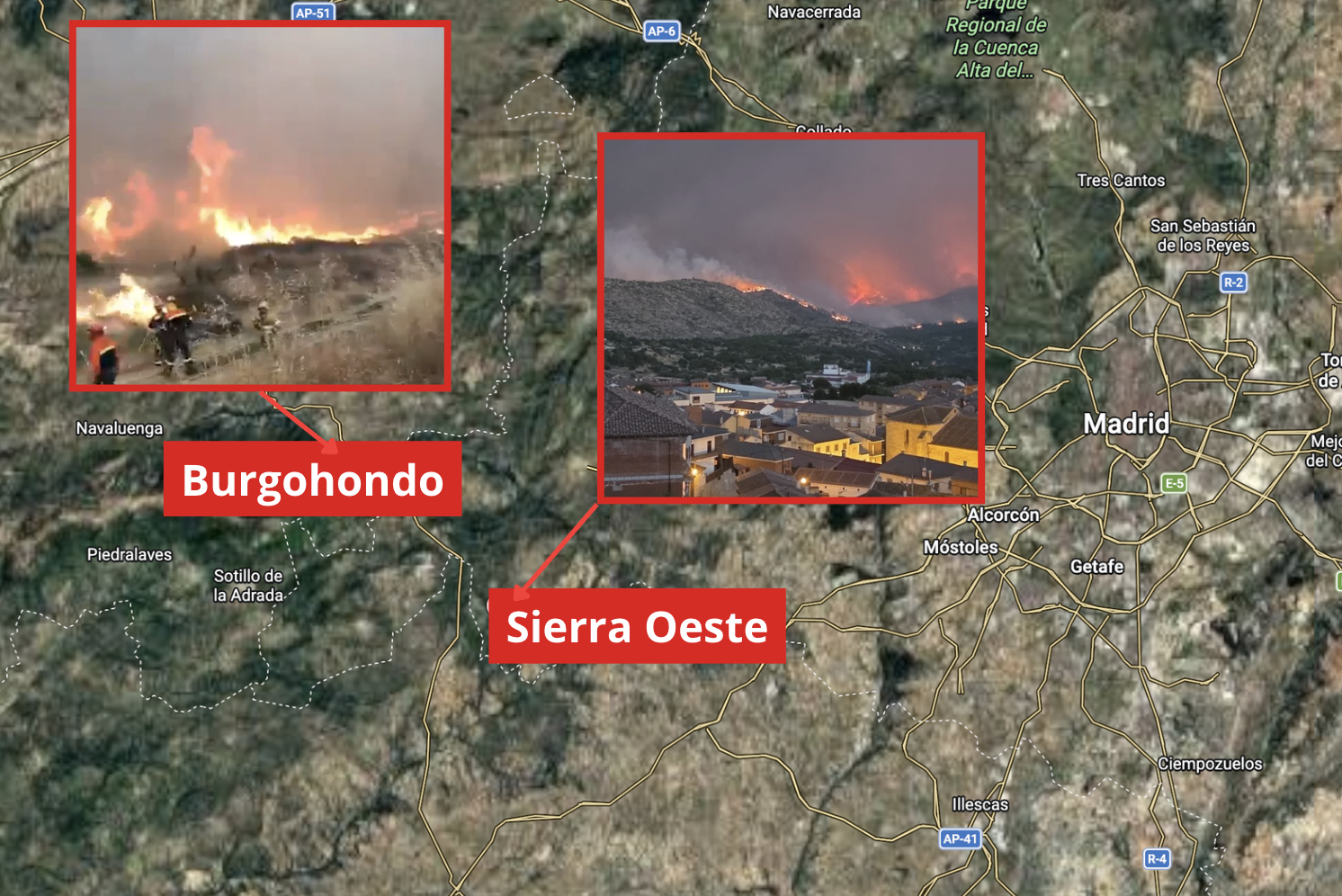
There are now fears that Sierra Oeste could link up with the Burgohondo wildfire in Avila.
‘Our priority right now is to prevent the fires from converging,’ Interior Minister Fernando Grande-Marlaska said from the emergency command centre in Cenicientos.
The merged Madrid wildfire has already scorched more than 12,000 hectares, fuelled by temperatures above 40C, low humidity and wind gusts of more than 50km/hr.
More than 30,000 people have now been evacuated across the Madrid region, while a further 20,000 residents remain confined to their homes.
Evacuation orders have been issued for Robledo de Chavela, Zarzalejo and Navalagamella, while around 5,000 campers were evacuated from El Escorial campsite late on Friday.
Grande-Marlaska said investigators believe the San Martin de Valdeiglesias blaze was started by a vehicle that caught fire on the M-501, while the causes of the Villa del Prado and Burgohondo fires remain under investigation by the Guardia Civil’s environmental unit, SEPRONA.
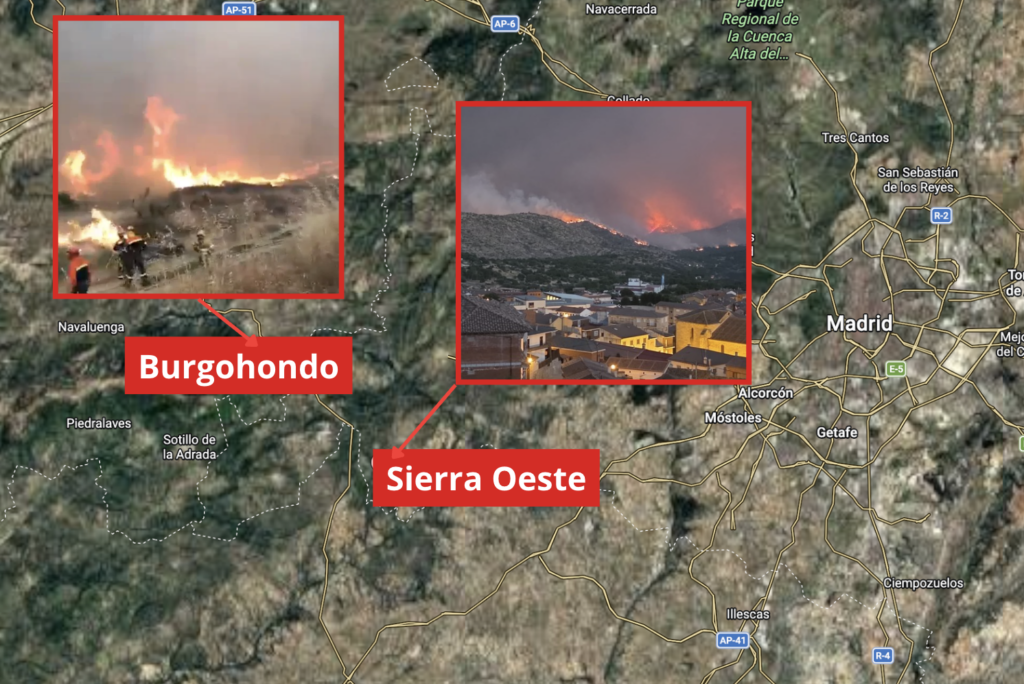
In neighbouring Avila, around 13,000 people have been affected after residents in El Tiemblo, Burgohondo and Navaluenga were ordered to remain indoors as flames advanced at speeds of up to three kilometres in just 40 minutes.
Authorities have also evacuated El Burguillo campsite, several rural accommodation properties in the Valle de Iruelas Nature Reserve and a care home in El Tiemblo, with elderly residents moved overnight to Cebreros.
The Spanish government declared a national emergency in both Madrid and Avila on Friday after the scale of the fires overwhelmed regional firefighting resources.
‘We have wind gusts exceeding 50km/hr, temperatures that offer us no help whatsoever and extremely low humidity,’ Grande-Marlaska warned.
‘These are very adverse conditions, although we hope they will improve somewhat tomorrow.’