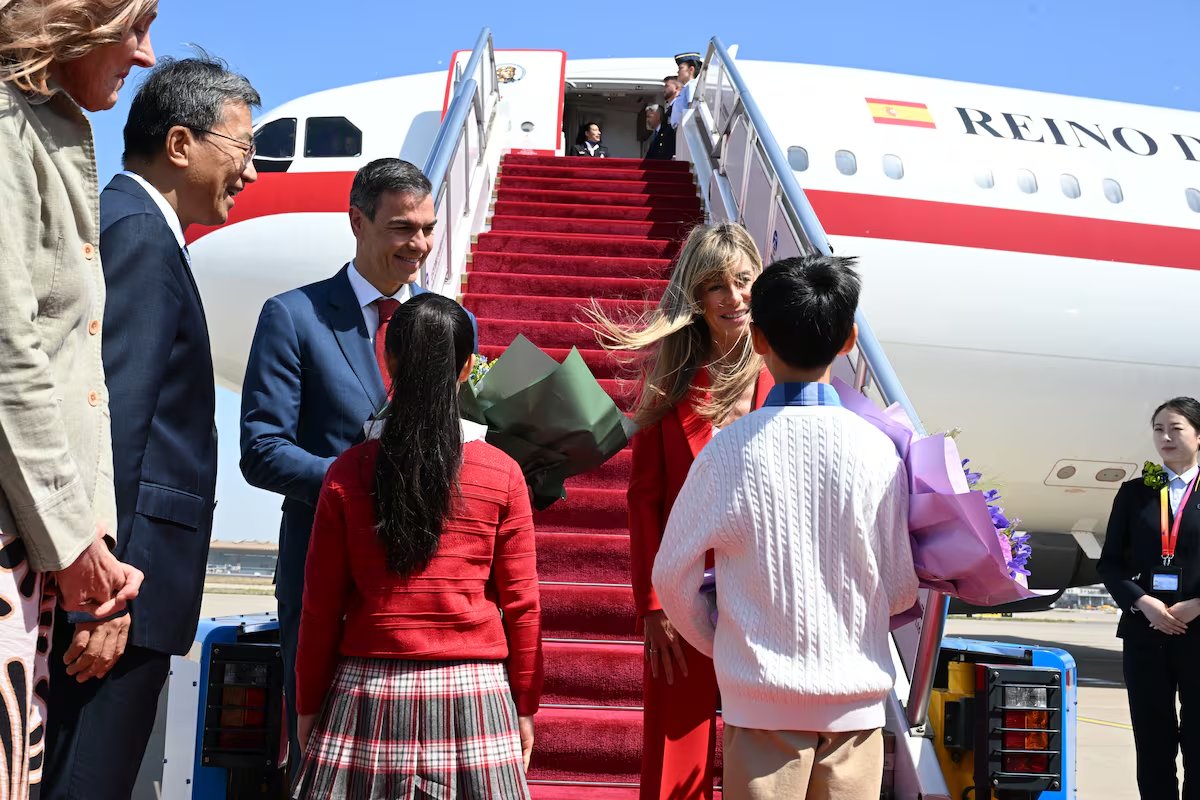

The wife of Pedro Sanchez has been ordered to surrender her passport and is barred from leaving Spain after a judge formally sent her to trial on multiple corruption-related charges.
Judge Juan Carlos Peinado imposed the precautionary measures on Begoña Gomez and her Moncloa adviser Cristina Alvarez in a ruling issued on June 20, arguing that there is a risk they could flee the country before the case reaches a jury trial.
According to the judge, the offences under investigation carry potential prison sentences ranging from two to 16 years.
While acknowledging that both defendants could ultimately be acquitted, Peinado said that if convicted on most of the charges, they would face prison terms that would likely rule out a suspended sentence.
The judge has therefore ordered the withdrawal of all passports held by Gomez and Alvarez, including any diplomatic passports, and prohibited the issuance of new travel documents.
Both women have also been banned from leaving Spain and must report to court every 15 days.
In his ruling, Peinado argued that the security arrangements currently surrounding Gomez due to her husband’s position as Prime Minister could eventually disappear, making any potential flight easier in the future.
The judge has opened trial proceedings against Gomez, Alvarez and businessman Juan Carlos Barrabes.
Gomez faces allegations of influence peddling, corruption in business dealings, misappropriation and misuse of public funds.
Prosecutors allege she benefited from the work of a publicly funded government employee on projects linked to her university activities and private initiatives.

Peinado argues there is evidence that Gomez requested the appointment of Alvarez because of their relationship of trust and subsequently used her for activities unrelated to her official government role, including liaising with universities, sponsors and technology partners.
The judge also alleges that Gomez sought to take control of software developed through Madrid’s Complutense University using public resources, although her defence disputes the accusations.
Alvarez has been charged with the same four offences. Peinado claims she knowingly carried out tasks unrelated to her public role and therefore acted as a necessary collaborator in the alleged misuse of public resources.
Barrabes, meanwhile, faces charges of influence peddling and corruption in private business dealings.
Gomez’s legal team has confirmed it will appeal the precautionary measures, including the passport seizure and travel ban. However, the decision to send the case to trial cannot itself be appealed.
The case has become one of the most politically sensitive legal investigations in Spain, placing fresh pressure on Sanchez’s government at a time of growing political turbulence and corruption allegations affecting both the ruling PSOE and opposition figures.