
The two hantavirus patients whose air ambulance was initially expected to stop in Malaga have finally resumed their journey to the Netherlands.
It comes after their medical evacuation plane suffered a major technical failure and became stranded overnight in the Canary Islands.
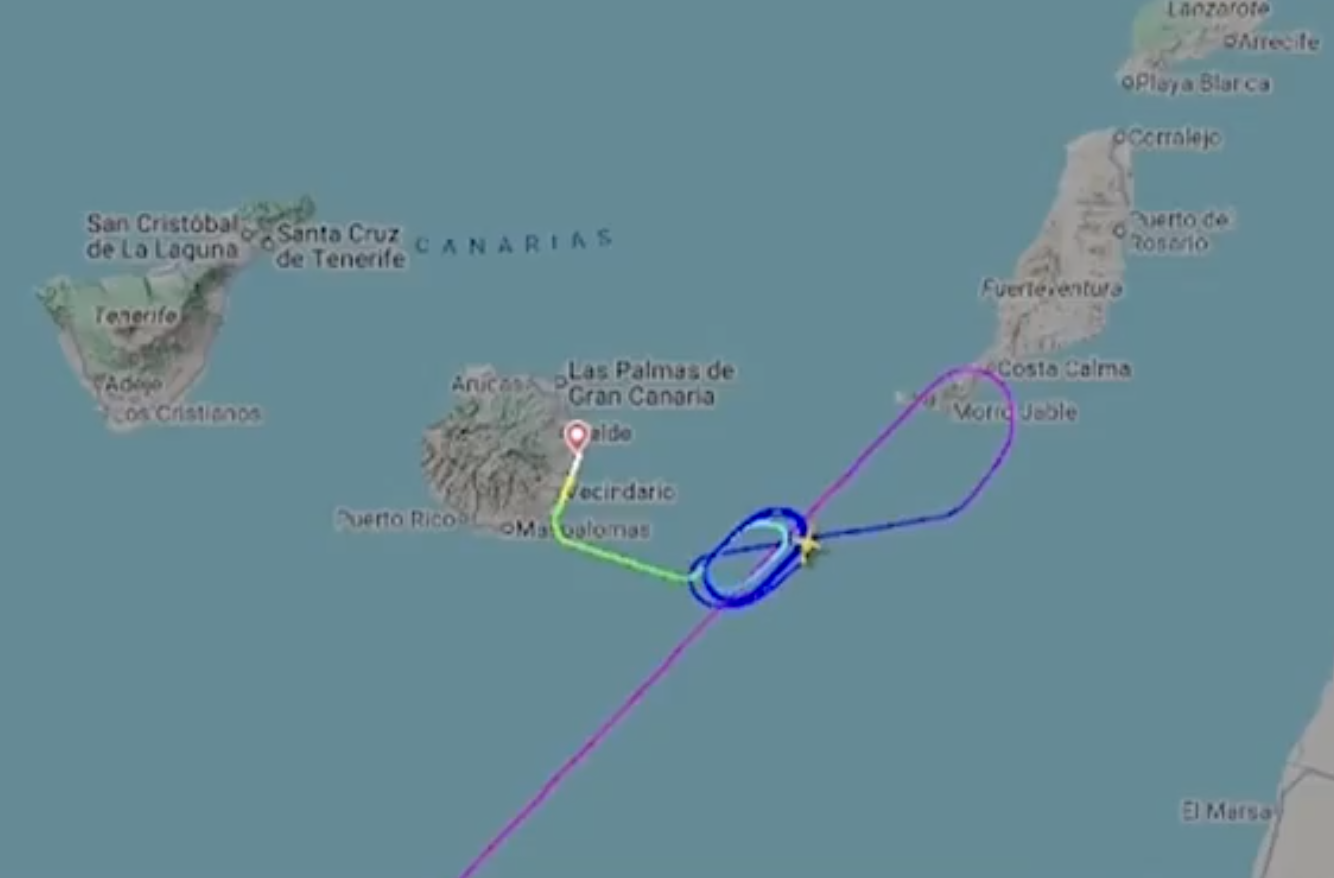
Flight tracking data earlier showed Malaga added to the aircraft’s route after the emergency diversion to Gran Canaria, sparking concern on the Costa del Sol.
However, Spanish health authorities later abandoned those plans and instead arranged for a replacement medical aircraft to complete the journey directly to Amsterdam.
The patients, linked to the outbreak aboard the cruise ship MV Hondius, had been left stranded at Gran Canaria airport after their original air ambulance suffered an electrical failure during the evacuation from Cape Verde.
Authorities confirmed the replacement aircraft departed during the early hours of Thursday morning and is now completing the transfer to the Dutch capital.
The incident began after the original medical jet was denied permission to refuel in Morocco during a planned stop in Marrakech.
As a result, the crew requested emergency authorisation to land in Gran Canaria instead.
During the stopover, medical staff detected an electrical fault affecting the life-support system connected to one of the patients.
Spanish health authorities later confirmed the patient remained inside the aircraft connected to the airport’s electrical supply while emergency arrangements were made.
Officials repeatedly stressed there was no risk to public health and that strict isolation protocols remained in place throughout the operation.
Confusion surrounded the incident for several hours after authorities initially claimed the diversion was purely due to refuelling problems caused by Morocco’s refusal to accept the aircraft.
Later statements pointed to a rupture in the plane’s biological isolation bubble before the Ministry of Health clarified that the key issue involved the electrical medical support system.
The Canary Islands government reportedly supplied emergency batteries in an attempt to allow the aircraft to continue flying.
However, Spain’s Ministry of Health ultimately refused to authorise take-off after determining the batteries did not provide enough autonomy to safely sustain the patient for the remainder of the journey.
Officials feared the plane may have required another emergency landing on mainland Spain if it attempted to continue.
Instead, authorities opted to wait for a second fully equipped medical aircraft capable of completing the route directly to Amsterdam.
Throughout the stop in Gran Canaria, nobody boarded or exited the plane, in line with strict conditions imposed by Spanish authorities before granting permission to land.
The incident forms part of the growing controversy surrounding the MV Hondius cruise ship, which is expected to dock in the Canary Islands on Saturday after possible hantavirus infections were detected onboard among passengers.
Hantavirus is a rare disease generally transmitted through rodents and can cause severe respiratory illness, prompting heightened international health monitoring and strict prevention protocols.