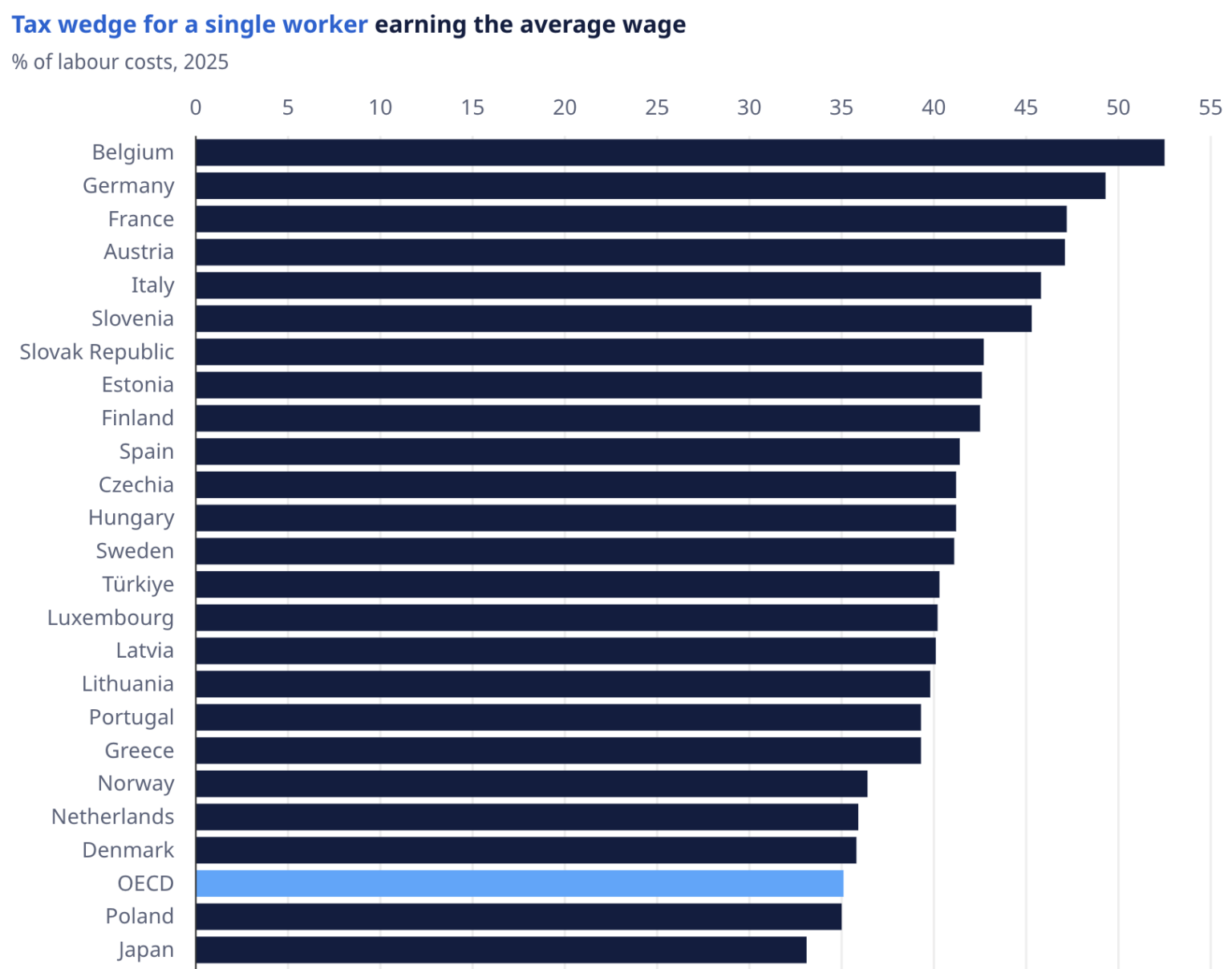

Spain has, for the first time on record, entered the top 10 countries with the highest tax burden on salaries, according to a new OECD report.
The latest Taxing Wages study shows that Spain is collecting more than ever from employment income, driven by increases in income tax and social security contributions.
While this has helped reduce the country’s public deficit and fund rising spending, it has also placed growing pressure on workers’ pay packets.
Workers paying more than ever
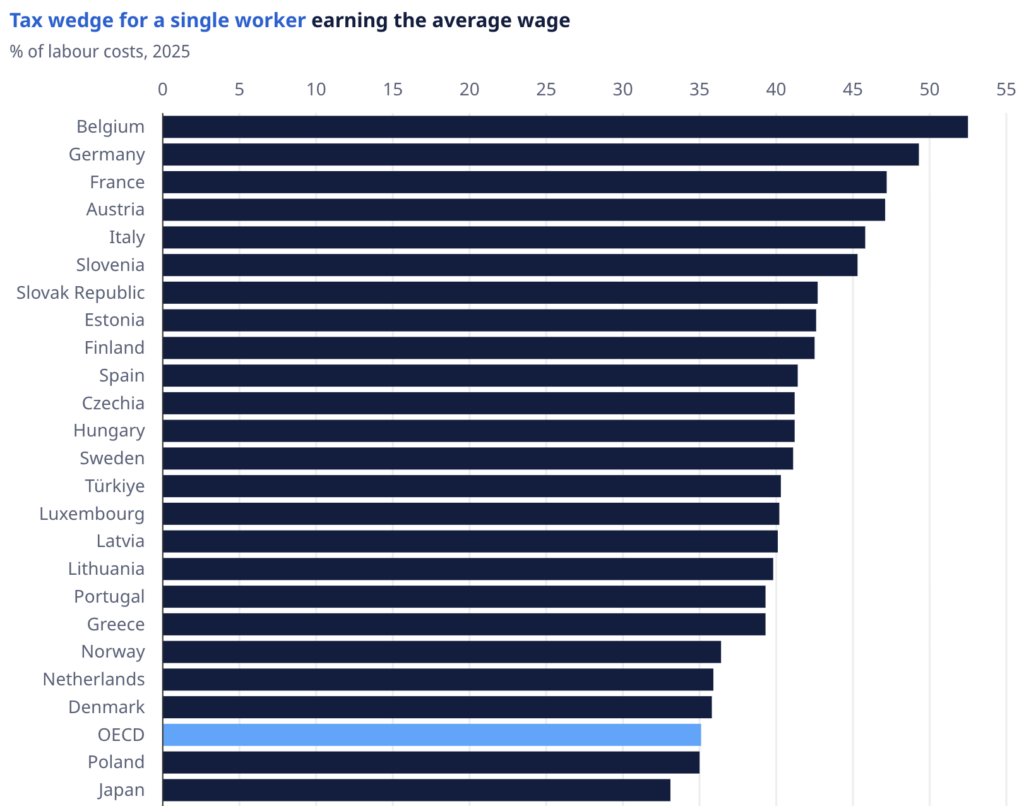
A single worker earning the average salary in Spain now faces a total tax burden – known as the ‘tax wedge’ – of 41.44% of their gross income.
That puts Spain 10th highest in the OECD, alongside countries like Germany, France, Italy and Belgium.
The tax wedge includes income tax plus both employee and employer social contributions, minus any benefits received.
Since 2018, Spain’s tax burden on wages has risen by 1.8 percentage points – one of the fastest increases in the OECD – pushing the country up from 16th place to the top 10.
The long-term trend is even clearer. At the start of the century, the same average worker paid around 38.6% of their salary in taxes. Today, that figure has climbed to over 41%.
In practical terms, for every €1,000 earned, workers now pay around €414 in taxes and contributions, compared to €386 two decades ago.
Low earners also hit hard
The increase is not limited to higher earners.
A single worker earning 33% below the national average now pays close to 38% of their income in taxes – the highest level on record.
Spain is one of just a handful of OECD countries where the tax burden on lower incomes is currently at historic highs.
Families are also feeling the squeeze. A household with two children, where one adult earns the average salary and the other earns 67% of it, faces a tax wedge of 38.7% – again the highest recorded level in Spain and among the highest in the OECD.
From below average to above
For years, Spain appeared to have lower taxes on labour than many European countries. But that was largely due to lower wages, not lighter taxation.
As salaries have gradually converged, without major real increases in purchasing power, the tax burden has risen to match and, in some cases, exceed European averages.
For example, a dual-income family with two average salaries now pays over 40% of their income in taxes and contributions – around 2.5 percentage points higher than the EU average.
At the start of the century, Spain’s burden was about four points lower than its European peers.
Inflation quietly driving tax rises
A key factor behind the increase is how Spain’s income tax system responds to inflation.
Because tax brackets have not been fully adjusted (or ‘deflated’) in line with rising wages, many workers have been pushed into higher tax bands without real gains in purchasing power.
This has allowed the government to increase revenue without formally raising tax rates.
According to the European Central Bank, Spain is one of the EU countries where income tax rises most sharply as wages increase – meaning even small salary boosts can lead to disproportionately higher tax bills.
Closing the gap with Europe
The result is a sharp rise in overall tax revenue. By 2024, income tax and social contributions accounted for 25.3% of Spain’s GDP, significantly narrowing the gap with the eurozone.
This has helped Spain become one of the few European countries to reduce its public deficit below pre-pandemic levels.
But the OECD data suggests that, despite historically lower wages, the actual tax effort required from Spanish workers is now higher than the European average, in a shift that is increasingly being felt across all income groups.