
Hundreds of migrants have been filmed queuing outside Moroccan consulates across Spain as they scramble to secure paperwork for the government’s proposed mass regularisation – with some openly claiming they receive €1,200 a month in benefits.
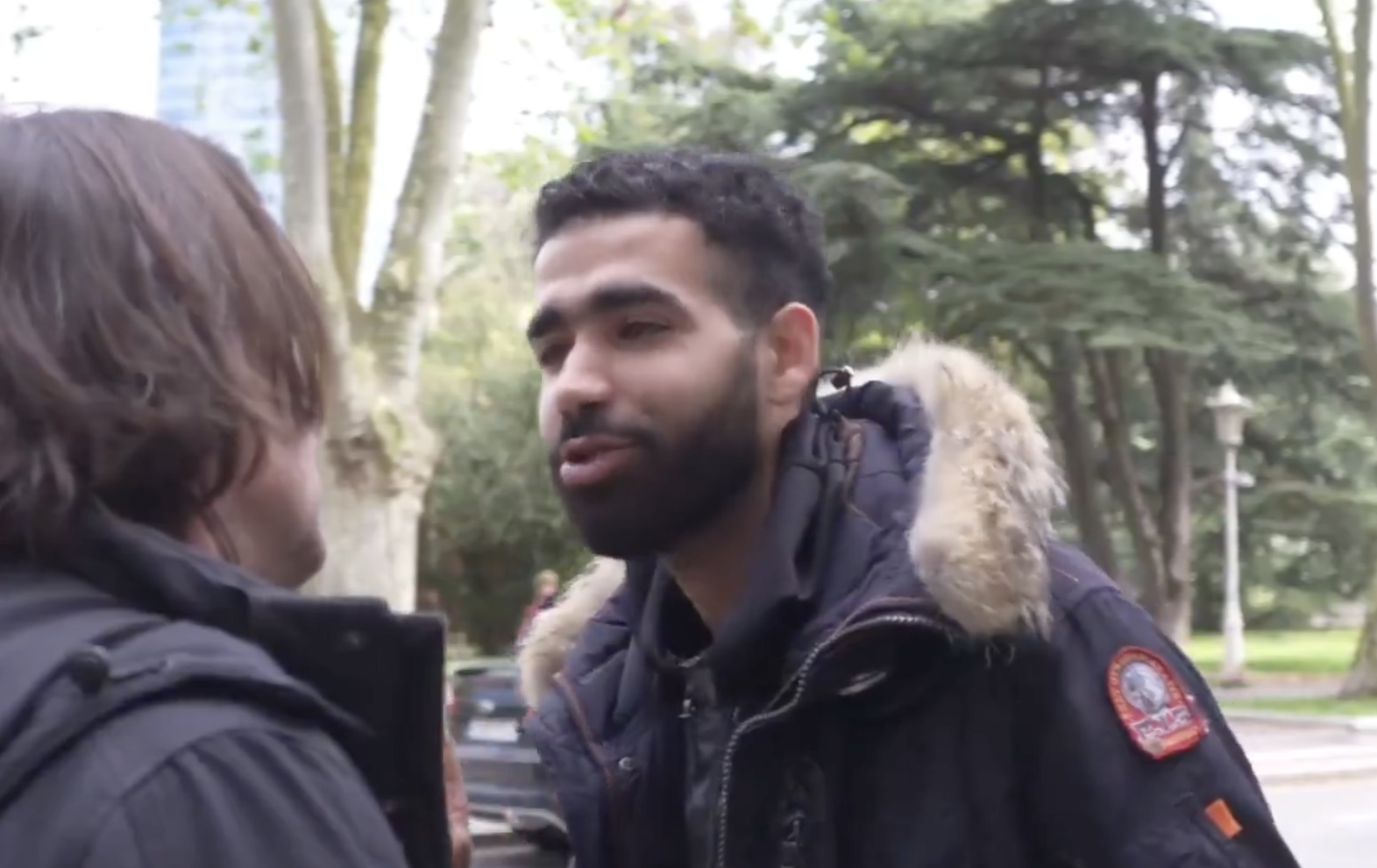
The footage, recorded by Spanish outlet OK Diario, shows migrants speaking directly to the newspaper’s journalist while waiting in line outside the consulate in Bilbao.
Many admit they have been living in Spain without papers for years and now see the new law as a turning point.
‘I didn’t have papers yet, but when this law came out, this is the moment,’ one man says.
Another makes a more eye-catching claim: ‘They give me €1,200 to live on and now the residency papers.’
He goes further, breaking it down: ‘I get €400 to pay for housing and €800 for food, for clothes… €1,200 in total.’
The same man says he pays around €200 for a shared flat, adding: ‘I have €1,000 leftover.’
Others speak about additional support they expect to access.
‘After six months you get money for dental help, eye care and all that,’ one says.
He also claims the regularisation will allow him to access ‘free courses’ worth between €800 and €900, adding: ‘Everything free.’
Another acknowledges the backlash the policy has generated: ‘I know people on the right don’t like it, but I don’t care.’
The footage has sparked a fierce reaction online, particularly in right-wing circles and among anti-immigration accounts.
OK Diario is a controversial publication that is known for its highly partisan and right-wing reporting.
Open praise for Sanchez
The footage attempts to suggest that the hundreds of thousands of migrants being regularised will vote for Pedro Sanchez in the future.
Several of those filmed express support for current prime minister.
‘Long live Pedro Sanchez!’ some shout, describing him as a ‘good person’.
Some even suggest they would vote for Sanchez if given the opportunity.
However, what is not addressed in the footage is that those currently in an irregular situation – and even newly regularised migrants – do not have the right to vote in Spain.
To be eligible in general elections, non-EU nationals must obtain legal residency, live in Spain for around 10 years and apply for and be granted Spanish citizenship.
Only once they are a Spanish citizen can they vote in national and regional elections.
Why the queues?
The surge in crowds is linked to a key requirement in the regularisation process: obtaining a criminal record certificate from the country of origin.
Without it, applications cannot proceed, creating bottlenecks at consulates and embassies, where appointments are already booked out weeks in advance.
The government’s proposal could allow up to 500,000 migrants to regularise their status, provided they meet criteria including proof of residence and no criminal record.
A politically charged moment
The footage has quickly fed into Spain’s wider debate over migration, with the government presenting the plan as a way to reduce the underground economy and fill labour gaps.
Opponents, meanwhile, argue it risks encouraging further irregular migration and placing pressure on public services.