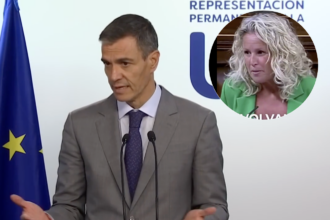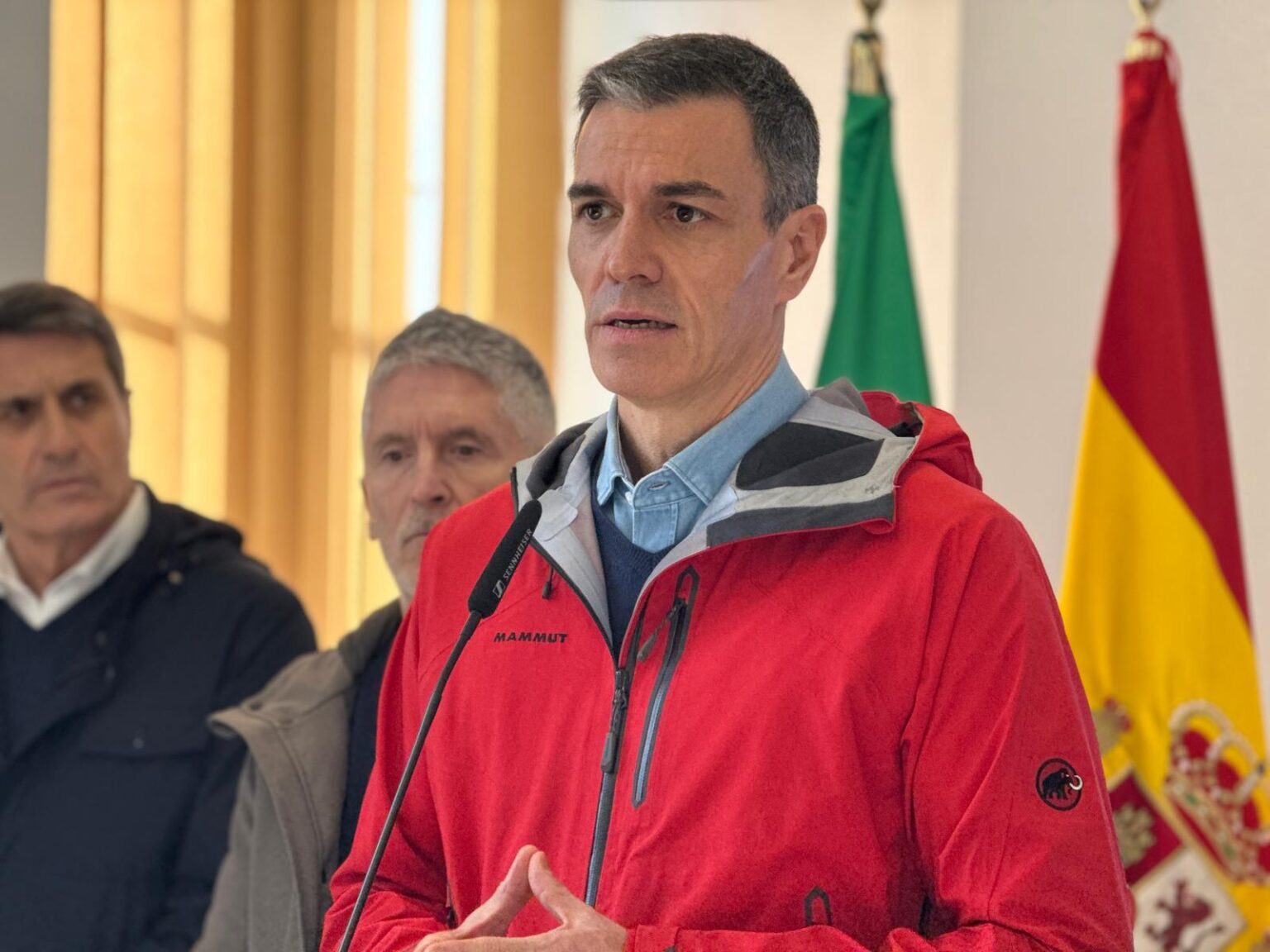

Pedro Sanchez has issued a public defence of his government’s sweeping migrant regularisation plan, insisting it is both an ‘act of justice’ and an economic necessity for the country’s future.
The intervention came in the form of an open letter to citizens (read in full and in English below), published as the Council of Ministers approved a new decree to legalise the status of hundreds of thousands of undocumented migrants living in Spain.
The move follows a citizen-led legislative initiative backed by more than 600,000 signatures, with support from trade unions, business organisations, the Church and wider civil society.
Sanchez framed the measure as recognition of a reality already embedded in Spanish life. He pointed to the hundreds of thousands of migrants who, despite lacking formal status, are working, raising families and contributing to communities across the country.
The prime minister also drew on Spain’s own history of emigration, arguing that the country has a moral obligation shaped by the experiences of past generations who left for Europe and the Americas in search of opportunity.
But beyond the social argument, the government is leaning heavily on economic logic.
Sanchez warned that Spain faces a structural demographic challenge, with an ageing population and falling birth rate threatening long-term growth and the sustainability of public services.
Without an increase in the number of workers contributing to the system, he said, the country risks weakening its economy and welfare model.
Read the full letter below.
Pedro Sanchez’s letter
Dear citizens,
Today, once again, I feel proud to be Spanish. Because today we have shown, once again, that Spain moves forward when its society gets involved.
The Council of Ministers will today approve the Royal Decree that begins the process of extraordinary regularisation of people in an irregular situation in our country.
If we have reached this point, it is thanks to hundreds of organisations and more than six hundred thousand people who, for years, have worked tirelessly to bring this initiative to Parliament through a Popular Legislative Initiative. An initiative that has achieved something unusual in times of polarisation: the ability to unite. It has had the support of the Church, of trade unions, of employers and of a civil society that shares a clear objective: to improve the lives of their neighbours and, in doing so, make Spain a better country.
And it is precisely there that I want to place the emphasis.
This regularisation is, above all, an act of normalisation. Of recognising the reality of nearly half a million people who are already part of our daily lives. People who care for our elderly. Who work so that food reaches our tables. Who innovate, who undertake, whose children share classrooms, games and a future with ours. People who build the rich, open and diverse Spain that we are – and that we aspire to be.
It is also an act of justice towards our own history. Towards our grandparents, who emigrated to America and Europe in search of a better life. Towards our brothers and sisters who were forced to leave after the 2008 crisis. They helped build the societies that received them. And with their remittances and everything they learned abroad, they also contributed to modernising Spain.
But let us not deceive ourselves. This regularisation is not only an act of justice. It is also a necessity. Spain, like other European countries, is ageing. Without new people working and contributing, our prosperity slows, our capacity to innovate weakens and our public services – healthcare, pensions, education – suffer. In fact, it is also thanks to the dynamism of migrants that the Spanish economy is today the fastest growing in Europe and the one creating the most employment opportunities. For those who come from outside and for those who were born here.
Neither technology nor automation will solve this challenge on their own in the coming years. The path is clear: better integration, better organisation and channelling all the potential of those who already live among us.
Because that is the true meaning of this regularisation: to recognise rights, but also to demand obligations. That those who are already part of our daily lives do so on equal terms, contributing to the sustainability of our country and our model of coexistence.
We are aware that migration brings challenges. It would be irresponsible to deny it. But we also know that regularisation is the best response to address many of them. Because integration is only possible through regular status. Through access to decent work, through contribution to the system, through full participation in our society.
Today we have two paths. That of those who want to sow fear, pit people against one another and condemn thousands to exclusion. Or that of those who understand that migration is a reality that must be managed responsibly, integrated with fairness and turned into shared prosperity.
Spain has always chosen the second path. We have done so before. And we are doing so again today.
Thank you and congratulations on this achievement.