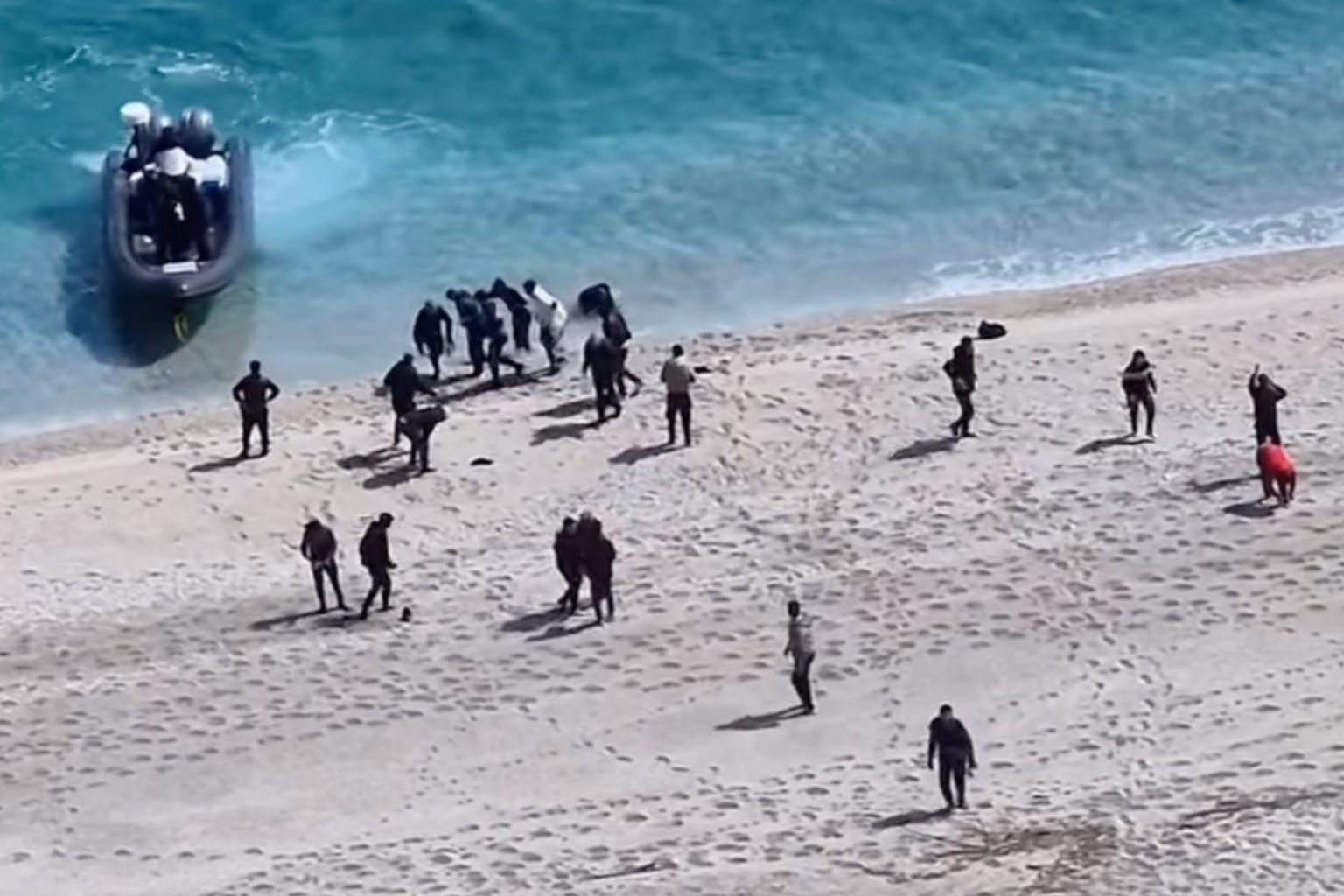

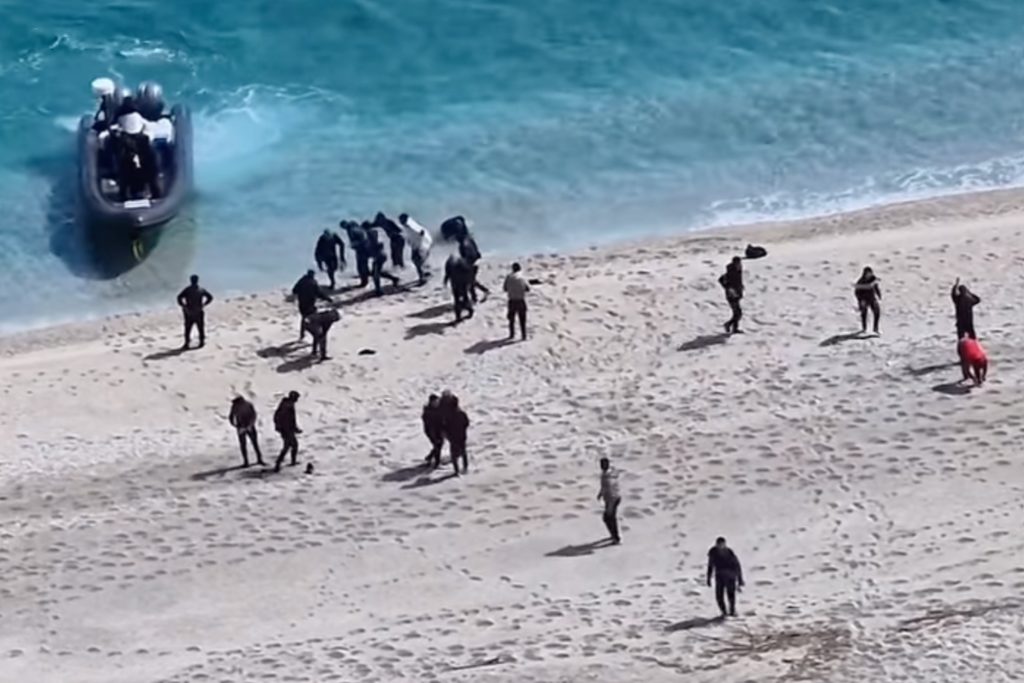
Irregular migration and pressure on Spain’s borders are now viewed as the country’s biggest security and defence challenge, according to a new national survey.
The findings come from the second social perception barometer carried out by polling firm GAD3 for the Spanish Association of Defence, Security, Aeronautics and Space Technology Companies, TEDAE.
The study found that 28% of Spaniards now identify irregular migration as the country’s main security threat.
Meanwhile, 23% pointed to armed conflicts and the economic crises linked to international instability.
The survey, based on more than 2,000 online interviews, suggests Spaniards are becoming increasingly aware of global security risks, even while everyday concerns remain focused on housing and economic stability.
Seven out of 10 respondents said they are now more worried about wars than they were five years ago.
Despite migration topping the list of perceived threats, concern over international conflicts has also risen sharply, with almost six in 10 respondents expressing anxiety over ongoing wars and geopolitical instability.
The strongest perceived impacts of global tensions were linked to energy prices, the cost of living and the wider economy.
An overwhelming 94% of those surveyed said these areas have been directly affected by the current international situation.
The poll also revealed greater trust in international organisations than in Spain’s own preparedness.
NATO was viewed as the institution best prepared to handle modern security threats, with 55% confidence, followed by the European Union at 51%.
However, only around one-third of respondents believe Spain itself is adequately prepared to respond to current defence and security challenges.
Support for greater European strategic autonomy has also increased significantly.
Six out of 10 respondents said it was very necessary or essential for the EU to strengthen its own defence capabilities and reduce reliance on foreign powers.
The survey additionally explored public attitudes towards Spain’s foreign policy positions.
A total of 56% approved of the Spanish government’s stance on the war in Ukraine.
Approval fell to 48% regarding the government’s position on the Middle East and 46% in relation to Gaza Strip.
Support for defence spending is also rising.
According to the poll, 52% of Spaniards support NATO’s target of increasing defence investment to 2% of GDP.
Meanwhile, 57% backed the idea of voluntary military service.
More than half of respondents also said salaries for members of the armed forces should be increased, although support for pay rises has fallen slightly compared to last year.
TEDAE president Ricardo Marti Fluxa described some military salaries as ‘lamentable’, claiming certain wages are close to Spain’s minimum salary threshold.
The study also showed strong backing for Spain’s national defence industry.
Seven out of 10 respondents supported strengthening Spanish defence and security companies, while eight out of 10 considered the sector important or very important for national security.
Most respondents preferred a diversified model based on specialist companies in sectors such as cybersecurity, naval defence, satellites and aerospace, rather than concentrating resources into one giant national corporation.
GAD3 president Narciso Michavila said the results show that Spaniards increasingly view defence as a broader concept linked not only to military strength, but also to resilience, international cooperation and strategic technological capabilities.