
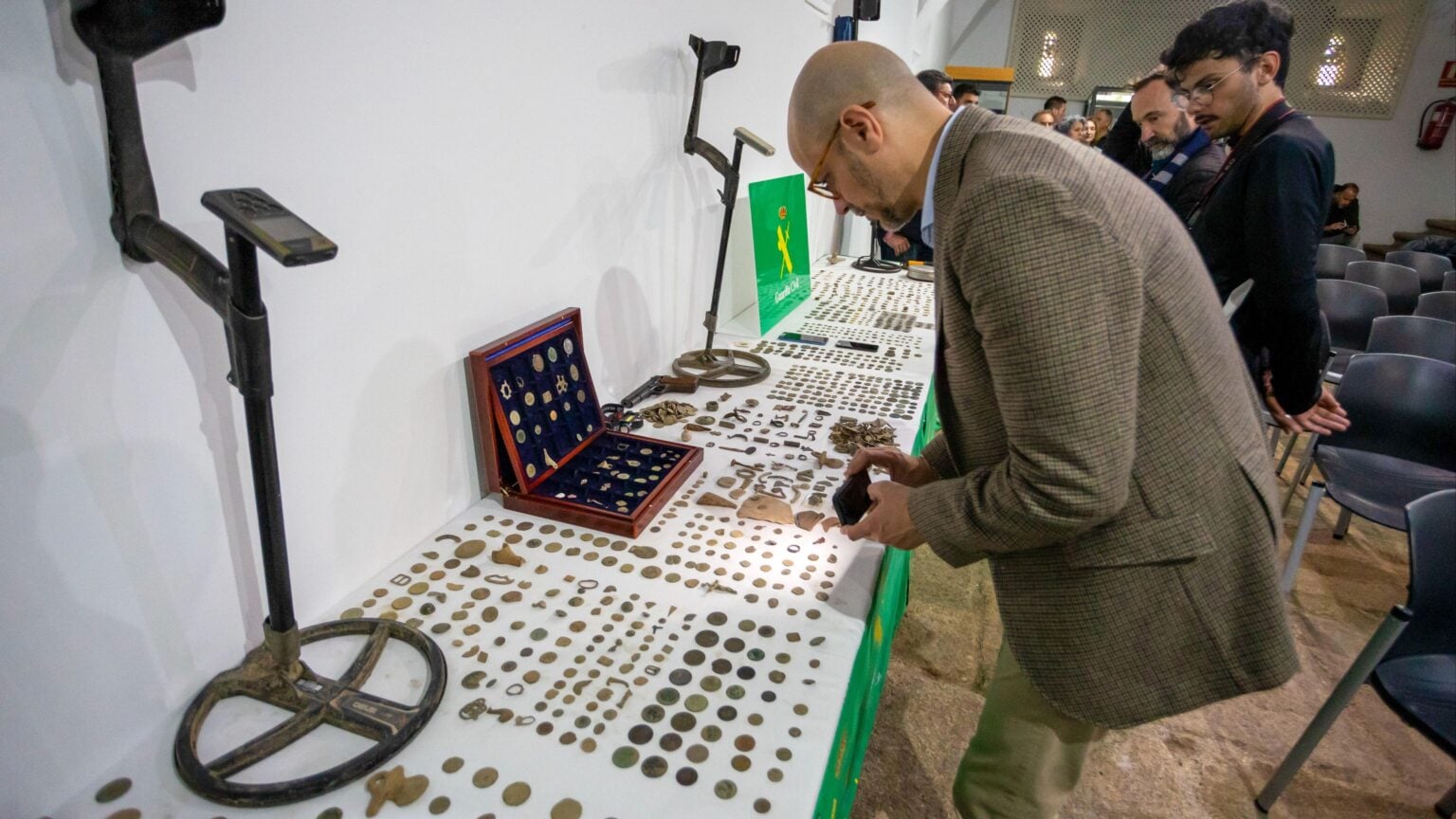

The Guardia Civil has issued a warning to would-be treasure hunters and metal detectorists in Spain.
In a social media post, the force warned against looting historical objects and selling them illegally.
It reminded treasure hunters that an ancient coin could be a piece of Spain’s shared heritage.
‘An old coin is not just a coin. It could be a piece of our history,’ the Guardia Civil wrote on X.
The message was accompanied by a photograph showing metal detectors alongside a large collection of coins and other objects laid out for inspection.
‘Looting and the illegal sale of cultural goods deprive us of a heritage that belongs to everyone,’ it added.
The force said it investigates these offences and works to recover looted artefacts.
The post marked the International Day against Illicit Trafficking in Cultural Property, with a reminder that ‘protecting the past means caring for our future’.
Is metal detecting legal in Spain?
The rules on metal detecting depend on the region and the location, so anyone planning to use a detector should check with the regional heritage authority and local council first.
Andalucia, however, has strict restrictions. Its cultural heritage law generally prohibits metal detectors and similar instruments capable of locating archaeological remains, except within authorised archaeological activities and specified exemptions.
The law also allows designated areas and periods to be exempted.
If archaeological remains are discovered, stop searching and avoid disturbing or removing them.
Andalucian law requires finds to be reported to the relevant authorities, with a 24-hour reporting deadline expressly applying to discoveries during permitted detector use.