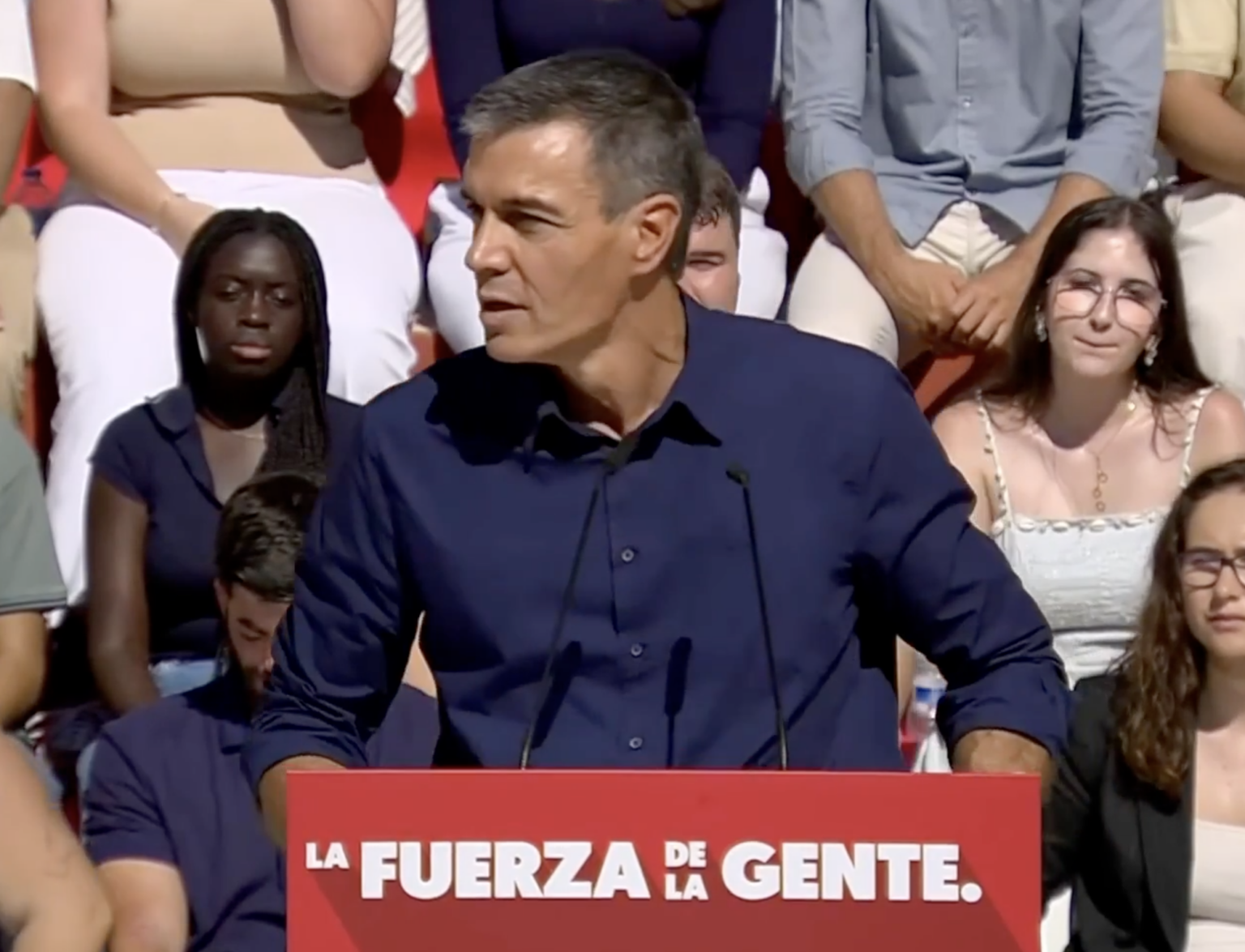

Pedro Sanchez has claimed that a government formed by the PP and Vox would take Spain ’40 or 50 years backwards’ on issues including abortion and assisted dying.
In an interview with El Pais ahead of the November 29 general election, the prime minister said the opposition parties offered a reversal of social progress rather than a routine change of government.
‘Vox provides the ideas and the PP the ambition for power,’ he said.
‘A government of the PP with Vox does not represent an alternation in power,’ he added, arguing that it would reopen debates over rights established decades ago.
His comments follow PP leader Alberto Nuñez Feijoo’s proposals to revisit teenage abortion rights and reform Spain’s euthanasia law.
Sanchez also acknowledged public frustration over housing and the distribution of economic gains, describing ‘evident discontent’ despite his defence of the government’s employment record.
He said he wanted a broader progressive parliamentary majority to tackle the housing crisis, arguing that building more homes must be accompanied by affordable and protected housing.
‘If we intervened in the energy market and it was positive, why should we not also regulate the housing market?’ he asked.
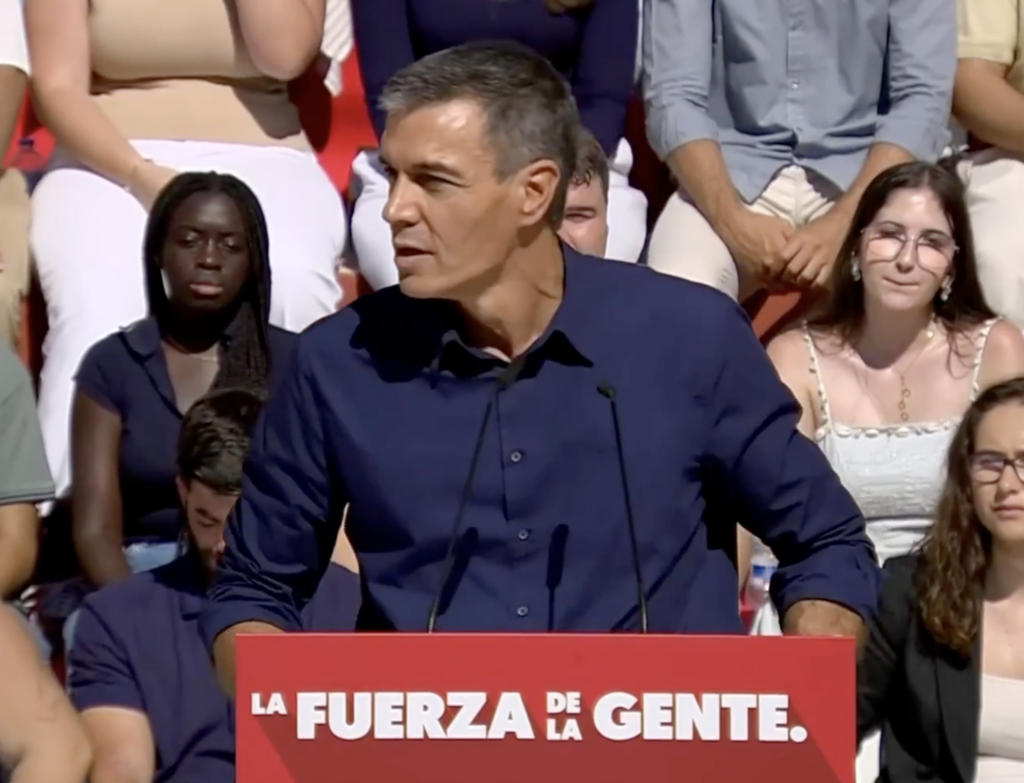
The PM renewed his commitment to raising the minimum wage before the election and defended the financial position of Spain’s public pension system.
He argued that higher wages and the regularisation of migrants had helped strengthen the system through increased contributions.
‘If Feijoo and Vox are concerned about the sustainability of those pensions, they should tell employers to agree a bigger pay rise for the working middle class with the unions,’ he said.
On corruption within the PSOE, Sanchez apologised and maintained that his party had acted decisively.
However, he defended his wife, Begoña Gomez, and brother, David Sanchez, arguing that they were being pursued because of their relationship to him.
The Socialist leader also condemned the PP’s use of AI-generated campaign content and said his party would not use deepfakes.
A party seeking to govern ‘should respect people and offer constructive debate’, he argued.
Asked about youth-led demonstrations, Sanchez described them as mobilisations for social justice. He rejected the suggestion that far-right views represented most young people, blaming social media algorithms for helping such messages spread.
He also addressed July’s migration crisis in Ceuta, acknowledging that ‘nobody foresaw the scale’ of what would happen on July 30 and 31.
Sanchez defended the response at the border, arguing that a more aggressive intervention would have caused further deaths, and called for stronger migration cooperation with Morocco.
He insisted that Ceuta and Melilla were part of Spain and the European border.