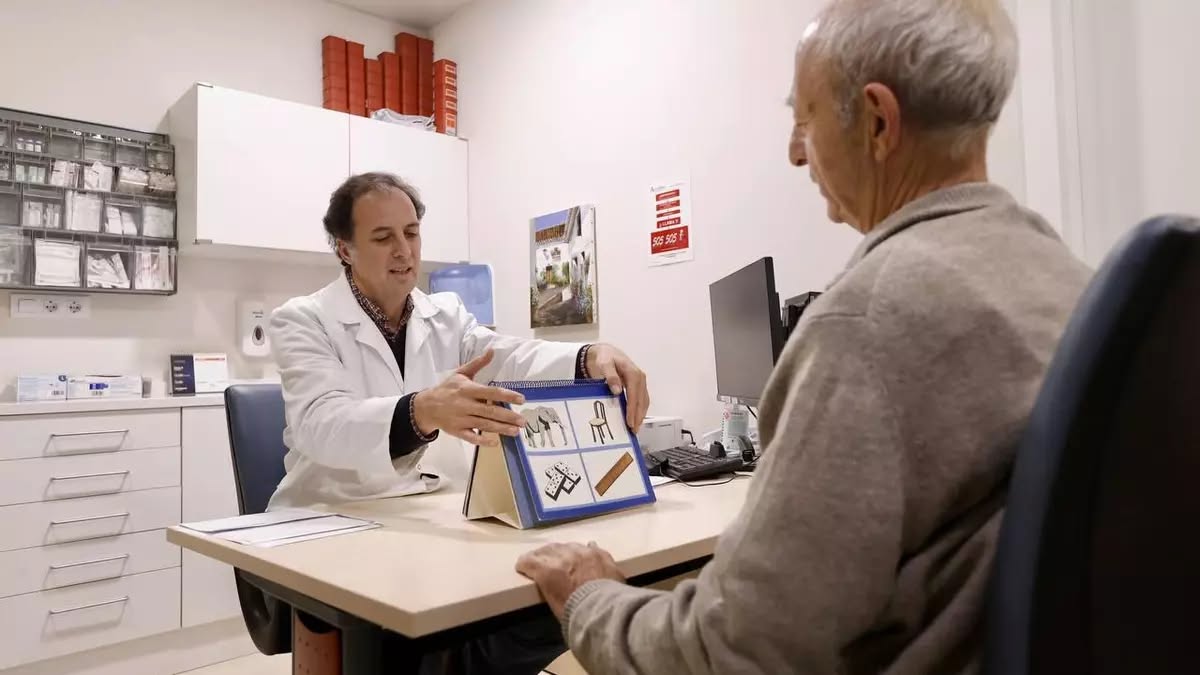

Alzheimer’s is increasingly being diagnosed in people under the age of 65, with one Andalucian neurologist revealing that his youngest patient was just 29.
But that does not necessarily mean the disease itself is suddenly becoming dramatically more common among younger generations.
According to Dr Eduardo Agüera, a neurologist at the Reina Sofia University Hospital in Cordoba, one of the biggest changes is that doctors can now detect Alzheimer’s much earlier – sometimes when patients are almost symptom-free.
‘Patients with Alzheimer’s are increasingly being diagnosed at younger ages and in earlier stages,’ Agüera explained to El Dia de Cordoba.
His hospital’s Cognitive Impairment and Dementia Unit treats around 2,500 patients every year, with between 400 and 500 new cases of Alzheimer’s diagnosed annually.
Why are younger people being diagnosed?
Until relatively recently, doctors largely had to wait until a patient developed clear problems with their memory or another cognitive function before Alzheimer’s could be diagnosed.
That has changed significantly over roughly the past five years, according to Agüera.
Specialists can now use biomarkers – biological signs of the disease detectable through blood tests or cerebrospinal fluid – as well as amyloid PET scans when Alzheimer’s is suspected.
‘These allow us to diagnose the disease in patients who are almost asymptomatic,’ he said.
Previously, doctors might have had to wait for obvious clinical symptoms to develop.
Now, Agüera says biomarkers can potentially reveal what he describes as ‘latent Alzheimer’s’ before it becomes clinically evident.
Reina Sofia has deliberately reorganised its service to concentrate specialist resources on younger patients and those in the earliest stages, while some older patients with more advanced disease can be monitored through primary care with specialist teleconsultation.
Warning signs in younger people
Memory loss remains the most common reason for someone to be referred to specialists.
Relatives may notice that someone repeatedly asks the same question, repeats conversations or quickly forgets something they have just been told.
But Alzheimer’s does not always begin that way.
Some patients develop problems with language, such as struggling to find the right word or getting stuck while speaking.
Others begin having difficulties at work because tasks they previously performed without difficulty become harder to manage.
Agüera says concerns become particularly significant when other people begin noticing changes in someone’s memory, language or ability to manage everyday tasks, particularly in a younger person.
Patient diagnosed at just 29
Asked about the youngest person diagnosed at Reina Sofia, Agüera recalled an extraordinary case.
‘We had a girl of about 29 years old, but that was an exceptional case,’ he said.
He added that he had recently seen patients aged 55 and 57, saying the hospital pays particular attention to younger cases.
Early-onset Alzheimer’s – generally referring to disease developing before 65 – remains very different from the far more common Alzheimer’s seen among older people.
Can you reduce your risk?
Agüera also highlighted the growing evidence that some dementia risk can potentially be reduced.
He said education and maintaining an intellectually active working life appear to provide some protection, potentially delaying the onset or progression of cognitive decline.
He pointed to the 14 modifiable factors identified by the Lancet Commission on dementia prevention, intervention and care.
These include addressing hearing and vision loss, controlling conditions such as high blood pressure and diabetes, avoiding smoking and excessive alcohol consumption and reducing the risk of head injuries.
The Lancet Commission estimated that addressing 14 modifiable risk factors could potentially prevent or delay around 45% of dementia cases globally – a population-level estimate rather than a guarantee that an individual can reduce their personal risk by exactly 45%.
For Agüera, this makes identifying younger people at an early stage particularly important because there may still be considerable scope to intervene on their overall health and risk factors.
New treatments offer hope
There is also another reason why earlier diagnosis is becoming increasingly important: the emergence of treatments designed to target the biological processes involved in Alzheimer’s.
Agüera says Reina Sofia has participated in clinical research into experimental Alzheimer’s drugs for years.
He said two new intravenous treatments have now been approved that appear capable of slowing progression of the disease in eligible patients, although they do not cure or reverse Alzheimer’s.
For patients and their families, that makes detecting the disease at its earliest stages increasingly consequential.
‘We’re trying to tackle it at the beginning,’ Agüera said, with the aim of treating the disease where possible or helping families take steps to slow its progression for as long as possible.