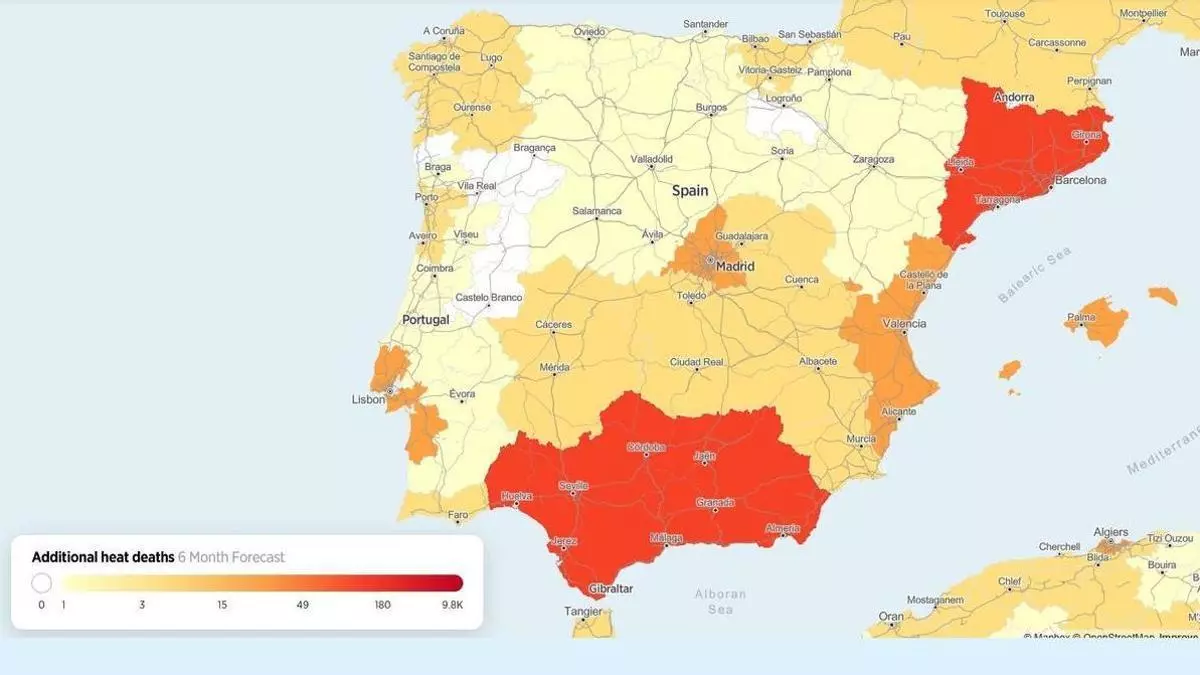

Spain could record around 2,500 additional heat-related deaths during the current El Niño episode, according to estimates from the Climate Impact Lab.
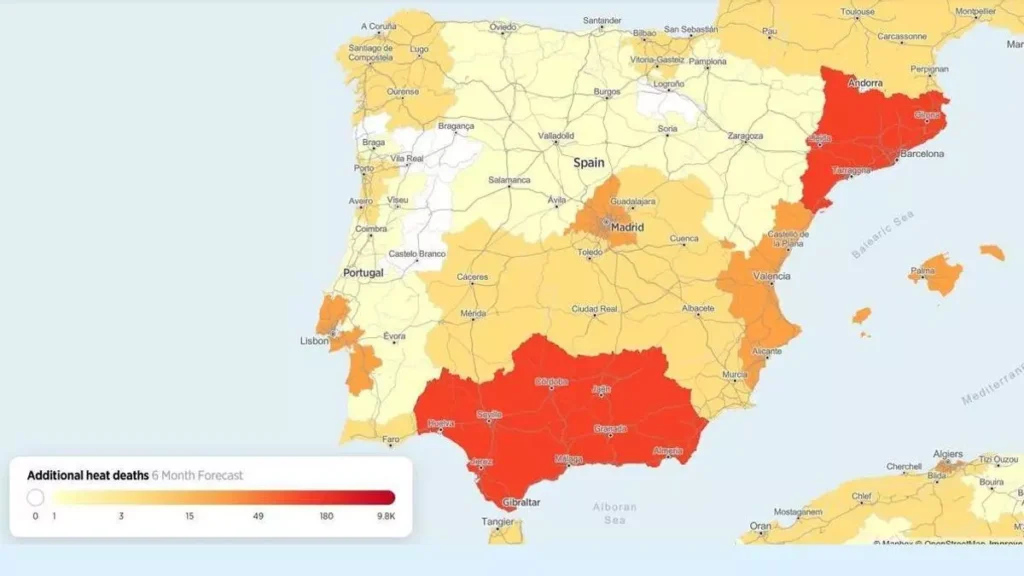
The figures cover June 2026 to March 2027, with Andalucia’s estimated toll put at 340.
Cataluña has the highest projected total among the Spanish regions listed, at 730, followed by the Valencian Community with 430. Madrid’s figure stands at 180.
Of Spain’s estimated 2,500 deaths, around 2,300 relate to June to September, while a further 200 are projected between October and March.
The warning forms part of a much larger global picture as the Climate Impact Lab’s El Niño Heat Mortality Tracker estimates approximately 857,400 additional heat-related deaths worldwide between June and March.
Around 372,900 of those are forecast for the six months from October onwards. The tool combines temperature data for months already elapsed with seasonal forecasts, applying research on how temperatures affect mortality.
The researchers expect the heaviest losses in the Global South.
Nigeria is forecast to suffer around 56,000 additional heat-related deaths between October and March, followed closely by India with approximately 55,000. Indonesia’s projected toll is around 29,000, while Brazil’s is about 19,000.
The latest worldwide estimate is substantially higher than the lab’s September projection.
Researchers say this partly reflects the addition of March to the forecast period.
It also incorporates observed temperatures for August and September, which were hotter than previously predicted.
The tracker provides monthly estimates for approximately 3,700 regions worldwide and is designed to help authorities identify where preventive measures are most urgently needed. It will be updated each month as the episode develops.
The lab says early warnings, access to healthcare, cooling centres and protections for outdoor workers can help reduce deaths.
Michael Greenstone, a co-founder of the Climate Impact Lab and professor at the University of Chicago, said the forecasts give authorities ‘a chance to act before lives are lost’.