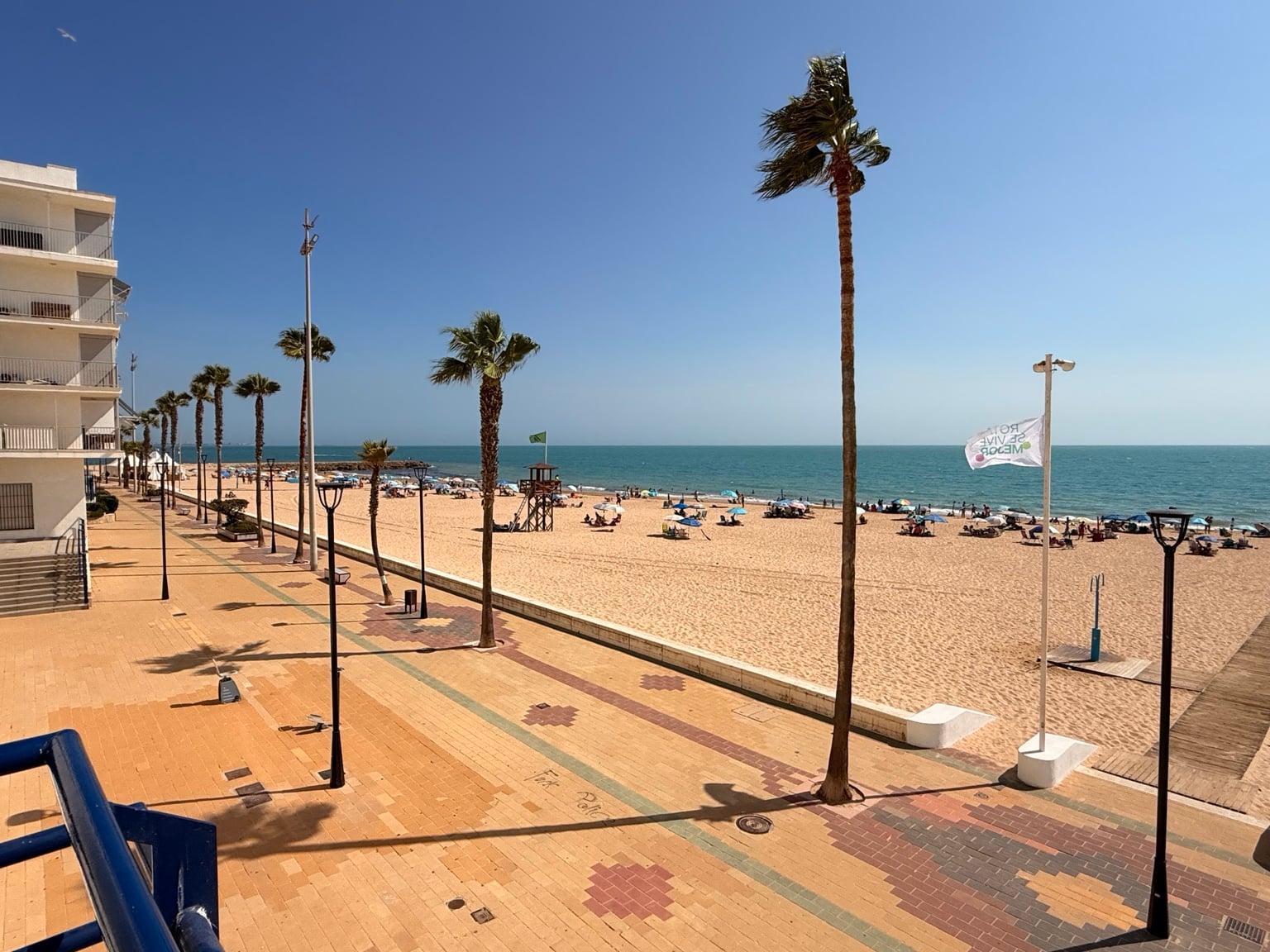

Five beaches on the Costa de la Luz will remain closed to swimming this weekend, it has been announced.
It comes after routine tests detected unsafe levels of bacteria, including E.coli.
Health officials are investigating whether unusually heavy rainfall may have been responsible.
The affected beaches are spread across Chipiona, Rota and El Puerto de Santa Maria.
Micaela beach in Chipiona, Punta Candor in Rota, La Cachucha in Puerto Real and Fuentebravia and Aculadero-Puerto Sherry in El Puerto de Santa Maria are among the areas affected by the latest testing.
Local authorities have stressed that investigations are continuing and urged residents and tourists not to speculate about the source of the contamination.
Samples producing abnormal results were collected on August 24, when intense rainfall hit the area.
Chipiona council said it was ‘curious’ that the five Cadiz beaches producing negative results were sampled on the same day as the rainfall, which washed material towards coastal areas.
Officials said technicians are now examining whether there could be a connection.
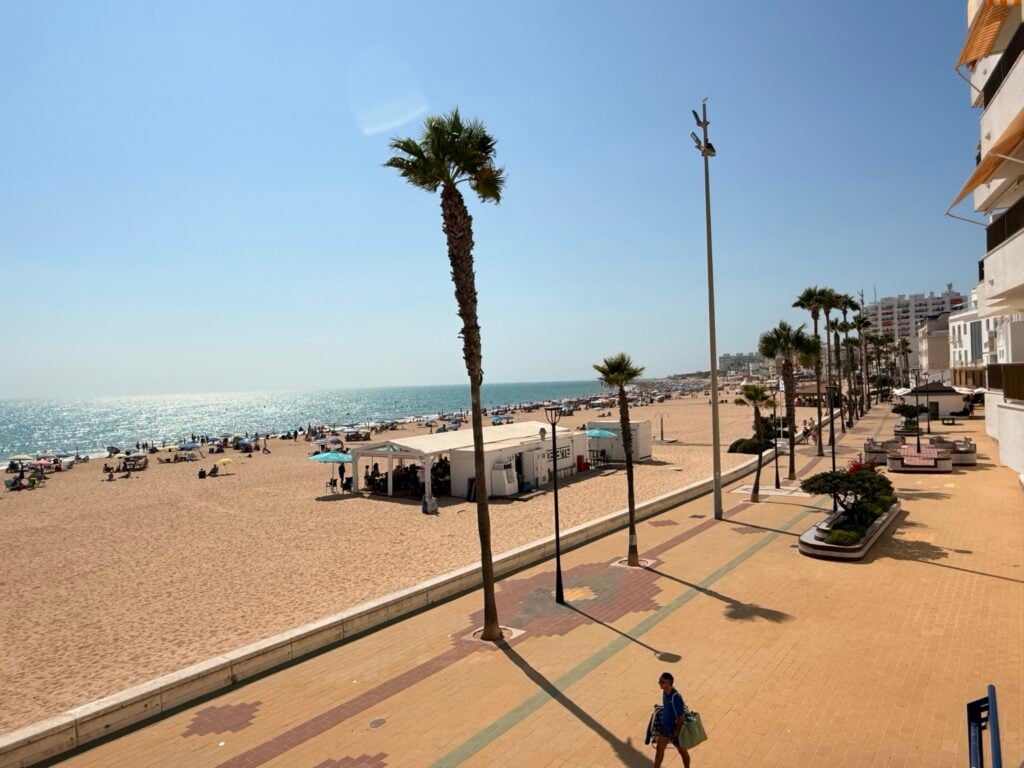
E. coli detected at Micaela beach
Chipiona council said the Junta carries out tests every two weeks between mid-May and the end of September to monitor the quality of water at officially designated bathing beaches.
Previous samples collected at Micaela on August 3 produced very low levels of E. coli and enterococci, according to the council, with the town’s beaches historically recording good results.
That changed following samples collected on August 24.
At 4.27pm on August 27, the council received an official resolution from the Junta’s provincial health authorities ordering a temporary ban on swimming at Micaela beach.
The council stressed that each designated bathing area is tested separately and that the abnormal results were limited to Micaela, with Chipiona’s other beaches remaining within permitted parameters.
It described the problem as a ‘localised incident’.
Officials have not yet established what caused the sudden deterioration.
‘The council will avoid making statements about its possible origin until conclusive information is available,’ the town hall said.
However, it added that it was noteworthy that five Cadiz beaches returned negative tests following the same episode of rainfall, something it said technicians were assessing.
Punta Candor closed until at least Monday
In neighbouring Rota, Punta Candor beach is also closed to swimming, with authorities awaiting the results of further testing.
The closure is expected to remain in force until at least Monday.
Rota council said protecting public health was its priority and that the beach would not reopen until laboratory results confirmed that the water was once again safe.
It added that officials had so far found no abnormal incident that could explain the bacterial readings.
The town hall urged the public to remain calm while respecting the red flags and signs prohibiting bathing.
Could the rain be responsible?
Attention has also turned to the impact of the heavy rainfall on August 24.
In El Puerto de Santa Maria, municipal water company Apemsa said it had examined operating records from the wastewater treatment plant and found no relationship between the operation of the treatment facility itself and the abnormal microbiological results detected at Fuentebravia and Aculadero-Puerto Sherry.
However, the intense rainfall that morning activated overflow systems within the sewer network.
These systems are designed to release excess water during episodes of exceptionally heavy rainfall, helping prevent urban flooding and serious damage to sewage infrastructure.
Apemsa said their automatic activation during such weather events is provided for under environmental regulations and the municipality’s discharge authorisation.
Its manager, Juan Angel Poyatos, pointed out that water-quality problems had simultaneously appeared in several neighbouring municipalities, including Chipiona, Rota and Puerto Real.
He said it was therefore ‘very probable’ that the results were connected to samples being collected during an episode of extremely heavy rainfall, when sewer overflow points were also likely to have been activated for several hours.