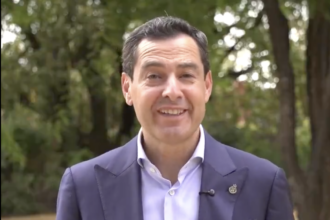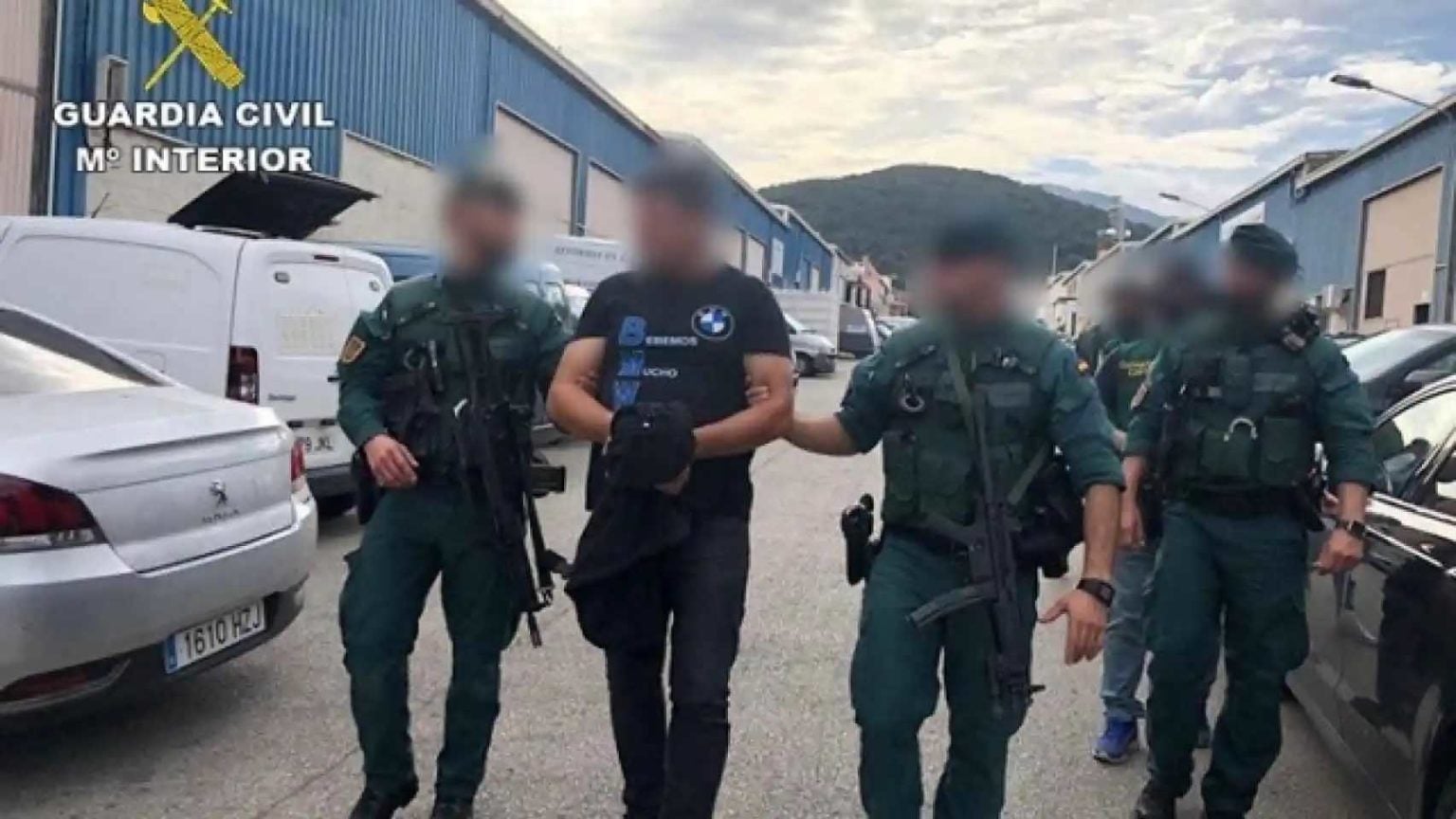

Andalucia’s President Juanma Moreno has called on the Spanish government to reinstate an elite Guardia Civil unit dedicated to fighting drug trafficking.
In an open letter addressed to Prime Minister Pedro Sanchez, Moreno warned that criminal gangs are expanding their operations across southern Spain and becoming increasingly violent.
He is calling for the return of OCON-Sur, the specialist anti-narcotics unit that was dismantled four years ago.
Moreno said Andalucia has increasingly become a ‘base of operations’ for drug trafficking clans and international criminal networks, arguing that the problem can no longer be considered confined to traditional hotspots such as the Campo de Gibraltar.
‘We are no longer talking about one particular area, but the entire coastline and part of the interior being targeted by drug traffickers,’ Moreno said in the letter.
He pointed to the increasingly brazen presence of narcolanchas – powerful speedboats used to transport drugs – operating and taking refuge in the Guadalquivir river even in broad daylight.
The intervention comes amid mounting concern over the scale and violence of organised crime in Andalucia.
Latest Interior Ministry figures show that 5,267 people were arrested for drug trafficking in the region during 2025, more than anywhere else in Spain and representing around 24% of the national total.
Authorities also seized more than 198 tonnes of hashish in Andalucia last year, alongside 25.6 tonnes of cocaine and almost 462,000 cannabis plants.
‘Escalation of violence’
Moreno warned that the expansion of the drugs trade is being accompanied by increasing violence and a growing sense of insecurity among residents.
He cited a series of recent incidents, including a fatal shooting in Utrera and the subsequent triple killing in Isla Cristina, where the victims included a woman who was eight months pregnant, another woman aged 62 and a 16-year-old.
The regional president also invoked the deaths of Guardia Civil officers David, Miguel Angel, German and Jeronimo, who were killed in the line of duty during anti-drug operations in Barbate and Huelva over the past two years.
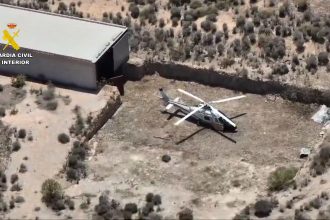
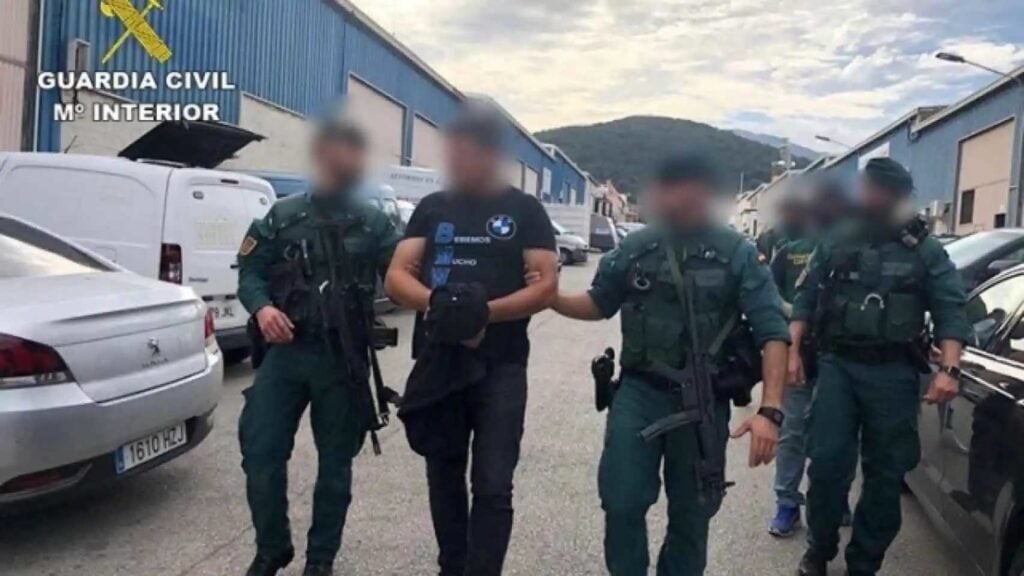
His demand comes shortly after another dramatic confrontation off the coast of Huelva, where the occupants of a narcolancha opened fire on a Guardia Civil patrol boat during a high-speed pursuit.
Ten alleged members of the organisation were subsequently arrested and almost six tonnes of hashish were seized.
Bring back OCON-Sur
At the heart of Moreno’s demands is the restoration of OCON-Sur, a specialist Guardia Civil unit created to tackle the powerful trafficking organisations operating across southern Spain.
The unit operated in Andalucia until it was dismantled four years ago.
According to Moreno, its deployment helped contain the activities of criminal organisations and its removal was a serious mistake.
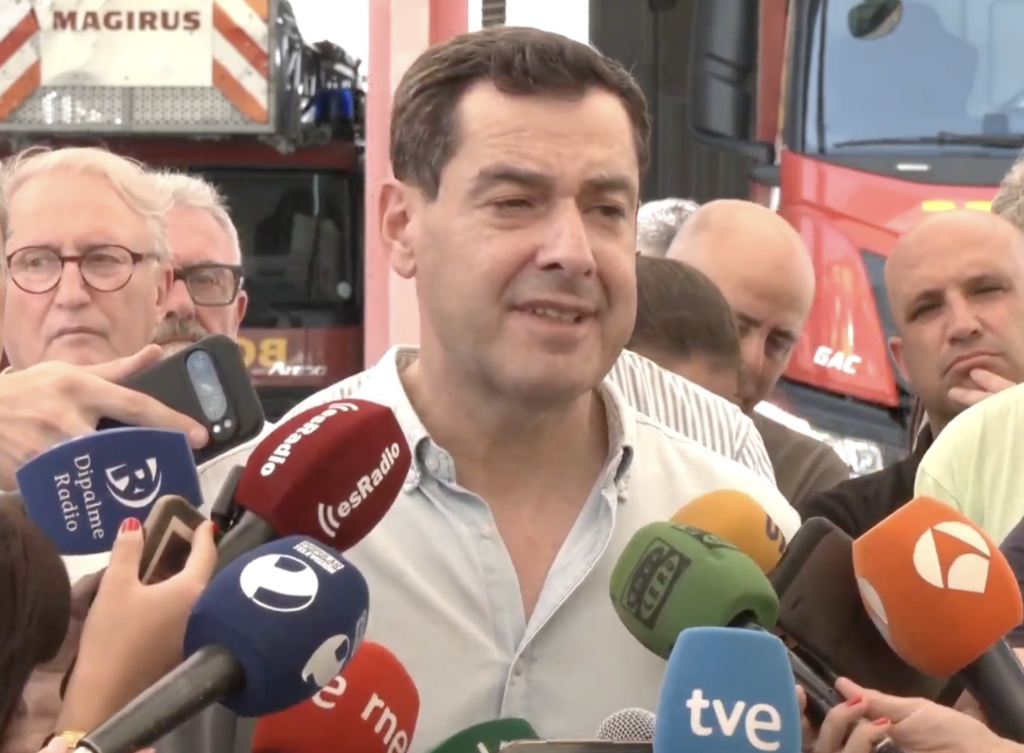
‘Time and events have demonstrated that the dismantling of OCON-Sur was an error,’ he said.
The Junta is now calling for the Spanish government to mount a ‘forceful’ response to the growing operational capacity and violence of trafficking organisations.
Moreno also wants Guardia Civil officers and other security forces to receive sufficient resources to confront gangs which often possess high-powered boats, sophisticated communications equipment and firearms.
Fears gangs are recruiting vulnerable youngsters
The Junta warned that the consequences of the drugs trade extend beyond policing and public security.
Moreno said organised crime groups are exploiting some of Andalucia’s poorest communities, recruiting young and vulnerable people into networks involved in supporting, supplying and distributing narcotics.
This can include everything from storing drugs and supplying fuel to narcolanchas to acting as lookouts or providing logistical support.
The regional president described strengthening the fight against narcotics as ‘necessary and urgent’, arguing that greater resources are needed both to restore security in affected communities and prevent vulnerable young people from being drawn into organised crime.
The demand comes as the latest national statistics underline Andalucia’s continuing position at the centre of Spain’s drugs trade.
While drug-trafficking arrests in the region have fallen substantially from their 2021 peak, almost one in four arrests nationwide still takes place in Andalucia, with Malaga, Cadiz and Sevilla alone accounting for almost two-thirds of the regional total.