
Ceuta is rapidly returning to ‘normality’ after returning more than 48,000 migrants who illegally crossed the border with Morocco on Thursday.
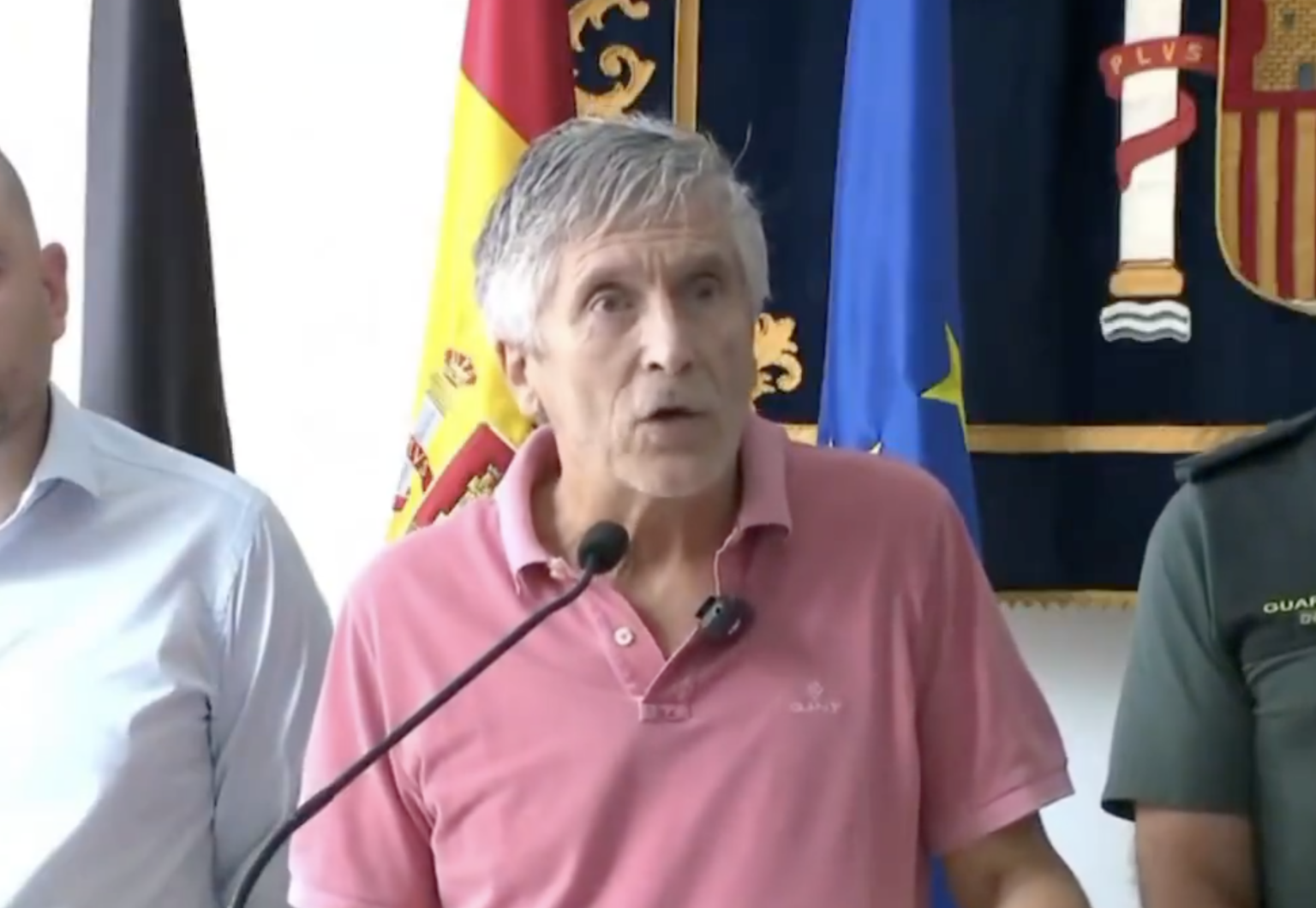
Spain’s Interior Minister Fernando Grande-Marlaska visited the enclave on Saturday to assess the situation.
He told reporters: ‘In less than 48 hours, the situation in Ceuta has nothing to do with what it was, and normality is being restored.’
He defended the government’s response to the crisis, insisting that the necessary personnel and resources were deployed immediately after the mass arrivals began.
According to the Interior Ministry, none of those who entered Ceuta has managed to continue on to mainland Spain.
However, the humanitarian toll continues to mount. The Guardia Civil has recovered more bodies from the waters around the Tarajal breakwater, taking the death toll linked to the crisis to 67 people.
New floating barrier installed
Authorities also unveiled a new 500-metre floating barrier at the Tarajal breakwater on Saturday morning to prevent further attempts to reach Ceuta by sea.
The inflatable barrier extends to a depth of around one metre and has been reinforced with Navy buoys while leaving a navigation channel for Guardia Civil patrol boats.
Officials said the previous night had passed without incident, with no new irregular arrivals recorded.
Signs of normality have also begun to return across the city. Shops have reopened, traffic has resumed and petrol stations are operating normally, a stark contrast to the scenes witnessed just 48 hours earlier.
Sanchez seeks EU support
As the situation stabilised on the ground, Prime Minister Pedro Sanchez shifted the focus to Brussels, sending a letter to European Commission President Ursula von der Leyen and European Council President Antonio Costa expressing his concern over the reaction of several EU governments to the crisis.
In the letter, Sanchez argued that Spain had restored control of the border with very limited support from other member states and called for an emergency meeting of EU interior ministers to coordinate a common European response to future migration emergencies.
Meanwhile, the government also announced the gradual reopening of Melilla’s Beni Enzar border crossing, although initially only for vehicles taking part in Operation Crossing the Strait (Operación Paso del Estrecho).
Marlaska described the events of recent days as ‘an attack on the integrity of Ceuta’, adding that preventing dangerous irregular crossings ultimately ‘saves lives’, as the government seeks to draw a line under one of Spain’s most severe migration crises in recent years.