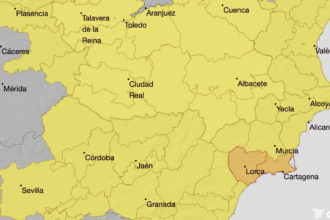
As Spain prepares for another bout of extreme temperatures this week, many people have dismissed the conditions as ‘another hot Spanish summer’.
But according to Jose Miguel Viñas, meteorologist at Meteored, the weather pattern currently affecting Spain is very different from the traditional heatwave.
Writing this week, Viñas says that while heatwaves have always occurred in Mediterranean summers, the heat domes driving many of today’s extreme events are becoming more intense because the air masses involved are warmer to begin with.
Additionally, the atmospheric blocking patterns that trap them are lasting longer.
Heat dome and heatwave are not the same thing
One of the key points Viñas makes is that a heat dome should not be confused with a heatwave.
‘The heatwave is the consequence of the presence of a heat dome,’ he explains, describing the dome as a large mass of unusually warm air trapped beneath a persistent high-pressure system.
As that trapped air slowly sinks, it becomes even hotter through compression, driving surface temperatures to extreme levels.

According to Viñas, this meteorological phenomenon has been recognised by scientists for years, although the term ‘heat dome’ has only recently entered mainstream public discussion.
Why today’s heat is different
Viñas argues that although heatwaves have always been linked to warm subtropical air masses, the ones now reaching Spain are different from those of previous decades.
‘The air masses are warmer at their source and the high-pressure blocking situations are more persistent,’ he writes, meaning the hot air remains trapped over the same area for longer, allowing temperatures to climb further than they once did.
That, he says, helps explain why Europe has seen an increasing number of prolonged periods of exceptional heat in recent years.
Another heat dome is developing
Viñas says weather models show another blocking pattern forming over western Europe, with a fresh heat dome expected to establish itself from the end of this week.
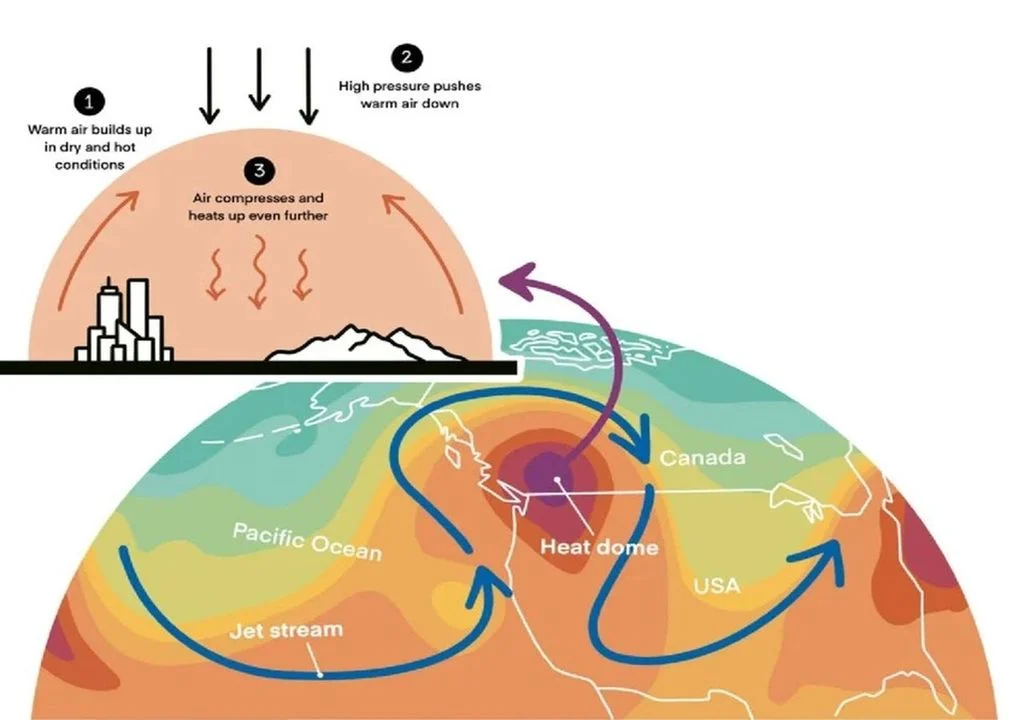
He believes it could trigger Spain’s second heatwave of the summer, with temperatures potentially reaching 45C in parts of inland Andalucia early next week and exceeding 40C across much of central Spain, including Madrid.
‘Not just another Spanish summer’
Viñas is careful not to suggest that Spain has never experienced extreme heat before.
Instead, his argument is that the characteristics of these events are changing: hotter air arriving from subtropical regions, longer-lasting atmospheric blocks and more intense extremes than were typical in the past.