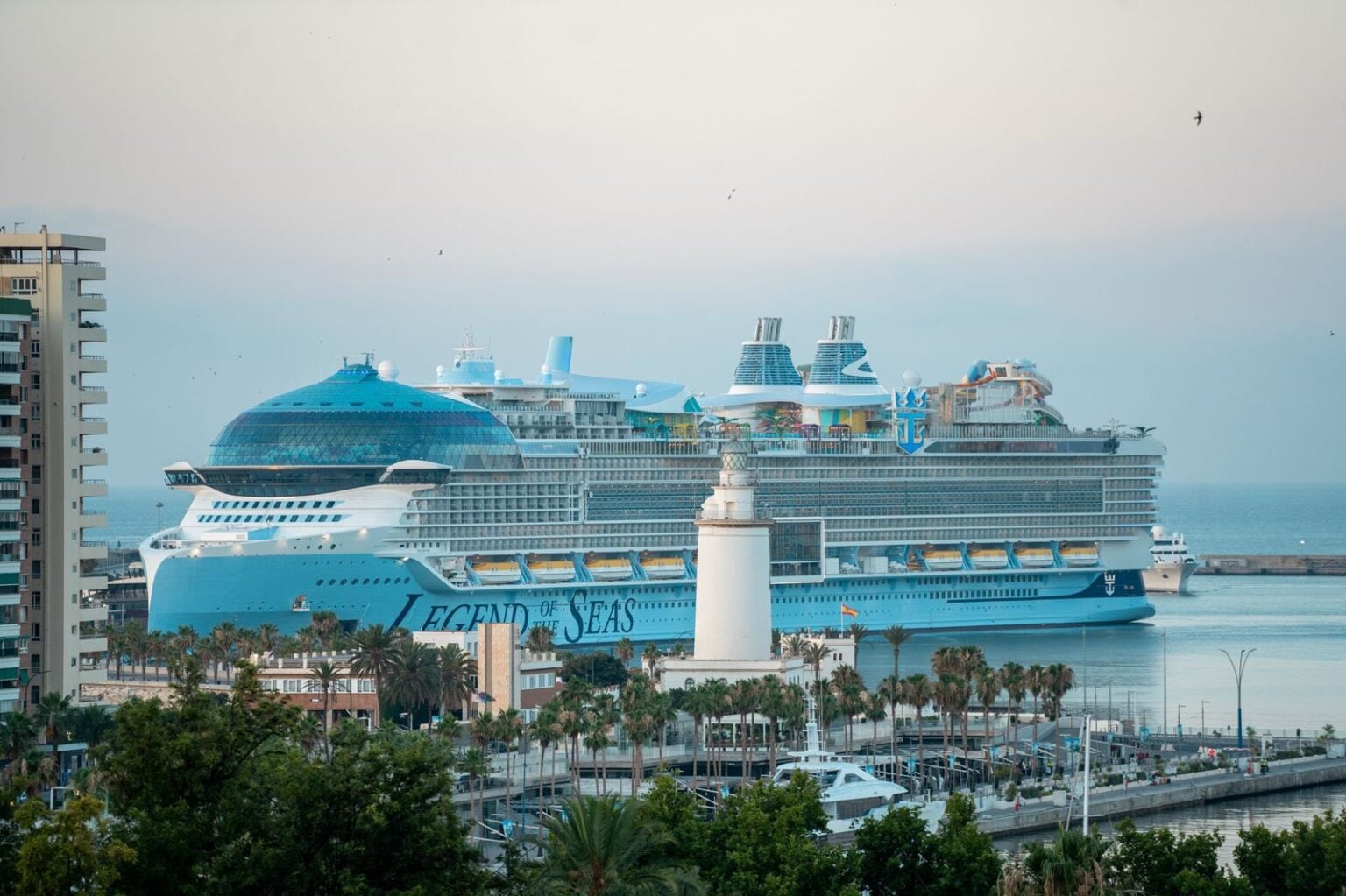

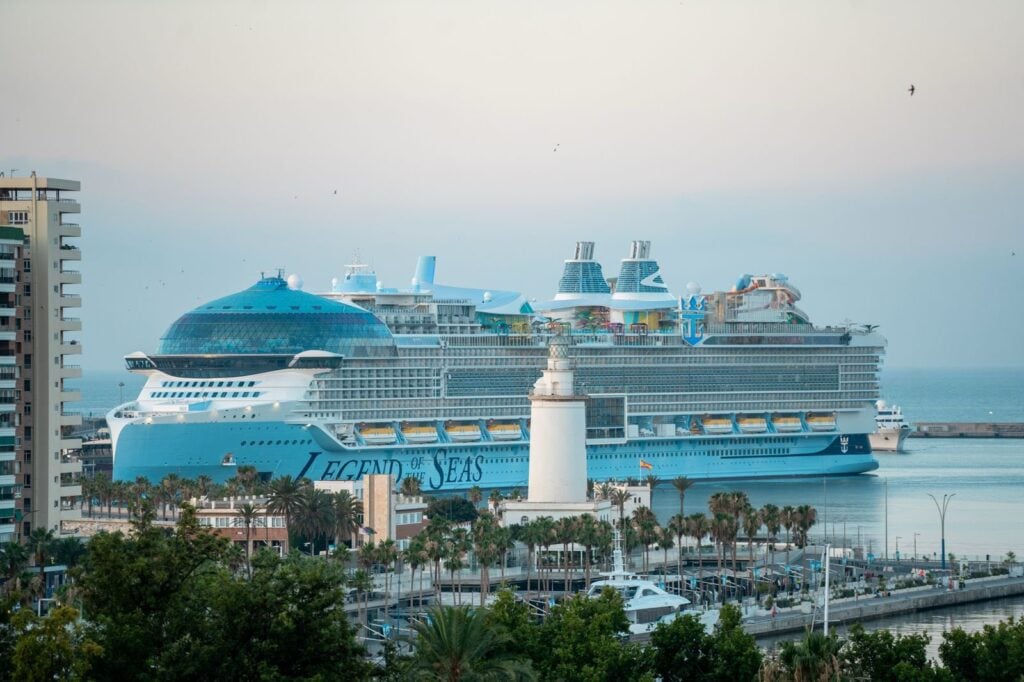
The arrival of the world’s biggest cruise ship to Spain this week may have delighted tourism bosses, but many locals were not onboard.
Scores of residents in Malaga and Barcelona took to social media to vent their frustration, branding the vessel the ‘Legend of Disease’ and accusing it of bringing pollution, overcrowding and little economic benefit.
It came as Royal Caribbean’s Legend of the Seas departed Malaga on Monday night on its maiden voyage before heading to Barcelona and Rome – three Mediterranean cities that have all become flashpoints in Europe’s growing anti-tourism movement.
While many lined the waterfront to watch the ship leave amid a fireworks display, social media quickly filled with criticism from residents who see giant cruise liners as symbols of excessive tourism.
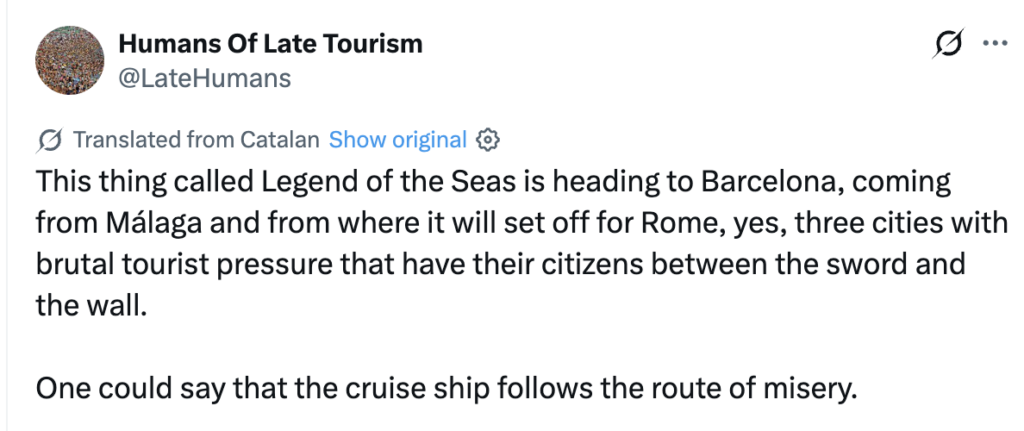
One of the most widely shared posts came from the campaign group Humans of Late Tourism, which wrote: ‘This thing called Legend of the Seas is heading to Barcelona, coming from Malaga and from where it will set off for Rome – yes, three cities with brutal tourist pressure.’
The group added: ‘One could say that the cruise ship follows the route of misery.’
Another social media user was even more blunt, renaming the vessel ‘Legend of Disease’ in a post that has since attracted hundreds of reactions.
Others complained that cruise ships leave ‘practically no money’ in the cities they visit while generating ‘a huge amount of pollution’.
One Malaga resident wrote: ‘Cruise ships practically leave no money in cities and create a lot of pollution. Thanks, Malaga.’
Some reactions were even more extreme. One X user asked: ‘Can we put mines in the Port of Barcelona? Then we can breathe clean air.’
The comments reflect a growing belief among critics that cruise passengers spend only a few hours ashore, often eating and sleeping onboard rather than supporting local businesses, while the ships themselves contribute significantly to air pollution and congestion.
The fireworks organised by Malaga City Hall to celebrate the vessel’s departure also angered locals.
One resident described the decision as ‘shameful’, saying the council should know about the harmful effects fireworks have on animals and vulnerable people.
Others argued the city was prioritising spectacles over residents’ needs, with one commenter writing that Malaga continues to spend money on ‘lights and shows’ while many people cannot afford housing and public services remain under pressure.
The criticism did not go unanswered.
Some users defended cruise tourism, arguing that it has made holidays that were once reserved for the wealthy accessible to ordinary families.
One commenter suggested cruise holidays represented the ‘democratisation’ of travel, while another argued that airports bring thousands of visitors every day yet rarely face the same level of criticism despite also placing pressure on cities.
The backlash comes as opposition to cruise tourism continues to grow across southern Europe.
Barcelona has announced plans to reduce cruise capacity, while demonstrations against overtourism have become increasingly common in destinations including Mallorca, the Canary Islands and Malaga.