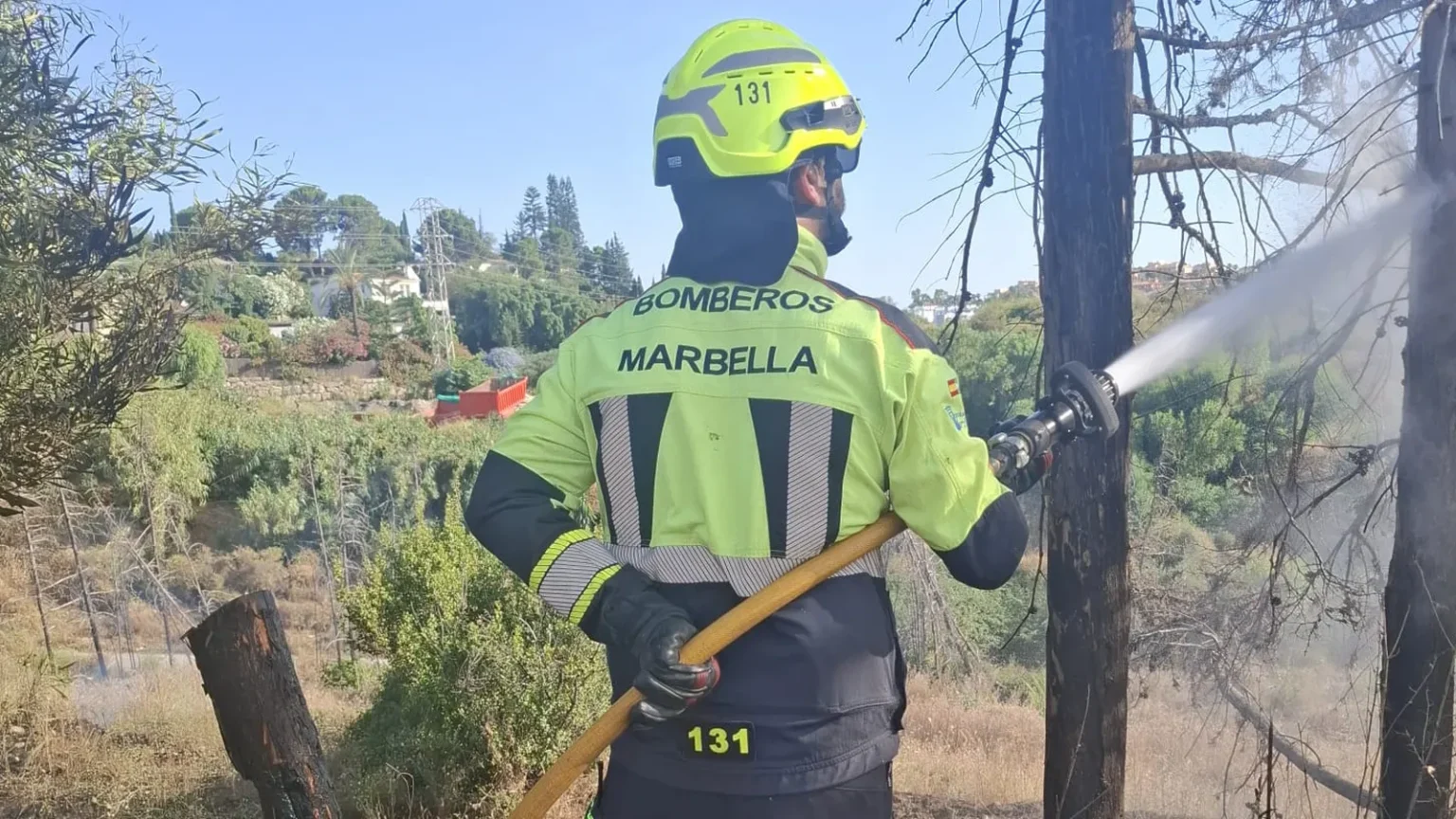

Andalucia has officially entered its high-risk wildfire season with authorities deploying 4,700 personnel and 43 aircraft as fears grow over a potentially dangerous summer ahead.
The region’s Plan Infoca emergency operation will run from June 1 until October 15, with officials warning that heavy winter rainfall has created unusually high levels of dry vegetation capable of rapidly spreading fires in the coming months.
The campaign was formally launched on Monday by Antonio Sanz during a meeting of the regional advisory committee overseeing Andalucia’s wildfire response strategy.
Authorities confirmed that this year’s operation includes several major additions, including new Heavy Machinery Units and Technical Fire Units designed to tackle especially complex blazes.
The new heavy machinery division includes excavators, transport platforms, tractor units and 25 industrial shredders aimed at reducing combustible vegetation across vulnerable areas.
Meanwhile, the new Technical Fire Unit will gradually begin operating this summer as an additional specialist firefighting tool for particularly difficult situations.
The aerial response fleet has also been expanded to 43 aircraft – three more than last year.
The deployment includes 25 helicopters, 14 planes operated by the Junta de Andalucia, one helicopter operated by public company Enresa, and three state aircraft positioned in Cadiz, Jaen and Malaga.
On the ground, the Infoca operation will be supported by 108 fire engines, 11 water supply vehicles, 23 forest defence centres, 11 sub-centres and three reinforcement brigade bases spread across the region.
Officials said 84% of the fire engine fleet has now been renewed following a €30million investment.
Authorities also confirmed there are now 186 strategic surveillance points and 88 helicopter water collection sites distributed throughout Andalucia.
One of the key concerns this year is the enormous amount of vegetation growth caused by months of heavy rain earlier in 2026.
Officials warned that while the wet winter benefited reservoirs and forests, it also created large quantities of fine vegetation and grass that will dry out under summer heat and act as ‘rapid propagators’ for wildfires.
Early forecasts suggest the region may initially see more small outbreaks than major fires.
However, authorities warned the long-term outlook for summer remains ‘complex’ due to the accumulated fuel load across Andalucia’s countryside and mountain areas.
Sanz also renewed calls for Spain’s central government to base a permanent forest fire reinforcement brigade at the new Sierra de las Nieves facility between Istan and Marbella.
He argued the site occupies a strategic location between environmentally sensitive areas including Sierra Nevada National Park and Doñana National Park.
Read more Andalucia news at the Spanish Eye.