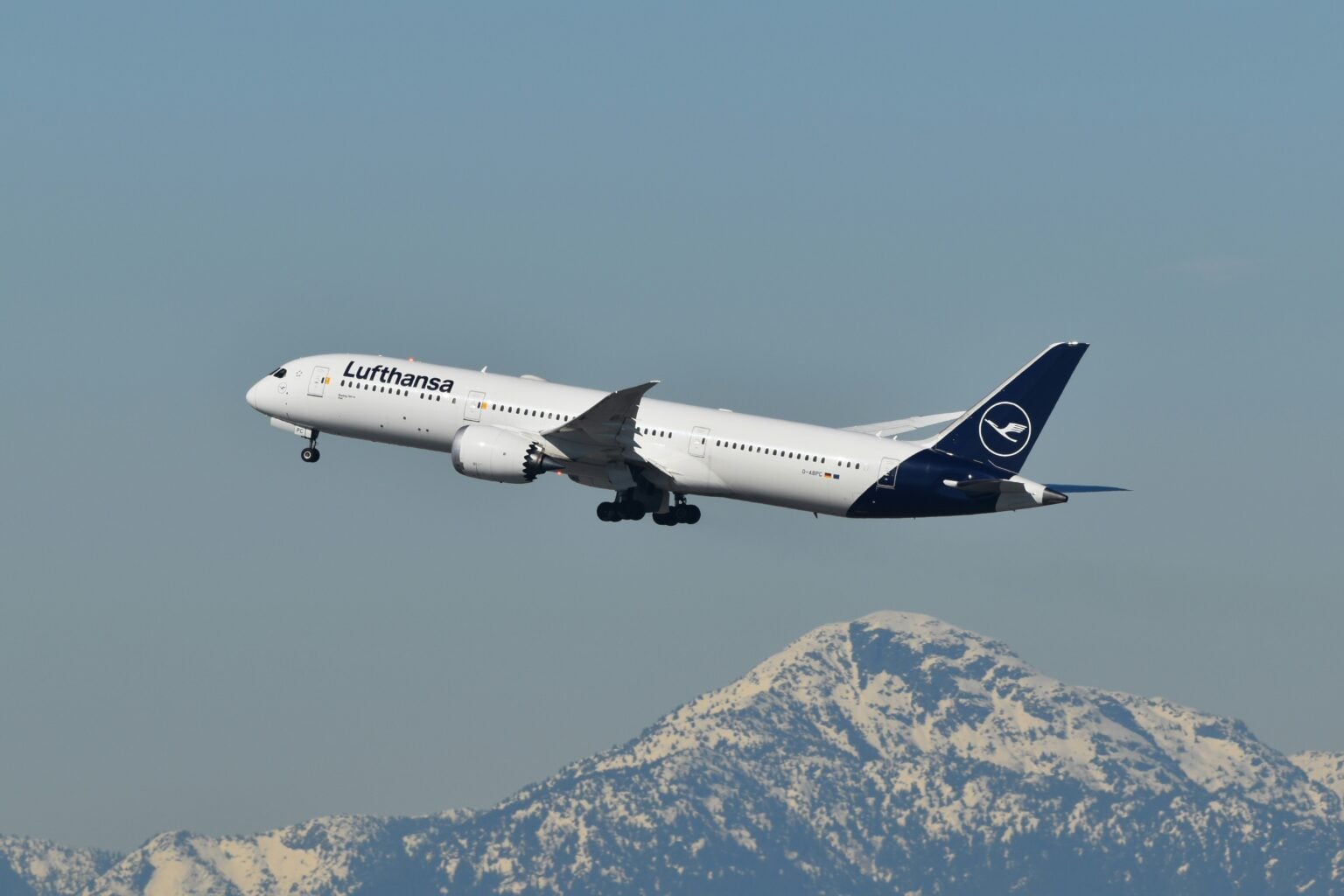

Lufthansa is scrapping 20,000 flights by October, it has emerged, after jet fuel prices almost doubled in recent weeks.
The airline has already reduced its summer capacity by 1%, cutting unprofitable routes from Frankfurt and Munich while shifting focus to stronger hubs like Zurich, Vienna, and Brussels.
From this week, around 120 flights a day are being cancelled through the end of May. Routes from Frankfurt to cities like Bydgoszcz, Rzeszow, and Stavanger have been suspended, temporarily dropping three destinations.
At the same time, Lufthansa is reinforcing 10 other connections across its network to keep coverage balanced.
Lufthansa is now reviewing its flight plans for the coming months, with more changes expected soon.
Short-haul routes are under particular pressure, with the airline aiming to streamline them ahead of the busy summer season.
Across its main hubs – Frankfurt, Munich, Zurich, Vienna, Brussels, and Rome – the strategy is simple: cut routes that lose money and protect the ones that don’t.
Long-haul connections, which tend to bring in more revenue, remain a priority.
The pressure isn’t unique to Lufthansa. According to Roma Andreu from EAE Business School, airlines like SAS and KLM are especially exposed because they lack strong fuel hedging contracts.
These contracts usually lock in fuel prices for 60–70% of consumption – up to 85% in the case of Ryanair – shielding airlines from sudden spikes.
Without them, carriers are forced to buy fuel at today’s high prices.
That’s why airlines are now making sharper calls on where to fly.
With fuel so expensive and passenger demand uneven, every route has to justify itself.