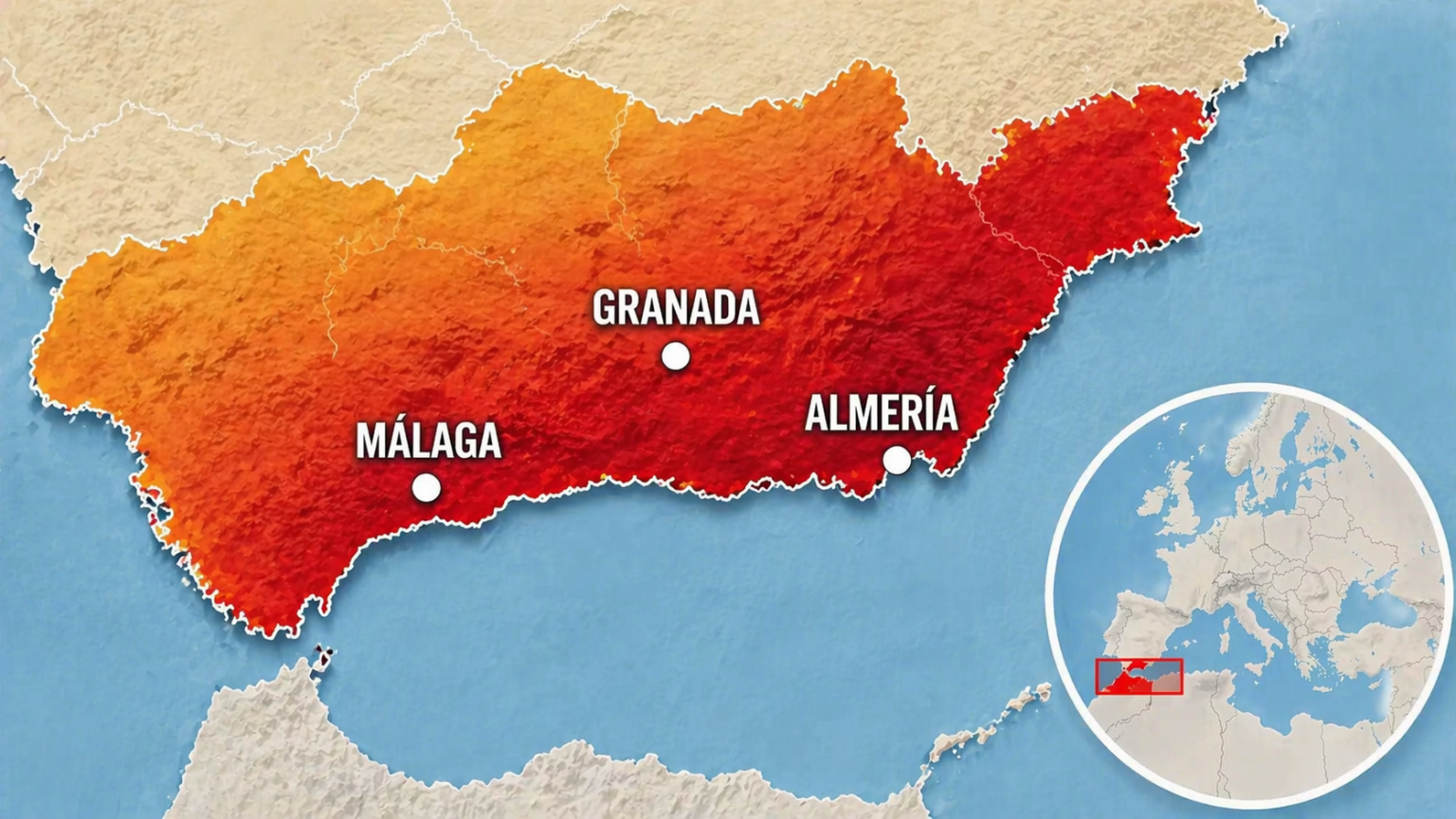

Summers in Andalucia are set to become hotter, longer and significantly drier as temperatures rise by up to 4.5C and rainfall dropping by as much as half in key months.
That’s the warning from a new study led by the University of Granada, which highlights how rising heat is directly disrupting the region’s water cycle.
The provinces of Almeria, Granada and Malaga are identified as particularly vulnerable.
Already sitting on the edge between dry and more temperate climates, even small shifts in temperature or rainfall can trigger immediate and disproportionate effects.
As temperatures climb, water evaporates faster, leaving less moisture available in the soil and making it harder for stable rainfall systems to form.
Rainfall collapse and water loss
The study suggests summer rainfall could fall by around 50% on average, with some areas seeing drops of more than 70%.
And when rain does come, it’s shorter and less effective, often failing to replenish what’s lost through evaporation.
This has a direct knock-on effect on water reserves. Runoff, which feeds rivers and reservoirs, could fall by up to 60% during summer months, making it harder to recover supplies even in wetter seasons.
A worsening trend
One of the most striking findings is that the trend holds across all climate scenarios: regardless of emission levels, the direction is the same – hotter and drier.
The impact is also uneven across the year.
Summer and autumn are expected to see the most extreme changes, with longer dry spells and sustained heat, while winter remains relatively stable.
A changing landscape
The findings, published in Science of The Total Environment, point to a future where water becomes increasingly scarce, heat builds more intensely, and the land itself struggles to recover year after year.
Read more Andalucia news at the Spanish Eye.