
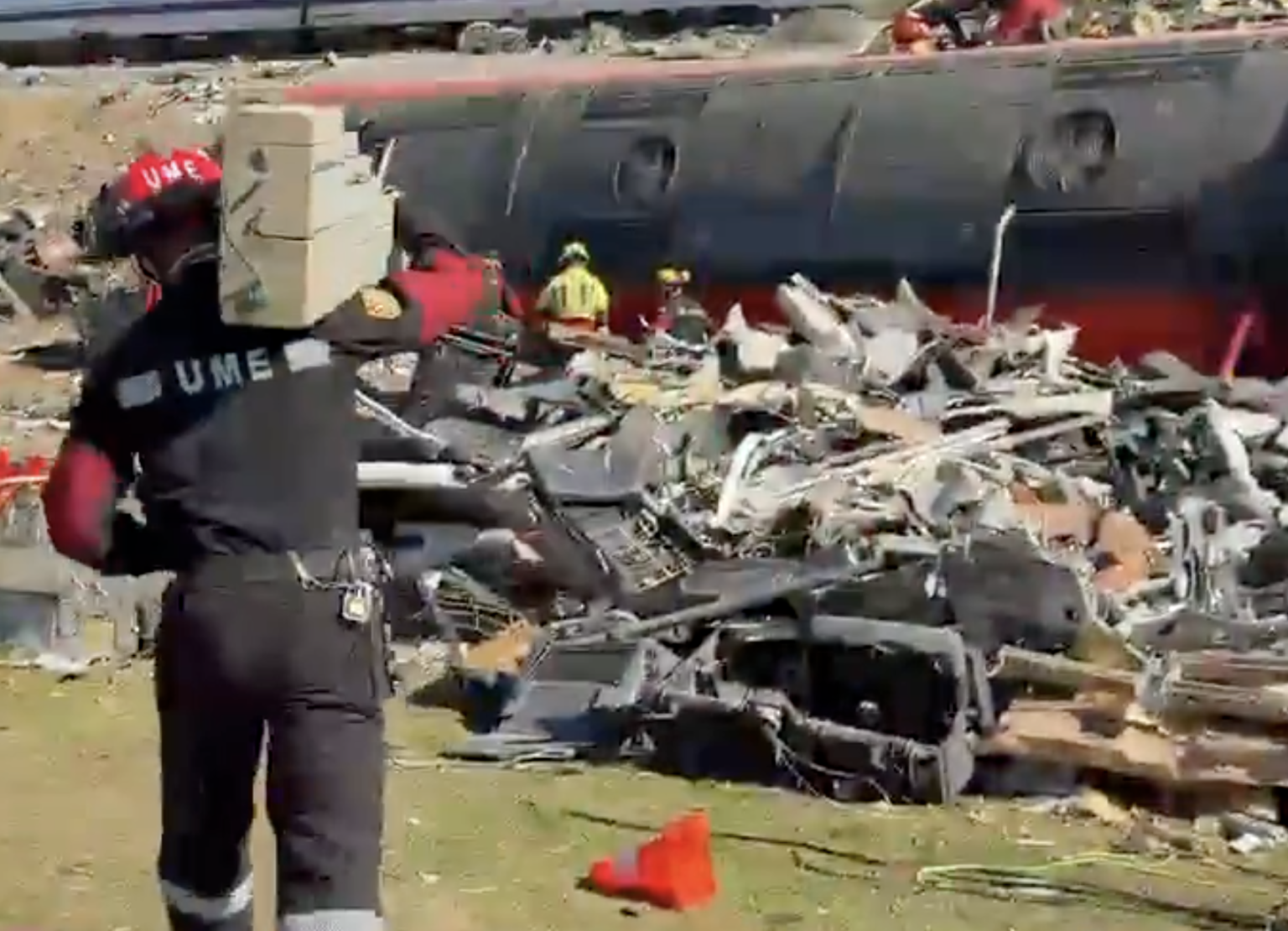

Spain needs to invest around €10billion over the next decade to restore its high-speed railway network, according to engineers reviewing the Toledo rail disaster.
Iñaki Barron, spokesman for the College of Civil Engineers, called for ‘major surgery’ to recover a system that has ‘lost credibility and effectiveness’.
The former president of the Railway Accident Investigation Commission, known as CIAF, said two disasters of such severity on the same line in one year were ‘not normal’.
He also challenged the Transport Ministry’s assessment of 170 incidents involving the Madrid–Sevilla line’s LZB signalling system this year.
‘170 incidents in 10 months is not normal at all,’ he said, calling for each to be examined to establish its consequences for the railway’s operation.
Barron estimated that at least €3.5billion would be needed for maintenance over the next decade, alongside approximately €7billion to repair infrastructure that had not been adequately maintained.
He described the combined requirement as roughly €10billion over 10 years.
‘If a railway line is allowed to deteriorate, that deterioration increases exponentially,’ he warned.
He called for continuous maintenance that is properly supervised, checked and certified, arguing that railways must be treated as a long-term national project extending beyond individual governments.
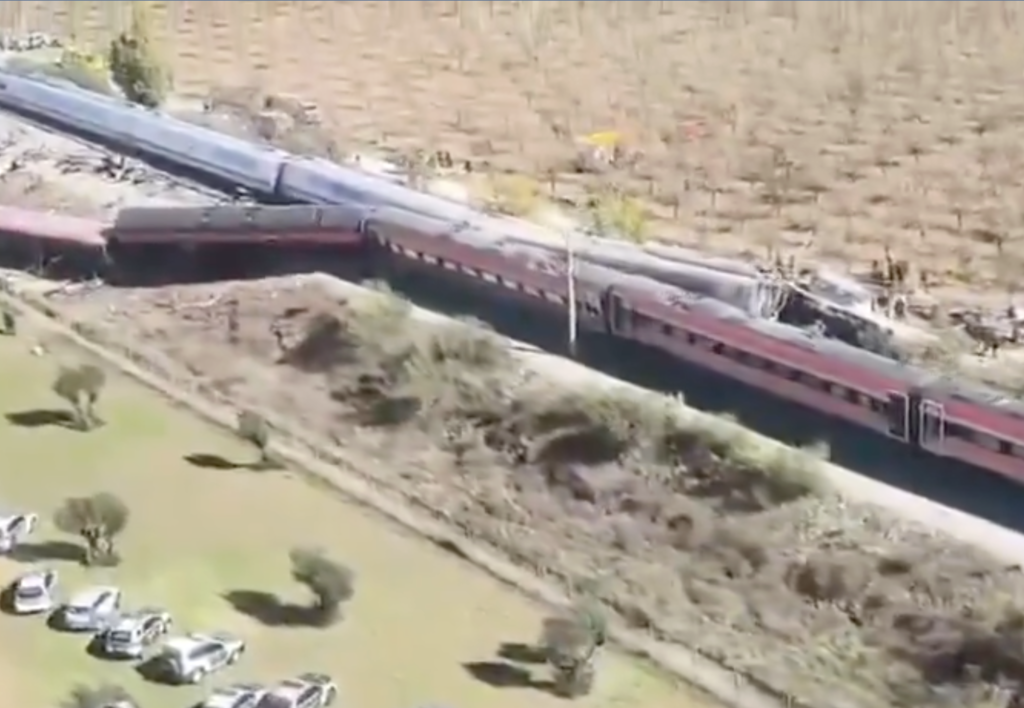
However, Barron cautioned against attributing responsibility for the Urda collision before investigators establish what happened.
He said Adif’s traffic control arrangements were under scrutiny and called for control centres to include representatives of train operators with authority to make decisions and relay instructions.
Staff also needed regular training to handle exceptional situations, he added.
Barron defended the reliability of LZB, rejecting suggestions that replacing it with newer signalling technology would necessarily have prevented the crash.
He argued that a failure involving ETCS, part of the newer ERTMS framework, could have produced the same outcome under equivalent circumstances.
Spain’s move towards ETCS was intended to standardise signalling systems, he said.
He also warned that switching between primary and backup systems could create complex procedures and confusion without regular training.