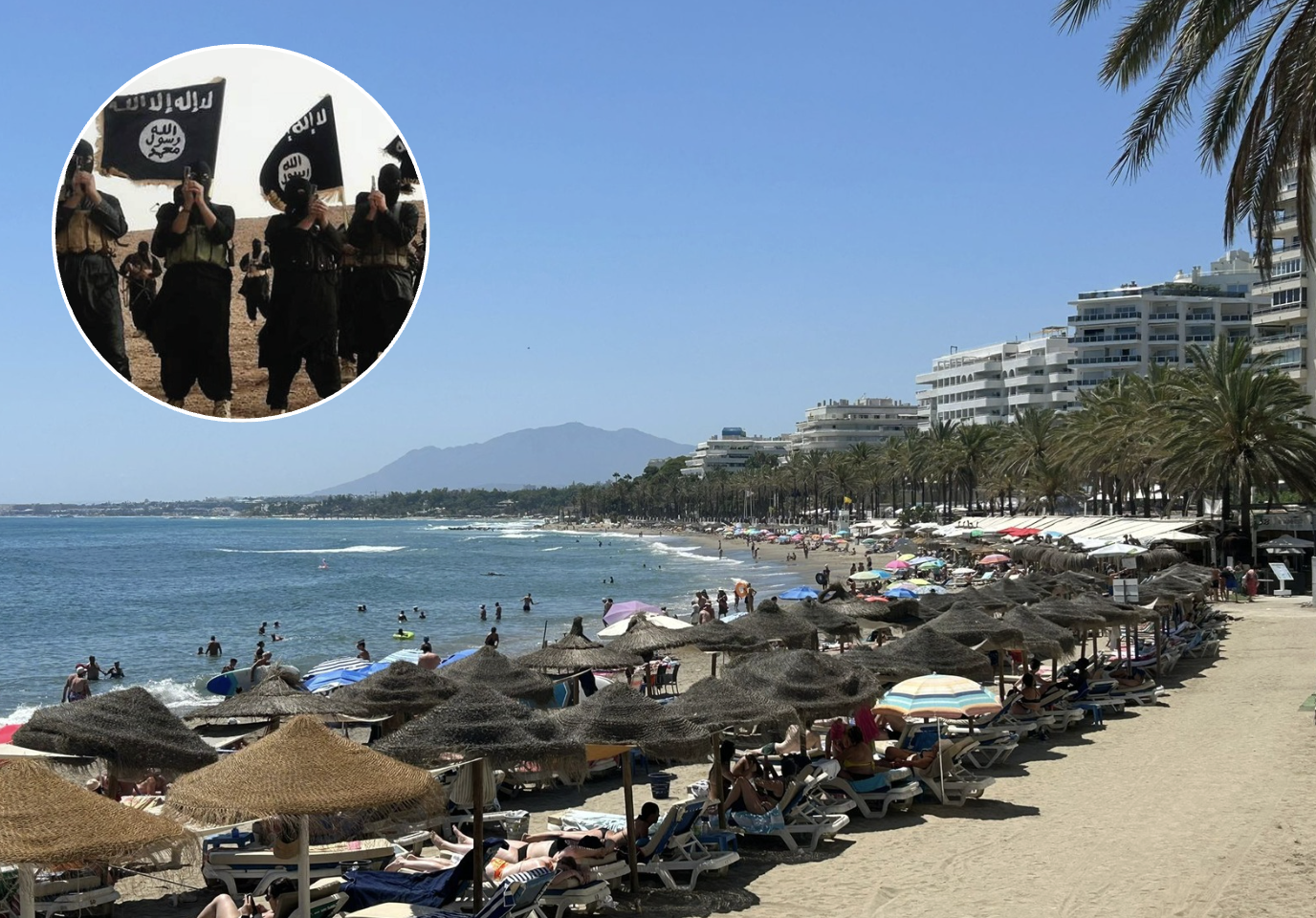

An ISIS supporter has accepted a five-year prison sentence after sharing sensitive information about the Saudi royal family’s security and movements during their summer holidays in Marbella.
The Moroccan national, who lived in Malaga, reached an agreement with prosecutors as his trial began at Spain’s Audiencia Nacional on Monday.
Prosecutors had originally sought an eight-year prison term but reduced their demand after the defendant admitted collaborating with a terrorist organisation.
He will also spend five years under supervised release after leaving prison, receive an 11-year disqualification, pay a fine and legal costs, and forfeit property seized during the investigation.
The agreement must now be formalised in the court’s written judgment.
The man had been held on remand since May 2026 and is reported to have four children.
According to the prosecution, the defendant provided one of his contacts with information about the Saudi royal family’s annual summer stays in Marbella.
This included details about their security arrangements, visits to a mosque for prayers and nights out at local nightclubs.
Prosecutors said the information made it easier to plan a potential attack.
The Saudi monarchy is considered a target by ISIS because of the kingdom’s cooperation with Western powers, including the US.
The defendant was accused of encouraging attacks across Europe by sharing information about the routines, security and movements of potential targets.
The man carried out ‘logistical and propaganda support’ for ISIS as a member of Bank Alansar, according to the prosecution.
The virtual media organisation allegedly supplied ISIS supporters with social-media accounts and international telephone numbers that could be used to register for messaging services such as Telegram without revealing their real identities.
He was also accused of advising users about VPN services and other tools designed to make it more difficult for security forces to detect them.

The defendant reportedly edited and designed audiovisual material intended to strengthen and spread ISIS propaganda online.
He also created a Telegram channel called Fursan Al Aqida, which contained more than 2,000 files linked to the terrorist organisation.
Other groups were allegedly established to discuss jihadist ideology, distribute propaganda, hold meetings by video call and recruit or indoctrinate new followers.
Prosecutors said the material included incitement to jihad, praise for martyrdom and explicit calls for violence.
The defendant was also accused of celebrating ISIS attacks and expressing satisfaction when people were killed.
In one conversation, he allegedly discussed the ‘obligation to demolish churches’.
On another occasion, a Palestinian contact asked whether he could obtain weapons while posing as a Hamas fighter. The defendant reportedly encouraged him to carry out an attack as a sniper.
He also allegedly arranged a marriage between the widow of an ISIS fighter and another militant after she asked for a husband who was a mujahid.
Prosecutors said the man advised other supporters on how to send money to ISIS fighters and territories controlled by the terrorist group.
He recommended the informal hawala money-transfer system because it is difficult to trace while discouraging the use of cryptocurrencies, which he considered more easily trackable.
The investigation began in 2024 and involved a court-authorised undercover officer who interacted with the suspect online and gathered evidence about his activities.