
The province of Cadiz possesses far more than its celebrated Atlantic beaches.
Away from the coast is a landscape of white villages, castles, reservoirs and rugged mountains that becomes particularly inviting once Andalucia’s most punishing summer temperatures begin to ease.
September can still be hot, but the period from late September into November is ideal for wandering steep historic centres, eating outside and exploring the Sierra de Grazalema.
These three towns offer distinctly different autumn escapes and each is manageable as a day trip or overnight stay.
Vejer de la Frontera
Rising above the Costa de la Luz, Vejer de la Frontera combines the appearance of a classic Andalucian white village with some of the province’s most exciting restaurants.
Its old town is enclosed partly by medieval walls and filled with narrow lanes, hidden courtyards and whitewashed homes constructed around its hilltop castle.
The central Plaza de España is one of the prettiest squares in Cadiz province, with palm trees, traditional buildings and a tiled fountain decorated with ceramic frogs.
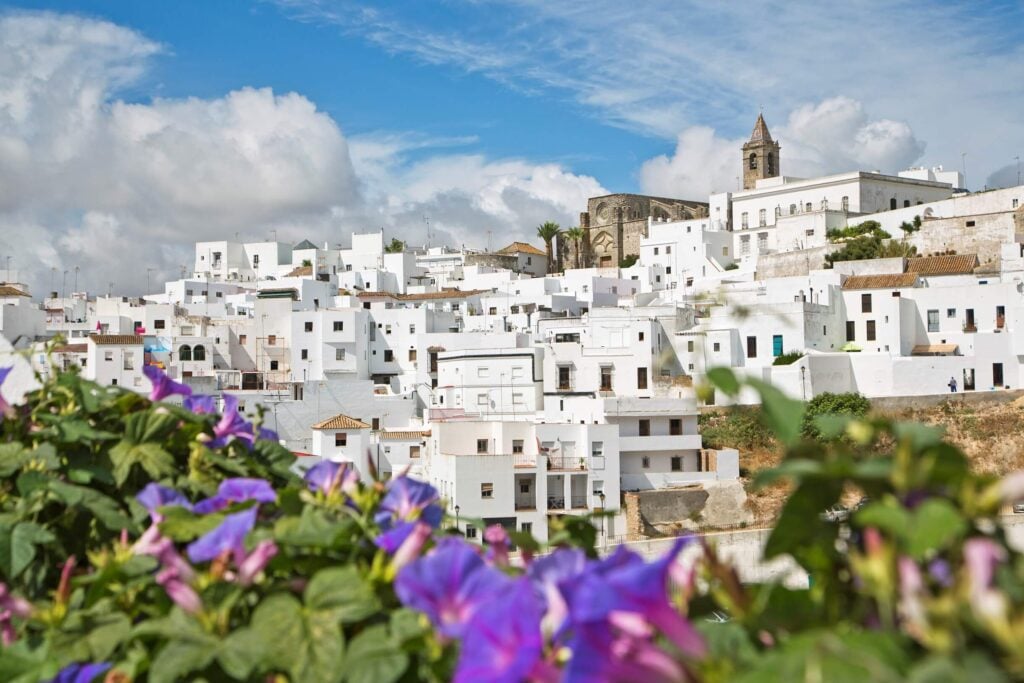
From there, visitors can wander beneath the Arco de la Segur, visit the Church of the Divine Saviour and search for the Arco de la Puerta Cerrada, one of the surviving gateways into the old walled settlement.
Vejer’s Moorish heritage is visible throughout the centre. One of its most distinctive local garments is the cobijado, a black cloak that covers most of the wearer’s face and is commemorated by a statue near the principal viewpoint.
The town can become extremely busy during July and August, when tourists combine a visit with a day at nearby El Palmar.
By late September, it becomes easier to find a table, explore the centre and watch the sunset without the same volume of summer traffic.
Vejer has developed a strong culinary reputation, with restaurants ranging from traditional Andalucian kitchens to Moroccan-inspired dining rooms. Local dishes include almadraba tuna, retinto beef, chickpea stews and freshly caught fish from the nearby coast.
It is around 45 minutes from Cadiz city, 55 minutes from Jerez and slightly more than two hours from Marbella.
Visitors should park outside the historic centre. Its narrow, steep and occasionally confusing streets are best explored on foot.
Zahara de la Sierra
Few first views in Andalucia can compete with the approach to Zahara de la Sierra.
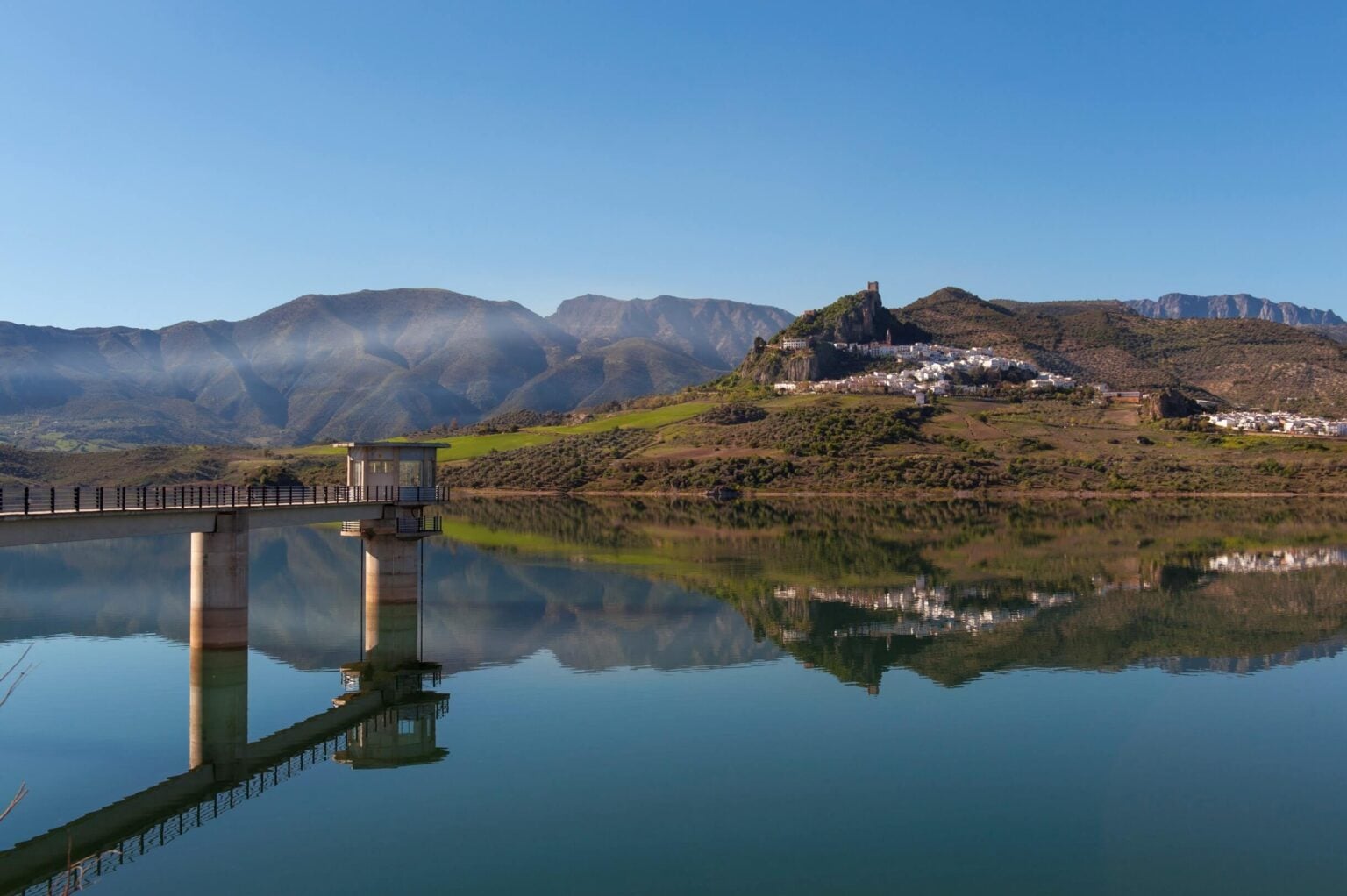
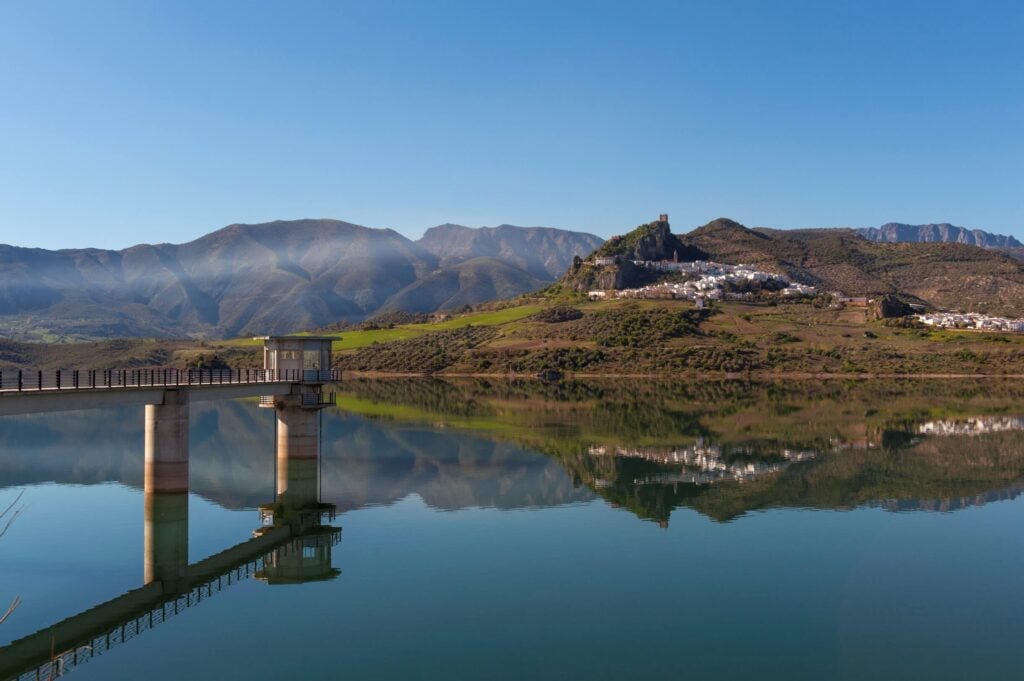
The brilliant white village sits on a rocky outcrop beneath the remains of a medieval castle, overlooking a turquoise reservoir and the surrounding mountains.
Zahara formed part of the historic frontier between Christian and Muslim kingdoms, and its strategic importance becomes obvious after climbing to the ruined Nasrid tower above the town.
The ascent is steep, but visitors are rewarded with panoramic views across the reservoir, rooftops and Sierra de Grazalema Natural Park.
Back in the centre, the Church of Santa Maria de la Mesa dominates the main square, where bars and restaurants provide a convenient place to recover from the climb.
The nearby reservoir is popular for kayaking and other outdoor activities, while the surrounding area offers hiking, cycling and birdwatching.
One of the most spectacular drives continues from Zahara towards Grazalema over the Puerto de las Palomas mountain pass. The road is steep and winding, but its viewpoints reveal enormous expanses of the natural park.
Drivers should check road and weather conditions beforehand, particularly following heavy rain.
Autumn brings milder walking temperatures, although the Sierra de Grazalema is one of the rainiest areas in Spain. Visitors should pack a waterproof layer even when conditions elsewhere in Cadiz province appear clear.
Zahara is known for locally produced olive oil, goat’s cheese, cured meats and traditional stews.
It is approximately 90 minutes from Jerez, one hour and 40 minutes from Cadiz city and around 45 minutes from Ronda.
An overnight stay allows visitors to enjoy the village after day-trippers leave and see the castle illuminated above the darkened hillside.
Setenil de las Bodegas
Setenil de las Bodegas is famous for houses and restaurants constructed directly beneath enormous overhanging rocks.
Rather than occupying the top of a defensive hill, much of the village developed inside a narrow gorge carved by the Guadalporcun river.
Its most photographed streets are Calle Cuevas del Sol and Calle Cuevas de la Sombra. Here, natural rock ceilings extend above homes, tapas bars and shops, creating one of southern Spain’s most unusual urban landscapes.
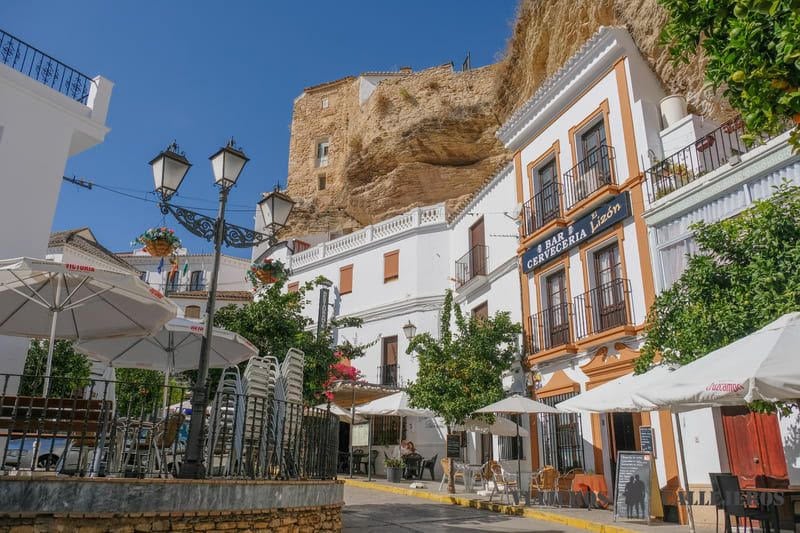
The geological formations are not merely decorative. The caves help maintain relatively stable interior temperatures, protecting inhabitants from the strongest summer heat and the winter cold.
However, summer popularity has created its own problems. The principal streets can become congested with visitors, making autumn a far better time to appreciate the town’s unusual layout.
Beyond the cave streets, visitors can climb towards the remains of Setenil’s medieval fortress and the Church of Nuestra Señora de la Encarnacion.
The ascent provides a broader view of how houses, cliffs and narrow streets have been fitted together inside the gorge.
Setenil is also an excellent place to eat. Its bars serve chorizo, black pudding, pork loin, local cheeses and sopas cortijeras, a rustic country dish traditionally prepared with bread, vegetables and olive oil.
The town is roughly 25 minutes from Ronda, 90 minutes from Malaga city and close to two hours from Cadiz city.
Read more Andalucia news at the Spanish Eye.